How to Unblock a Sink Without Chemicals
TL;DR
Start with a kettle of hot water and washing-up liquid, then plunge with a flat cup plunger while blocking the overflow with a wet cloth. If that fails, put a bowl under the U-bend and unscrew it by hand - that is where the blockage sits about eighty per cent of the time. Avoid caustic cleaners; they rarely clear a full blockage and damage plastic waste pipes.
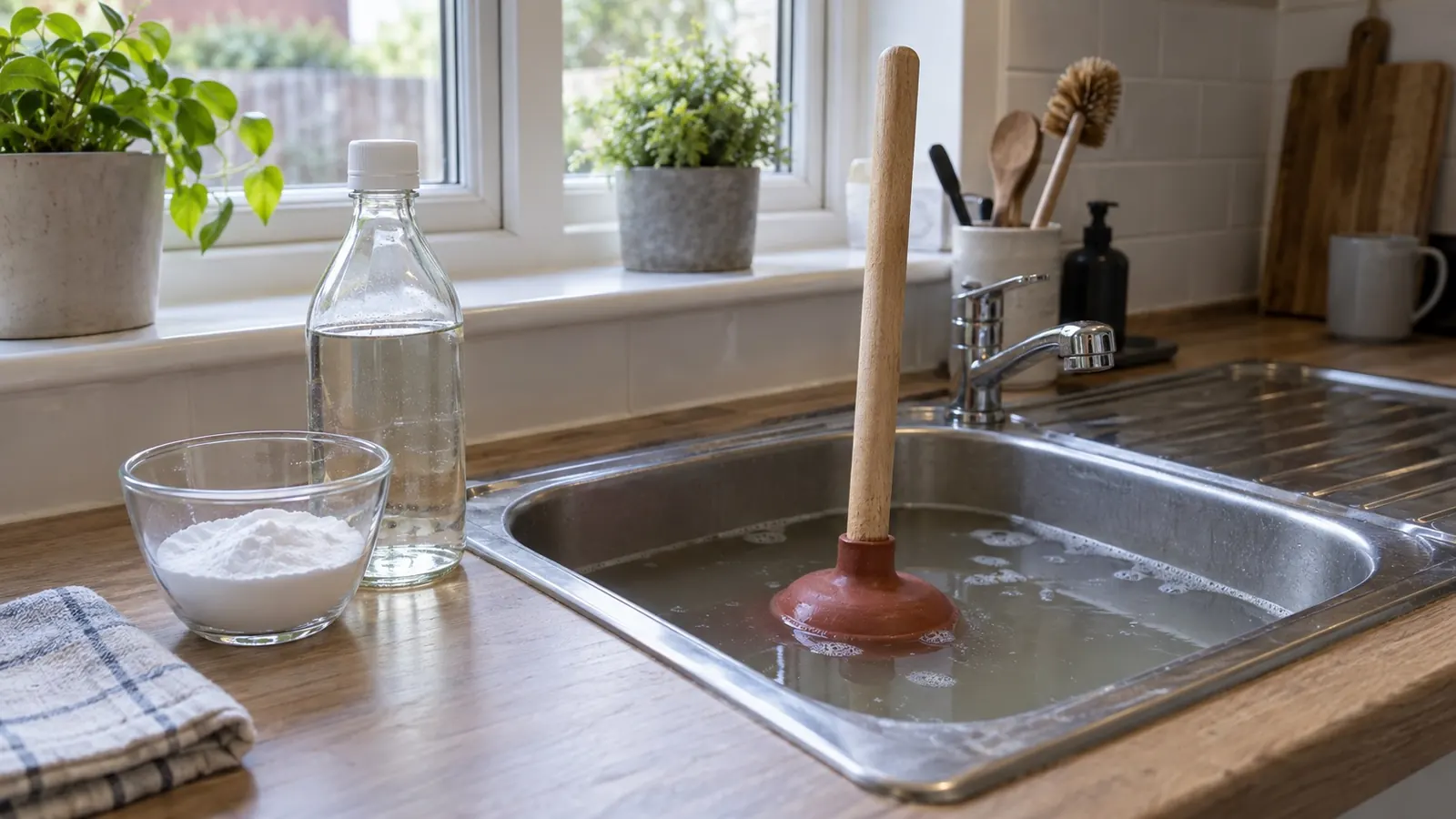
A kitchen sink that will not drain is almost always the same problem: a slow build-up of fat, oil and food particles that has narrowed the waste pipe until something finally bridges it. It looks like a sudden failure, but it has usually been developing for months.
The reassuring part is that the blockage is nearly always within arm's reach, in the U-bend directly under the sink, and clearing it needs no chemicals and barely any tools. Here is how to work through it in the order that gets results fastest.
Step 1: Hot Water and Washing-Up Liquid
Fat is the usual culprit, and fat responds to heat and detergent. Squeeze a good amount of washing-up liquid down the plughole, then follow it with a kettle of hot water poured steadily.
Use hot tap water or water just off the boil rather than fiercely boiling water. Modern waste pipes are plastic, and repeatedly pouring boiling water through them softens joints over time. Warm enough to melt fat is enough - you do not need to scald the pipe.
If the water level drops even slightly, you are making progress. Repeat once or twice before moving on.
Step 2: Plunge It Properly
A sink needs a flat cup plunger, not the flanged type used for toilets. Two details make the difference between this working and not working.
- Block the overflow. Push a wet cloth firmly into the overflow slot near the top of the bowl. If you skip this, the pressure you generate escapes straight out of it and the plunger does nothing. This is the single most common reason plunging a sink fails.
- Cover the plunger head with water. A few centimetres in the bowl is enough. You are moving water, not air.
Then plunge with firm, controlled strokes for about twenty seconds, keeping the cup sealed against the base of the bowl. Break the seal sharply at the end.
If you have a double sink, block the second plughole too - otherwise the pressure simply travels sideways.
Step 3: Clean Out the U-Bend
If plunging has not worked, this is where the blockage almost certainly is. It sounds daunting and it is genuinely straightforward - most modern traps unscrew by hand.
What you need
- A washing-up bowl or bucket
- An old towel
- Rubber gloves
- An old toothbrush or bottle brush
The process
- Clear everything out of the cupboard under the sink and lay the towel down.
- Position the bowl directly beneath the U-shaped section of pipe. It will be holding standing water and that water will come out.
- Unscrew the two large plastic collars either side of the U-bend, turning anticlockwise. They are usually hand-tight. If one is stubborn, use grips gently - plastic threads strip easily and cross-threading them on reassembly causes a leak.
- Lower the trap away and tip the contents into the bowl.
- Clean it out thoroughly with the brush under a running tap elsewhere in the house.
- Check the pipe going into the wall while the trap is off. Reach in a short way with a gloved finger - if you feel a soft blockage there, hook it out.
- Reassemble, tightening the collars hand-tight only, and make sure the rubber washers are seated flat and the right way round.
Run the tap for a minute afterwards and watch the joints carefully. A slight weep usually means a washer has twisted; undo it and reseat rather than over-tightening. If it still drips, our guide to a leaking waste pipe under the sink covers what to check next.
Step 4: A Drain Snake
If the trap was clear, the blockage is further along the waste run. A basic drain snake - a flexible coiled wire with a handle - reaches where the trap cannot.
Feed it into the pipe leading into the wall with the trap removed, rather than down through the plughole. You will get much further and you avoid fighting your way round the U-bend. Turn the handle as you push, and expect to feel it catch and then release.
Why We Do Not Recommend Caustic Cleaners
Chemical drain cleaners are the first thing many people reach for and close to the last thing we would suggest.
- They struggle with a full blockage. The product needs to reach the obstruction to work. If the pipe is already full of standing water, it dilutes on the way down.
- They damage plastic waste pipes. The heat generated by a strong caustic reaction can soften or distort plastic, particularly at glued joints.
- They create a hazard. If the chemical does not clear it, the next person to open that trap gets a bowl of caustic solution. Always say so if you have used one.
Enzyme or bacterial drain maintainers are fine and worth using monthly on a sink that runs slowly. They digest fat gradually rather than attacking it, and they will not harm the pipework. They are prevention, not rescue.
If More Than One Fitting Is Blocked
If the kitchen sink is blocked and so is the bath, basin or toilet, stop working on the sink. Multiple slow fittings mean the obstruction is downstream, in the shared waste or the underground drain, and no amount of work on the trap will help. Start with the outside drain instead.
Gurgling is the early warning here. If the sink gurgles when the washing machine empties, or the bath gurgles when the sink drains, the shared pipe is partially restricted. That is worth dealing with before it becomes a full blockage.
Keeping It Clear
- Never pour fat or cooking oil down the sink. It leaves the pan liquid and sets solid in the cold pipe. Let it cool and bin it - Water UK estimates that fats and oils are behind a very large share of the sewer blockages cleared each year.
- Fit a mesh strainer over the plughole and empty it into the bin rather than rinsing it through.
- Scrape plates properly before washing. Rice, pasta and coffee grounds are notorious - they swell or compact rather than breaking down.
- Run the hot tap for thirty seconds after washing up to carry warm grease past the trap while it is still liquid.
- Once a month, a kettle of hot water with washing-up liquid keeps a marginal pipe clear.
Hard water makes this worse. In areas like ours, scale builds on the inside of pipework and gives fat a rough surface to cling to, so a sink that would stay clear elsewhere gradually narrows here. Anglian Water publishes hardness figures by postcode. Our guide to discoloured water covers some of the other things hard water and old pipework do.
Frequently Asked Questions
Does baking soda and vinegar actually work?
It is mildly useful for smells and for a sluggish drain, and it will not damage anything. It does not have the power to shift a solid fat blockage - the reaction is mostly spent by the time it reaches the obstruction. Treat it as maintenance rather than a cure.
Why does my sink smell as well as drain slowly?
Because the fat coating the pipe holds food residue and bacteria. Clearing the blockage usually clears the smell too. If the smell persists after the drain runs freely, it points to a dry or missing trap seal instead - our guide to smelly drains explains how to tell.
Can I use a pressure washer down the drain?
Please do not. The pressure is far higher than domestic waste pipework is designed for, and it can blow joints apart inside a wall or under a floor, turning a blockage into a leak you cannot see.
How do I know if it is the trap or the pipe beyond it?
Remove the trap and pour a jug of water directly into the pipe going into the wall. If it drains away freely, the blockage was in the trap. If it backs up, it is further along.
Still Not Draining?
If the trap is clean and water still will not go away, the blockage is in the buried section of pipework and needs drain rods or a jetting unit. We cover Milton Keynes and the surrounding villages for drainage and emergency plumbing. Send us a message with what you have already tried and we will tell you what is likely going on.
Need Professional Advice?
Our Gas Safe registered engineers are ready to help with all your heating needs. Get a free, no-obligation quote today.