Why Is My Water Brown? What It Means
TL;DR
Brown water is almost always iron oxide - rust - either stirred up in the water main or coming from old pipework in your home. Run the cold kitchen tap for a few minutes; if it clears, it was disturbed sediment. If only the hot water is brown, the problem is your cylinder or heating system. If it persists on all cold outlets, contact your water supplier.
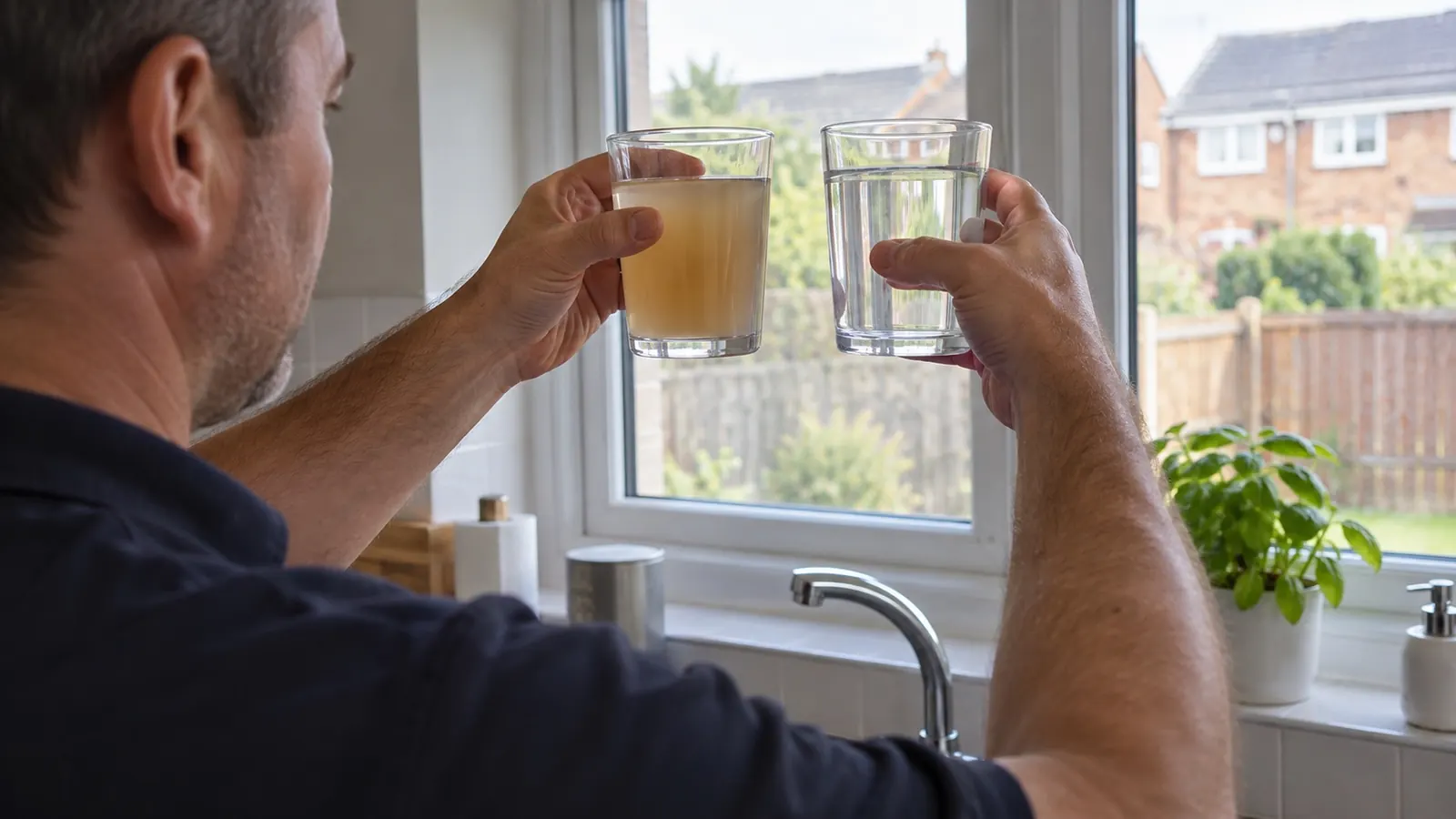
Turning on the tap and getting brown, orange or yellowish water is alarming. In most cases it is not dangerous, and it clears on its own within an hour - but the colour is telling you something specific about where it came from, and a few checks will identify which.
The Quick Diagnostic
Work through these in order. Each answer narrows it down considerably.
1. Is it the cold tap, the hot tap, or both?
- Cold only: the incoming mains supply or your cold pipework.
- Hot only: your hot water cylinder or heating system - nothing to do with the mains.
- Both: most likely the incoming supply.
2. Is it every tap, or just one?
- Every tap: the supply into the property.
- One tap only: the pipework serving that outlet, often an old galvanised or iron section.
3. Does it clear when you run it?
Run the cold kitchen tap - the one fed directly from the main - for two to five minutes. If the water gradually clears, it was disturbed sediment and the problem is effectively solved.
Cause 1: Disturbed Mains Sediment
This is by far the most common explanation.
Water mains naturally accumulate a fine layer of iron and manganese sediment over years. It sits harmlessly on the bottom of the pipe until something changes the flow and stirs it up. Common triggers include mains repair work in the area, a burst nearby, hydrant use by the fire service, or a valve being operated somewhere on the network.
The result is short-lived discolouration affecting several properties in a street at once. It generally clears within a few hours as the sediment is flushed through.
What to do
- Run the cold kitchen tap gently for a few minutes. Do not blast it - a high flow rate stirs up more sediment.
- If it clears, run each other cold tap briefly to clear the branches.
- Avoid using the washing machine until it runs clear, as iron can stain laundry.
- If it has not cleared after an hour or so of intermittent running, contact your water supplier. In this area that is Anglian Water, and they will usually know already if there has been work nearby.
Ask your neighbours as well. If several homes are affected, it is a network issue, not yours.
Cause 2: Corroding Pipework in the Property
If only one tap is affected, or the discolouration reliably appears first thing in the morning and clears after running, the source is likely inside your own property.
Older houses may still have galvanised steel or iron pipework in places. As the internal coating fails, the steel beneath corrodes and sheds rust into the water. It is most obvious after water has been standing still overnight, because there has been time for iron to dissolve into it.
The pattern to look for is: discoloured first thing, clears after thirty seconds, returns the next morning. That is corrosion in a section of your own pipe.
The only permanent fix is replacing the affected section, usually in copper or plastic. It is worth doing - old galvanised pipework also restricts flow badly as it corrodes internally, so replacing it often improves pressure at the same time. If you have noticed weak flow alongside the discolouration, the two are probably connected, and our guide to poor flow and trapped air covers how to tell them apart.
Cause 3: The Hot Water System
If the cold water is clear and only the hot is brown, the mains supply is fine. The problem is in your cylinder or heating system.
- A corroding hot water cylinder. Older steel cylinders corrode internally over time. Rusty hot water from a cylinder that is more than a couple of decades old is often a sign it is nearing the end of its life.
- A depleted sacrificial anode. Many cylinders have a magnesium anode designed to corrode instead of the tank. Once it is used up, the tank itself starts to go.
- System sludge. If the hot water is fed through a heat exchanger, black or brown discolouration can indicate iron oxide sludge in the heating circuit - the same material that causes cold spots in radiators.
Brown hot water is worth acting on rather than living with. A cylinder that has begun to corrode internally will eventually leak, and they tend to fail messily.
Is It Safe?
Iron in drinking water is regarded as an aesthetic problem rather than a health one at the levels normally seen - it affects colour and taste rather than safety. Water quality standards in England and Wales are regulated by the Drinking Water Inspectorate, and your supplier is required to investigate discolouration reports.
That said, the sensible position is:
- Do not drink or cook with visibly discoloured water - not because it is likely to be harmful, but because you cannot tell by looking what else has been disturbed with it.
- Do not use it for laundry, as iron stains fabric and the stain sets.
- If the water is brown and has an unusual smell or taste, stop using it and contact your supplier straight away.
- If discolouration keeps recurring with no obvious cause, report it. Your supplier can test it.
Other Colours and What They Mean
- Cloudy or milky white, clearing from the bottom up: tiny air bubbles. Completely harmless - fill a glass and watch it clear within a minute.
- Blue or green staining on fittings: copper, usually from new pipework or standing water in copper pipe.
- Black particles: often a degrading rubber washer or hose in a fitting. Usually traceable to one outlet.
- Pink or red staining in the bathroom: not the water at all - an airborne bacterium that grows in damp environments and wipes away.
Frequently Asked Questions
How long should I run the tap for?
Two to five minutes on the cold kitchen tap is usually enough. If it has not improved after that, running it longer rarely helps and wastes a lot of water - contact your supplier instead.
Should I be compensated for discoloured water?
Water companies operate guaranteed standards schemes and may make a payment where supply quality falls below standard. It is worth reporting every occurrence, both so it is recorded and so any pattern is investigated.
Can brown water damage my appliances?
Sediment can accumulate in washing machine and dishwasher inlet filters, reducing flow. If you have had a bout of discoloured water, it is worth checking and rinsing those filters afterwards. It is the same principle as checking the pump filter when a washing machine will not drain.
Would a filter fix it?
A whole-house sediment filter will catch particulate iron and is a reasonable measure if you have recurring problems from an old supply pipe. It is a mitigation rather than a cure - if your own pipework is corroding, replacing it is the real answer.
If It Keeps Happening
Occasional discolouration after mains work is normal. Water that is brown every morning, or hot water that is persistently rusty, points to pipework or a cylinder that is deteriorating - and both get worse rather than better. We cover Milton Keynes and the surrounding area for plumbing repairs and pipework replacement. Get in touch and tell us the pattern - which taps, hot or cold, and when - and we can usually narrow it down before we visit.
Need Professional Advice?
Our Gas Safe registered engineers are ready to help with all your heating needs. Get a free, no-obligation quote today.