Airlock in Your Pipes? How to Clear It
TL;DR
An airlock shows up as a tap that splutters, runs weakly or stops entirely while other taps are fine. The usual fix is to connect a hose between an affected cold tap and a mains-pressure cold tap, then turn the mains tap on so its pressure pushes the trapped air back out. Airlocks affect gravity-fed systems far more than mains-pressure ones.
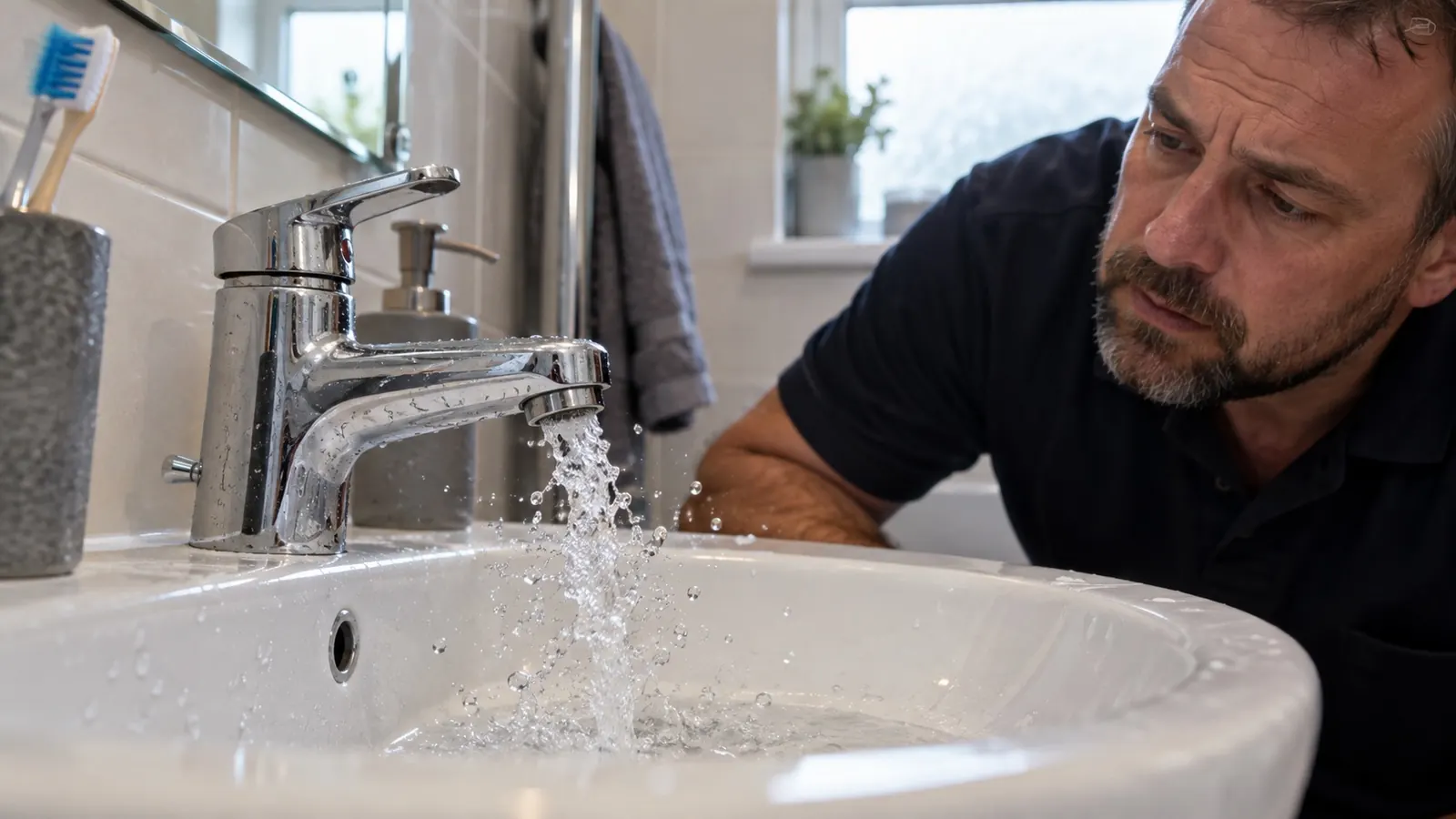
An airlock is exactly what it sounds like: a pocket of air trapped in a water pipe, sitting at a high point where it cannot escape. Because air compresses and water does not, that pocket acts as a cushion, absorbing the pressure that should be pushing water along and stopping the flow.
They are far more common in gravity-fed systems - those with a cold water tank in the loft - because the pressure available is much lower. On a mains-pressure system, the pressure is usually high enough to force air through on its own.
How to Tell If It Is an Airlock
Airlocks have a distinctive set of symptoms:
- A tap splutters and spits, delivering water in bursts mixed with air.
- One outlet has little or no flow while others in the house are fine.
- Banging or knocking in the pipework when a tap is opened or closed.
- The problem appeared straight after plumbing work, a system drain-down, or the water being off.
- Flow improves briefly when you open another tap, then falls away again.
That last point is a useful clue. Airlocks are inconsistent - they shift slightly and then settle back. A steady, unchanging weak flow is more likely a blocked filter, a partly closed valve or a genuine pressure problem.
What it is not
Rule these out before you start chasing air:
- A partially closed isolation valve, particularly after recent work. Check the small screw-slot valves on the pipes serving that outlet.
- A blocked tap aerator. Unscrew the nozzle on the end of the spout and check for scale and grit. In a hard water area this is a very common cause of poor flow from one tap.
- Low mains pressure affecting the whole property rather than one outlet.
If every outlet in the house is weak rather than just one, the cause is more likely to be system-wide.
Method 1: Open the Affected Tap Fully
Start simple. Open the affected tap fully and leave it running for a couple of minutes. On a system with reasonable pressure, the moving water will sometimes drag the air pocket along and out.
Open a second tap on the same run at the same time and it will often help. If the tap begins to splutter more violently before running clean, the air is moving - keep going.
Method 2: The Hose Method
This is the reliable fix, and it works by using mains pressure to push the airlock backwards out of the pipe.
What you need
A length of hose that fits over both tap spouts, and two jubilee clips or strong ties to secure it.
The method
- Identify a mains-pressure cold tap - almost always the kitchen cold tap, since it feeds directly from the incoming main.
- Connect one end of the hose to that tap and the other to the affected tap. Secure both ends properly with clips. This is important - the hose will be under pressure and will jump off if it is loose.
- Open the affected tap first.
- Then open the mains cold tap, slowly at first, then fully.
- Leave it for one to two minutes. You should hear the air being forced back through the system, often with some gurgling and banging.
- Turn off the mains tap first, then the affected tap. This order matters - it prevents water being drawn back the wrong way.
- Remove the hose and test the tap.
Repeat if there is improvement but not a full fix. Stubborn airlocks sometimes need two or three attempts.
An important safety note
Only ever connect between two cold taps, and never leave a hose connected to a tap and submerged in a sink, bath or any container of water. If the mains pressure drops, water can be siphoned backwards into the drinking supply. This is a genuine contamination risk and the reason backflow prevention exists in the Water Supply (Water Fittings) Regulations - the Chartered Institute of Plumbing and Heating Engineering explains the principle clearly. Disconnect the hose as soon as you are finished.
Method 3: Bleed the System
If the airlock is in a heating circuit rather than the hot or cold supply, the symptoms are different - radiators cold at the top, gurgling from the pipework, or a boiler that is noisy on start-up. That is trapped air in the heating system, and it comes out through the radiator bleed valves rather than the taps.
Guidance on domestic hot and cold water systems is available from the Water UK member companies. If the affected outlet is hot water only, and the property has a hot water cylinder, air can collect at the top of the cylinder or in the pipework leaving it. Running the hot tap at the highest point in the house for several minutes will often shift it.
Why Airlocks Happen
- After the water has been off. Air enters the pipes when they drain and does not always leave when the supply returns.
- After plumbing work. Any time a pipe has been opened, air gets in.
- A cold water tank running low. If a loft tank empties, air is drawn into the outlet pipe. Worth checking the tank fills properly, and that the float valve is not sticking.
- Poor pipe routing. Pipework with unnecessary high points creates natural traps where air collects. This is a design issue and tends to cause repeat airlocks in the same place.
- Low system pressure. Gravity-fed systems in bungalows or where the tank sits only slightly above the outlets are particularly prone.
If the same tap airlocks repeatedly, the pipe run is usually the reason, and it may need re-routing or an automatic air vent fitting at the high point.
Related Symptoms Worth Checking
Trapped air often travels with other problems. Gurgling from wastes rather than supply pipes is a different issue entirely - that points to drainage ventilation, and our guide to smelly drains covers it. If the water coming out is discoloured as well as spluttering, particularly after work on the mains, our guide to brown or discoloured water explains what is likely happening.
Frequently Asked Questions
Can an airlock damage anything?
Not usually in itself, but the banging that comes with it puts repeated shock loading on joints and fixings. Persistent knocking is worth resolving before it works a joint loose.
Why does it keep coming back?
Recurring airlocks in the same place nearly always mean a high point in the pipework where air naturally collects, or a cold water tank that periodically runs low. Both are fixable, but they need the cause addressing rather than the symptom.
What if my whole house has low pressure, not just one tap?
That is not an airlock. Check the main stopcock is fully open, and whether your neighbours are affected - if they are, it is a supply issue for the water company.
Do combi boilers get airlocks?
Because a combi runs at mains pressure, air is usually forced through rather than trapped. Air in a combi system more often shows up as noise from the boiler or cold spots in radiators, which is a heating-side issue rather than a supply one.
If It Will Not Clear
If the hose method has not worked, or the same outlet airlocks again and again, the pipework itself is usually the reason and it needs looking at properly. We cover Milton Keynes and the surrounding villages for plumbing repairs and diagnostics. Get in touch and tell us which outlets are affected and when it started - that usually narrows it down quickly.
Need Professional Advice?
Our Gas Safe registered engineers are ready to help with all your heating needs. Get a free, no-obligation quote today.