What Should My Boiler Pressure Be?
TL;DR
Your boiler pressure should sit between 1 and 1.5 bar when the system is cold, rising to roughly 1.5-2 bar when the heating is on and the water is hot. Below 1 bar is too low and the boiler may lock out; above 2.5-3 bar is too high and risks tripping the pressure relief valve. Check the gauge monthly and repressurise via the filling loop if it drops.
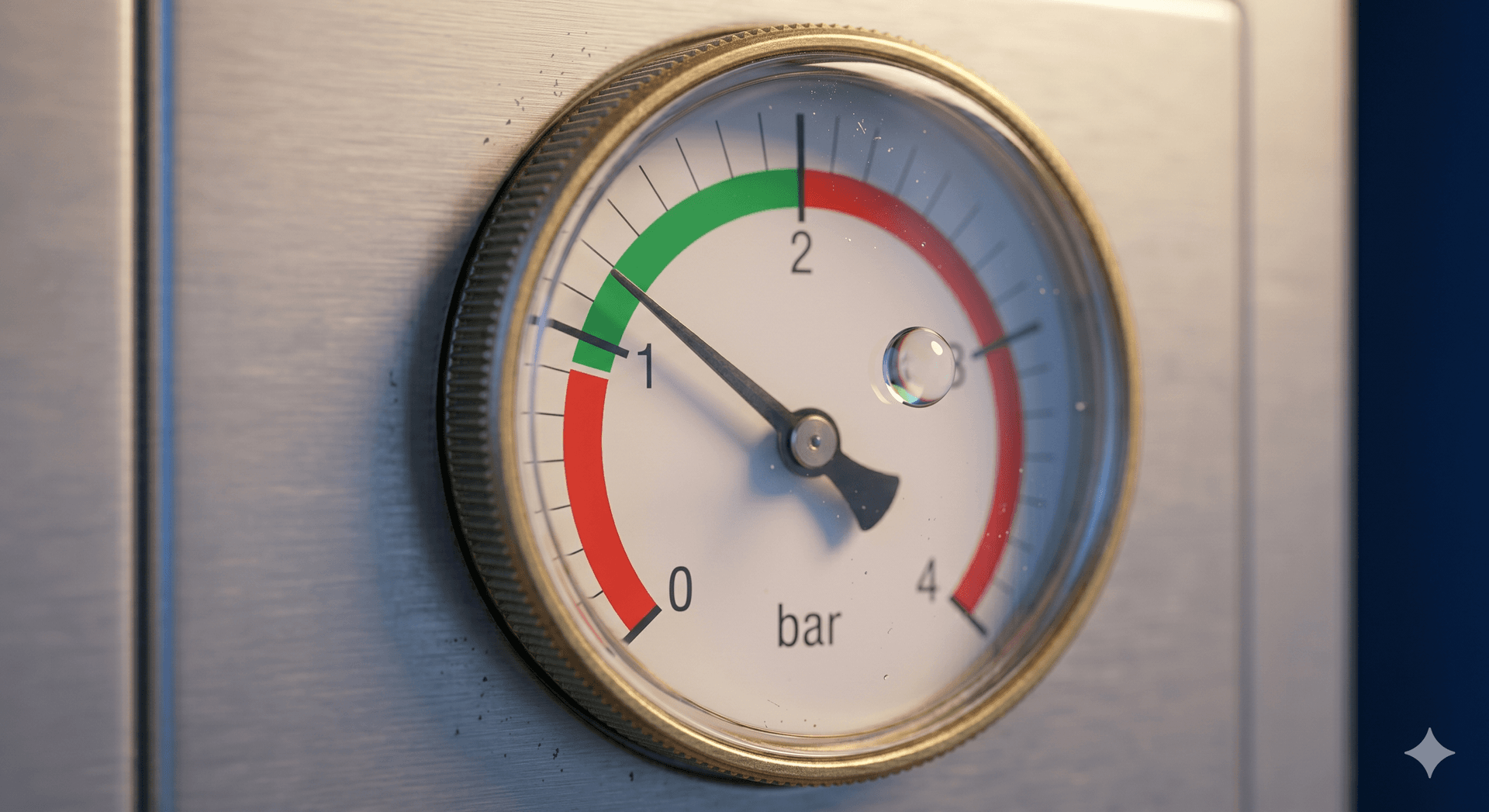
If you've ever glanced at the dial on the front of your boiler and wondered whether the needle is in the right place, you're not alone. Boiler pressure is one of the most common things our Milton Keynes customers ask about — and the good news is that it's also one of the easiest to understand once you know what you're looking at.
This guide explains exactly what your boiler pressure should be, why it changes throughout the day, and what to do if your reading looks wrong.
What Should Boiler Pressure Be? The Direct Answer
For almost every modern combi or system boiler in a Milton Keynes home, the ideal pressure is:
- 1 to 1.5 bar when the system is cold (heating switched off, radiators not warm)
- 1.5 to 2 bar when the system is hot (heating running, radiators up to temperature)
Anything below 1 bar is too low — your boiler may lock out and refuse to fire. Anything above 2.5-3 bar is too high — the system is over-pressurised and may start leaking from the pressure relief valve.
If you're reading this because your pressure has already dropped, our guide on how to repressurise a boiler walks you through the fix step by step.
Where Is the Pressure Gauge?
The pressure gauge is usually on the front or underside of the boiler. There are two common types:
- Analogue gauge — a round dial with a needle, often with a green "normal" zone and red zones at either end. Many also have a second movable needle you can set as a reminder of the correct cold pressure.
- Digital display — a number on the boiler's screen (for example, "1.3 bar"). Some boilers, like certain Worcester Bosch and Vaillant models, only show the pressure when you press a button or scroll through the menu.
If you can't find the gauge, check your boiler manual — or take a photo of the boiler and we'll happily point it out for you.
What the Coloured Zones Mean
On an analogue gauge, the colour-coded zones make life simple:
- Green zone — the safe operating range, typically 1 to 2 bar. This is where the needle should sit.
- Red zone (low) — below roughly 0.5-1 bar. The system needs topping up.
- Red zone (high) — above roughly 2.75-3 bar. The system is over-pressurised and pressure needs releasing.
Boiler Pressure Reading Guide
| Pressure Reading (cold) | What It Means | Action |
|---|---|---|
| Below 0.5 bar | Critically low — boiler will likely lock out | Repressurise via the filling loop; if it drops again, suspect a leak |
| 0.5 - 1 bar | Too low — boiler may struggle or fault | Top up to 1.2-1.5 bar using the filling loop |
| 1 - 1.5 bar | Ideal cold pressure | No action needed — this is perfect |
| 1.5 - 2.5 bar | Acceptable, especially when warm | Monitor; fine if heating is on |
| 2.5 - 3 bar | Too high — risk of PRV discharge | Bleed a radiator to release pressure |
| Above 3 bar | Over-pressurised — needs attention | Reduce pressure and book an engineer if it persists |
Why Does Pressure Change Between Hot and Cold?
This catches a lot of people out — your pressure isn't a fixed number. It moves throughout the day, and that's completely normal.
When your heating fires up, the water inside the system heats and expands. Because water can't compress, that expansion pushes the pressure up — typically by 0.3 to 0.5 bar. When the system cools, the water contracts and the pressure falls back down. This is exactly why we recommend checking and setting your pressure when the system is cold: it gives you a consistent baseline.
A healthy boiler has an expansion vessel — a sealed chamber with an air cushion — that absorbs this expansion and keeps the pressure swing modest. If your pressure jumps dramatically when the heating comes on (say, from 1.2 bar straight up to 2.8 bar), the expansion vessel may have lost its charge and need re-pressurising or replacing by an engineer.
What Happens If the Pressure Is Wrong?
Too low
Most modern boilers have a low-pressure cut-out for safety. Drop below roughly 0.5-1 bar and the boiler simply won't fire — you'll often see a fault code such as F1 or F22. Low pressure usually means water has been lost from the system, either through bleeding radiators, a small leak, or a weeping valve.
Too high
Over-pressurisation forces water out through the pressure relief valve — you may notice dripping from a small pipe outside your house. Persistent high pressure can stress seals and joints. Our guide on why your boiler keeps losing pressure covers the leak-related side of this in detail.
How Often Should You Check It?
A quick monthly glance at the gauge is plenty for most households. It takes ten seconds and lets you catch a slow drop before it becomes a no-heating emergency. We'd also suggest a check:
- After bleeding any radiators (bleeding releases pressure — see our radiator bleeding guide)
- At the start of the heating season, before the cold weather sets in
- Any time the heating or hot water behaves oddly
Pressure checks are also part of every annual boiler service we carry out across Milton Keynes — a good engineer will set it correctly and flag any vessel or valve issues before they leave you cold.
When to Call a Gas Safe Engineer
Topping up the pressure via the filling loop is a safe DIY job on the water side of your system. But call a Gas Safe registered engineer if:
- The pressure keeps dropping no matter how often you top it up (likely a leak)
- The pressure swings wildly between hot and cold (likely the expansion vessel)
- You can't find a leak but pressure is being lost
- The boiler still won't fire after repressurising
Never attempt repairs on the gas side of the boiler yourself — that's illegal and dangerous. We serve homes across MK, from Bletchley to Newport Pagnell, and can diagnose pressure faults quickly.
Need expert help? Contact Plumbline MK for a free, no-obligation quote. Call 07805 844 016 for same-day response across Milton Keynes and surrounding areas.
Frequently Asked Questions
Is 2 bar too high for a boiler?
No — 2 bar is generally fine, especially when the heating is on and the water is hot. Pressure naturally rises as the system warms up. It only becomes a concern if the reading climbs above roughly 2.75-3 bar when cold, which suggests the expansion vessel may need attention or the filling loop has been left open.
Why does my boiler pressure rise when the heating is on?
Water expands as it heats and can't be compressed, so the pressure inside a sealed heating system increases when the boiler is running. A rise of 0.3-0.5 bar is normal. A much larger jump suggests the expansion vessel has lost its air charge and should be checked by a Gas Safe engineer.
What happens if my boiler pressure is too low?
Modern boilers have a low-pressure safety cut-out, so if pressure falls below around 0.5-1 bar the boiler will lock out and stop producing heat and hot water. You'll usually see a fault code on the display. Topping up via the filling loop normally restores it, but repeated drops point to a leak.
How often should I check my boiler pressure?
A monthly check is ideal for most Milton Keynes homes — it takes seconds and helps you spot a slow leak early. Also check after bleeding radiators, at the start of winter, and any time the heating behaves unexpectedly. Your annual boiler service should include a pressure check too.
Need Professional Advice?
Our Gas Safe registered engineers are ready to help with all your heating needs. Get a free, no-obligation quote today.