What Is a Condensing Boiler? 2026 Guide
TL;DR
A condensing boiler recovers heat from its own flue gases that an older boiler would waste, reaching 90%+ efficiency. Every new gas boiler installed in the UK has been required to be condensing since 2005 (2007 for oil), so any modern boiler in Milton Keynes is a condensing model. The give-away sign is a plastic condensate pipe draining away.
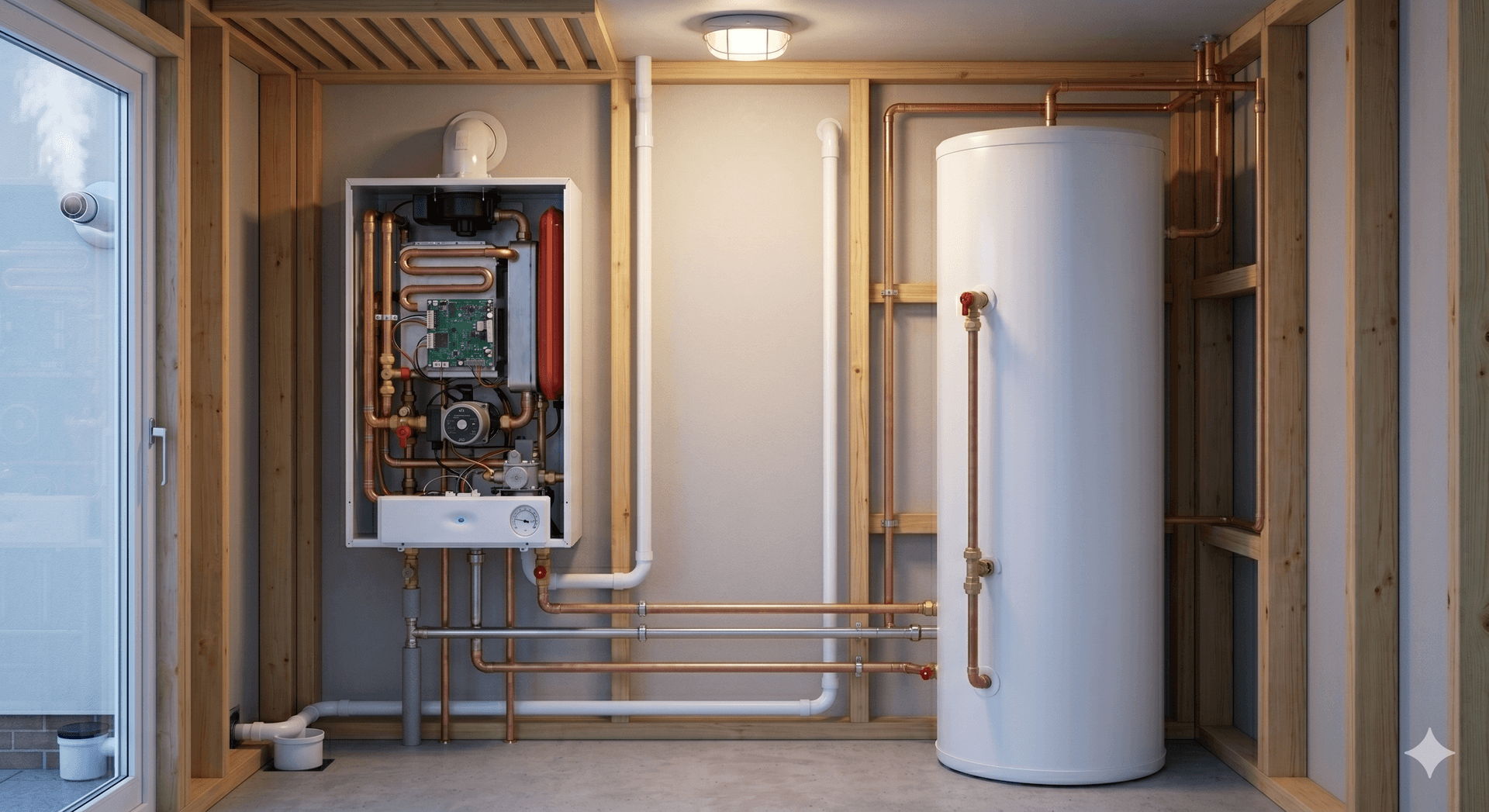
"Condensing boiler" is a term you'll see on every modern boiler advert and energy report — but it's rarely explained clearly. If you're replacing a boiler in Milton Keynes, or just want to understand the one you've got, this guide breaks it down.
We'll cover what makes a boiler "condensing", why it's so much more efficient than older models, what that plastic pipe outside is for, and what it all means for your heating bills here in MK.
A condensing boiler is a high-efficiency boiler that recovers heat from its own flue gases — heat that an older, non-condensing boiler would simply blow out of the flue and waste. By capturing this otherwise-lost heat, a condensing boiler reaches around 90% or higher efficiency. Every new gas boiler installed in the UK has been legally required to be condensing since 2005, so any modern boiler in Milton Keynes is a condensing model.
How Does a Condensing Boiler Work?
In any gas boiler, burning fuel produces hot waste gases. In an old non-condensing boiler, those gases — still very hot — escape straight out of the flue, taking a large chunk of energy with them.
A condensing boiler adds a second, larger heat exchanger that captures heat from those flue gases before they leave. The gases are cooled so much that the water vapour within them condenses back into liquid — and that condensation process itself releases extra "latent" heat. That recovered energy goes back into heating your home rather than escaping outside. The result is dramatically less wasted fuel.
Why Does a Condensing Boiler Have a Condensate Pipe?
When the flue gases condense, they produce a small amount of mildly acidic water — the condensate. This needs to drain away safely, which is why every condensing boiler has a plastic condensate pipe, usually running to an external drain or soakaway.
That pipe is the easiest way to identify a condensing boiler from the outside. It's also the one part that can cause trouble in cold weather: in a hard MK frost, an external condensate pipe can freeze and block, causing the boiler to lock out. It's a common winter callout for our boiler repair team, and it's usually a quick fix — thawing the pipe and, where needed, insulating or rerouting it to prevent it happening again.
How Efficient Is a Condensing Boiler?
Efficiency is rated under the ErP (Energy-related Products) system, where modern condensing boilers achieve an "A" rating — typically 92-94% efficient. An old non-condensing boiler from the 1990s or early 2000s might run at just 60-70%, meaning up to a third of your gas was wasted.
| Aspect | Old Non-Condensing Boiler | Modern Condensing Boiler |
|---|---|---|
| Typical efficiency | 60-75% | 90-94% |
| ErP energy rating | D, E or G | A |
| Flue gas heat | Wasted out the flue | Recovered and reused |
| Condensate pipe | None | Yes (plastic drain pipe) |
| Heat exchangers | One | Two (or one large dual-pass) |
| Annual heating cost (typical MK home) | Higher | Lower — savings of £200-£400+ |
| Legal for new UK installs | No (banned since 2005) | Yes — required |
How Much Could a Condensing Boiler Save You?
For a typical Milton Keynes home replacing an old G-rated boiler with a modern A-rated condensing model, energy savings of £200-£400 or more a year are realistic — though the exact figure depends on your home's size, insulation and how you use heating.
Many of MK's older properties — pre-2005 housing in Wolverton, parts of Bletchley and older corners of Newport Pagnell — may still have non-condensing or early condensing boilers that are well past their efficient best. Upgrading is one of the most reliable ways to cut a heating bill. Our boiler installation service covers high-efficiency condensing combi and system boilers across MK.
Are All New Boilers Condensing?
Yes. Since April 2005 in England and Wales, every new gas boiler installed has been legally required to be a condensing model (the rule extended to oil boilers in 2007). So if your boiler was fitted in the last 20 years, it is a condensing boiler. The only non-condensing boilers still in use are older units installed before the regulations — and these are increasingly rare.
If you're choosing a new boiler, the condensing question is already settled — what matters now is picking the right type and size. See our best combi boiler 2026 guide for model comparisons, or our heat pumps vs gas boilers guide if you're weighing up the longer-term low-carbon options.
Keeping a Condensing Boiler Efficient
A condensing boiler only delivers its headline efficiency if it's properly maintained. Sludge in the system, a blocked condensate trap or worn components all drag efficiency down. An annual service from a Gas Safe engineer keeps the heat exchangers clean and the boiler running as designed — book it through our boiler servicing page.
Get Condensing Boiler Advice in Milton Keynes
If your boiler is more than 12-15 years old, there's a good chance an early or non-condensing model is quietly costing you money every month. A modern condensing replacement pays for itself over time through lower bills.
Plumbline MK are Gas Safe registered installers based in Milton Keynes. We'll assess your current boiler, explain the realistic savings for your home, and give you a clear fixed quote with no pressure.
Need expert help? Contact Plumbline MK for a free, no-obligation quote. Call 07805 844 016 for friendly advice across Milton Keynes. You can also learn more about our team.
Frequently Asked Questions
Are all new boilers condensing boilers?
Yes. Since 2005 in England and Wales, every new gas boiler installed has been legally required to be a condensing model, with oil boilers following in 2007. Any boiler fitted in a Milton Keynes home over the past two decades is therefore a condensing boiler — non-condensing models can no longer be installed.
How can I tell if my boiler is a condensing boiler?
The clearest sign is a white plastic condensate pipe draining from the boiler, usually to an outside drain. Non-condensing boilers don't have one. You can also check the manufacture date or model number — anything fitted after 2005 is condensing. If you're unsure, a Gas Safe engineer can confirm it during a service.
What is the condensate pipe on a condensing boiler for?
The condensate pipe drains away the mildly acidic water produced when the boiler recovers heat from its flue gases. It's normally a plastic pipe running to an external drain. In freezing weather it can block with ice and cause the boiler to shut down — a common but easily fixed Milton Keynes winter callout.
How much can a condensing boiler save on energy bills?
Replacing an old non-condensing boiler with a modern A-rated condensing model can save a typical Milton Keynes household around £200-£400 a year. The saving depends on your home's size, insulation and heating habits, but the jump from roughly 70% to 92%+ efficiency makes a clear difference to running costs.
Need Professional Advice?
Our Gas Safe registered engineers are ready to help with all your heating needs. Get a free, no-obligation quote today.