How Does a Combi Boiler Work? MK Guide
TL;DR
A combi boiler heats water on demand. Cold mains water enters, the gas burner fires, and a heat exchanger transfers heat to the water. A diverter valve decides whether that hot water goes to your taps or to your radiators. Because nothing is stored, hot water is produced instantly the moment you open a tap.
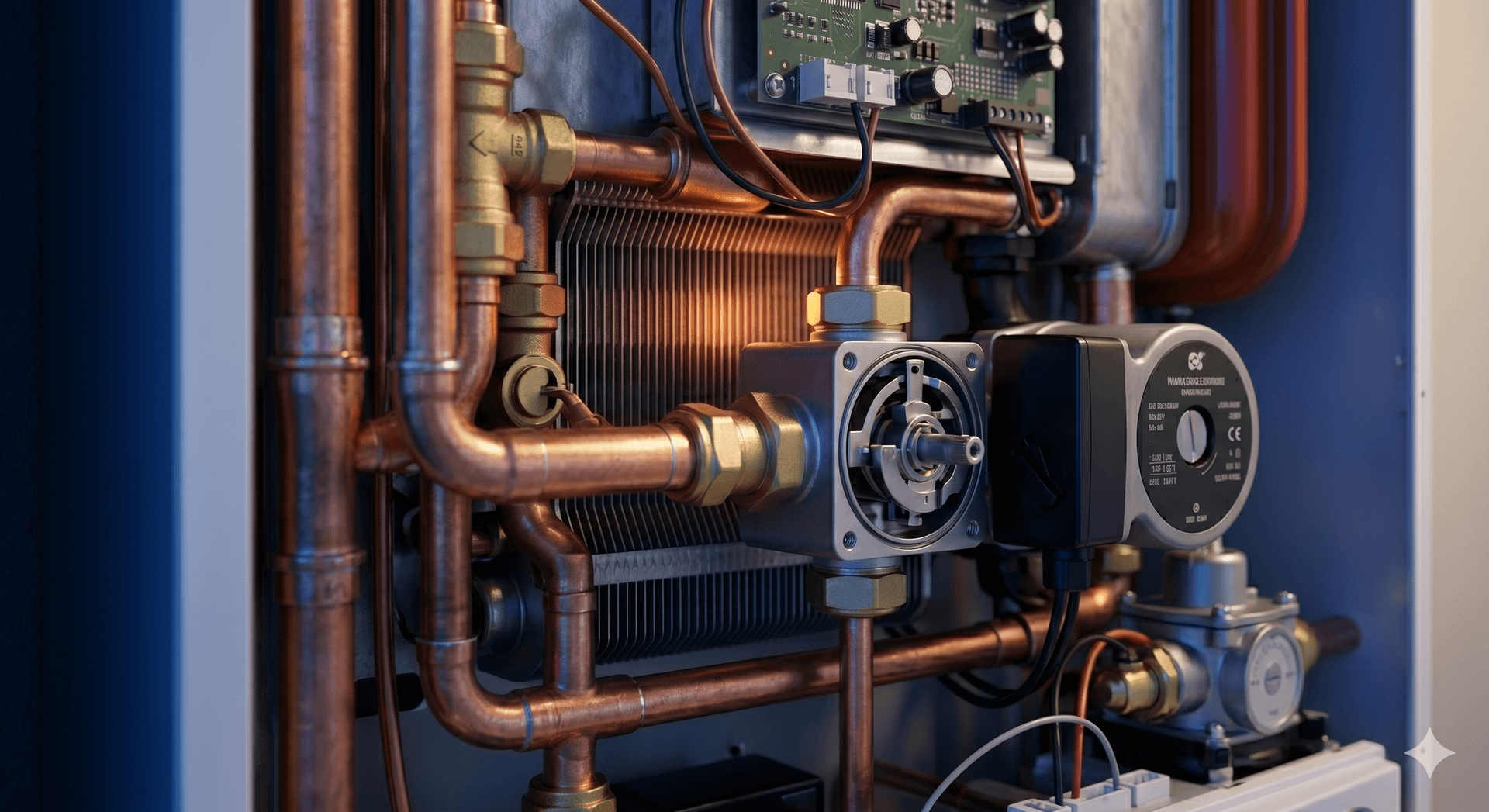
A combi boiler does two jobs from one compact box — central heating and instant hot water — yet most people never see inside one. Understanding how it works makes faults far easier to diagnose and helps you spot when something needs an engineer.
This guide walks through exactly how a combi boiler works, step by step, and explains the key parts that make it all happen. We repair combi boilers across Milton Keynes every week, so we'll keep it clear and practical.
A combi boiler works by heating water on demand. Cold water enters from the mains, the gas burner ignites, and a heat exchanger transfers the burner's heat into the water. A diverter valve then directs that hot water either to your hot taps or to your radiators, depending on what you've asked for. Because a combi stores no water, hot water is produced instantly whenever you open a tap.
How a Combi Boiler Heats Your Water: Step by Step
Here's the sequence of what happens inside a combi boiler the moment you turn on a hot tap:
- Cold water enters from the mains. When you open a hot tap, cold water flows into the boiler directly from your home's cold mains supply.
- A flow sensor detects demand. The boiler senses the water moving and knows it needs to produce hot water.
- The gas burner fires. The boiler ignites its gas burner to create heat.
- The heat exchanger transfers the heat. Cold water passes through the heat exchanger, which transfers the burner's heat into the water as it flows through.
- The diverter valve directs the water. The valve sends the freshly heated water towards your hot taps.
- Hot water reaches the tap. Within seconds, hot water flows out — heated entirely on demand, with nothing stored.
- The burner shuts off. When you close the tap, the flow stops, the sensor detects it, and the burner switches off.
For central heating, the process is similar — but the diverter valve sends the hot water around your radiator circuit instead, and a pump keeps it circulating through the house.
What Are the Key Parts of a Combi Boiler?
A handful of components do the heavy lifting. Knowing what each does makes boiler faults much easier to understand.
| Component | What It Does |
|---|---|
| Heat exchanger | Transfers heat from the burning gas into the water flowing through the boiler. |
| Diverter valve | Decides whether hot water goes to your taps or to your radiators — hot water takes priority. |
| Burner | Burns gas to produce the heat the boiler needs. |
| Pump | Circulates hot water around the radiator circuit to heat your home evenly. |
| Expansion vessel | Absorbs the pressure change as heated water expands, protecting the system from damage. |
| Pressure relief valve (PRV) | A safety valve that releases water if system pressure ever climbs too high. |
| Flow sensor | Detects when a hot tap is opened and tells the boiler to start heating. |
| Condensate trap | Collects the condensate produced by the boiler and drains it safely away. |
Why Hot Water Takes Priority Over Heating
A combi boiler can't heat your taps and radiators at exactly the same instant — the diverter valve has to choose. It's set to always prioritise hot water. So if your heating is on and someone runs a hot tap, the boiler briefly pauses the radiator circuit to deliver hot water, then switches back. You won't notice this in normal use; it happens within seconds.
This is also why a stuck diverter valve is one of the most common combi faults — and it produces a very recognisable symptom, which we cover in the FAQs below.
How a Combi Boiler Powers Your Heating
When you call for heat from your thermostat, the burner fires, the heat exchanger warms the water, and the diverter valve routes it to the radiator circuit. The pump pushes that hot water around your home, and as it gives up its heat through the radiators it returns to the boiler to be reheated — a continuous loop.
A combi can also run wet underfloor heating, though it usually needs a mixing valve or manifold to bring the water down to the lower temperature underfloor systems require. If you're considering it, our underfloor heating service can advise on whether your combi is suitable or whether a system boiler would pair better.
Common Combi Boiler Faults — and What They Tell You
Because you now know how the parts work together, faults make more sense:
- Heating works but no hot water (or vice versa) — almost always a stuck diverter valve, as it can no longer switch correctly between the two circuits.
- Pressure keeps dropping — often a small leak, or a failed expansion vessel that can no longer absorb pressure changes.
- Boiler short-cycles (fires up then quickly off) — can point to a faulty sensor, sludge restricting flow, or a pump problem.
- Water from the overflow outside — usually the pressure relief valve doing its job because pressure is too high.
All of these are everyday work for our boiler repair team across Milton Keynes — from newer combi-fitted estates like Broughton and Tattenhoe to older homes in Bletchley and Wolverton. Regular annual servicing catches most of these issues before they leave you without heating.
Is a Combi Boiler Right for Your MK Home?
Knowing how a combi works also explains its limits — sharing one heat exchanger and flow rate is why a combi struggles with multiple bathrooms. If that's your situation, our best boiler for a 3-bedroom house in Milton Keynes guide compares combi and system options for typical MK family homes.
Get Combi Boiler Help in Milton Keynes
Whether your combi has developed a fault or you're due a service, getting a Gas Safe engineer who knows these systems inside out makes all the difference.
Plumbline MK are Gas Safe registered and based right here in Milton Keynes. We diagnose and repair all combi boiler makes and models, with transparent pricing and no hidden charges.
Need expert help? Contact Plumbline MK for a free, no-obligation quote. Call 07805 844 016 for same-day response across Milton Keynes. You can also learn more about our team.
Frequently Asked Questions
Why is there no hot water but the heating still works?
This is the classic sign of a stuck diverter valve. The diverter valve directs hot water either to your taps or your radiators — when it seizes, it can get stuck on the heating circuit and stop sending hot water to your taps. It's a common combi fault and a straightforward repair for a Gas Safe engineer.
Why does my combi boiler keep losing pressure?
A combi boiler that repeatedly loses pressure usually has either a small leak somewhere in the system or a failed expansion vessel, which can no longer absorb the pressure changes as water heats and cools. Topping up the pressure is only a temporary fix — the underlying cause needs diagnosing by an engineer.
How hot does the water from a combi boiler get?
A combi boiler typically delivers hot water at around 50-60°C at the tap, with the central heating flow running hotter at roughly 60-75°C. The hot water temperature is usually adjustable on the boiler's controls — but it should stay hot enough to avoid bacteria risk while not being a scald hazard.
Can a combi boiler power underfloor heating?
Yes, a combi boiler can run wet underfloor heating, but it normally needs a mixing valve or manifold to reduce the water to the lower temperature underfloor systems use. For larger underfloor installations a system boiler often pairs better — our Milton Keynes team can advise on the right setup for your home.
Need Professional Advice?
Our Gas Safe registered engineers are ready to help with all your heating needs. Get a free, no-obligation quote today.