Best Boiler for a 3-Bed House in Milton Keynes
TL;DR
Most 3-bedroom houses in Milton Keynes suit a combi boiler in the 24 to 30kW range, provided there is one bathroom and decent mains flow. Two bathrooms used at the same time usually call for a system boiler with an unvented cylinder instead. Worcester Bosch Greenstar, Vaillant ecoTEC, Baxi 800 and Ideal Logic are all sound choices. The right answer comes from a survey that measures your mains flow and counts your radiators, not from the badge on the box.
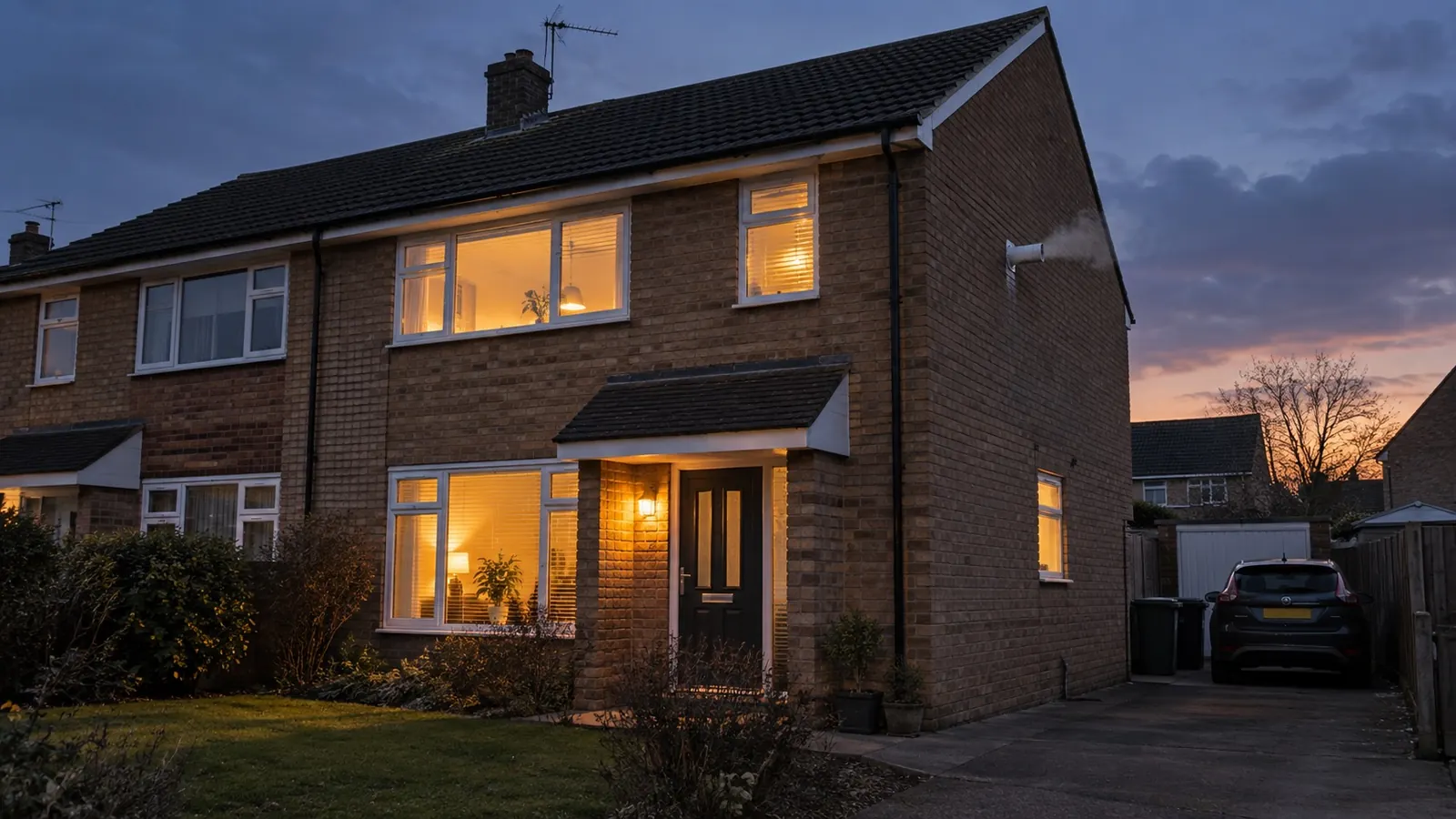
Three-bedroom houses are the backbone of Milton Keynes. A 1970s grid-square semi in Fishermead or Eaglestone, a 1980s estate house in Furzton, a Victorian terrace in Wolverton, a newer build out at Broughton or Tattenhoe. The heating demand of these homes is broadly similar, but the right boiler still comes down to a handful of specifics. Get it right and the house heats quietly and cheaply for fifteen years. Get it wrong and you live with a weak shower, a boiler that switches on and off all day, and parts wearing out early.
This is what we say to people who ring up and ask "what boiler should I get for a 3-bed?" It is short on jargon and long on the things that actually decide it.
What kW output does a 3-bed need?
A typical 3-bed semi or terrace in MK has eight to twelve radiators, and the heating side of the job is modest. What pushes a combi boiler up in size is hot water, because a combi heats the water on demand as it passes through. That is why you see 28kW and 30kW combis in houses whose radiators alone would be happy with far less.
- 3-bed, one bathroom, 8 to 10 radiators: a 24 to 25kW combi, or a system boiler in the high teens to low twenties.
- 3-bed, one bathroom, 10 to 12 radiators: a 28 to 30kW combi, or a 24kW system boiler.
- 3-bed with an en-suite as well as the family bathroom: a 30 to 32kW combi only if the mains flow is good, otherwise a system boiler with an unvented cylinder.
The common mistake is sizing up "to be safe". A 35kW combi in a small 3-bed is not safer. It short-cycles in mild weather because it cannot turn down low enough, it wastes gas doing so, and the diverter valve and circuit board take the strain. A correctly sized boiler runs longer, gentler cycles and lasts longer for it.
Combi or system boiler for a 3-bed?
For most 3-bed homes in MK with one bathroom, a combi is the right answer. There is no cylinder and no loft tank, so you get the airing cupboard back, the installation is simpler, and there is less to go wrong. If nobody in the house routinely runs two hot taps at the same time, a combi will not let you down.
The maths changes with a second bathroom. A combi can only make hot water as fast as it can heat it, so two showers running together means two weak showers. If you have an en-suite and a family bathroom and both get used in the same twenty minutes on a school morning, a system boiler feeding a 150 to 180 litre unvented cylinder is the better setup. The cylinder stores hot water at mains pressure, so both showers run properly at once. It costs more to install and takes a cupboard, and that trade-off is exactly what the survey visit is for.
One honest point: if you already have a system boiler and a cylinder that are working well, a salesperson will often push you towards a combi because it is the "modern" choice. In a 3-bed with two bathrooms, that is frequently a downgrade. Keep the cylinder.
Check your mains flow before you commit to a combi
Mains pressure across Milton Keynes is generally reasonable, but the newer estates on shared supplies, the BISF steel-framed houses in Bletchley and the older Wolverton and Stony Stratford terraces can all run lower, especially at teatime when the whole street is drawing water.
A combi is only as good as the cold water coming into it. Before anyone quotes you a combi, they should measure your incoming flow rate. It takes a bucket, a stopwatch and a minute at the kitchen tap. The figure they get is then compared with the hot water flow rate the manufacturer states for the model in question. If the mains cannot keep up, the combi will never deliver the shower on the brochure, and no amount of extra kW will fix it. If your installer has not measured it, ask why.
Hard water and a new boiler in MK
Milton Keynes is one of the hardest water areas Anglian Water serves. Limescale forms fast in a combi's plate heat exchanger, because that is where the hottest surface meets fresh mains water every time you run a tap. Over a few years scale narrows the passages, the hot water gets lukewarm and erratic, and the boiler works harder for less.
Two things help. First, a scale reducer or inhibitor on the cold feed to the boiler, which most manufacturers expect in a hard water area and some require for the warranty. Second, an annual service that includes the checks the manufacturer sets out.
Four boilers we would put in a 3-bed
All four of these are A-rated condensing boilers with a good record and parts that are easy to get. The differences are in build, modulation range and warranty.
- Worcester Bosch Greenstar 4000 (combi, 25 or 30kW): the default recommendation for a 3-bed combi. Quiet, straightforward to service, parts everywhere. As a Worcester Bosch Accredited Installer we can register it for up to a 12-year manufacturer warranty.
- Vaillant ecoTEC Plus (combi, 832 or 835): the premium option. Excellent build quality and a wide modulation range, so it sips gas when demand is low. As a Vaillant Advance installer we can register it for up to a 10-year warranty.
- Baxi 800 (combi, 830): British-built, compact and easy to live with. The 830 gives 30kW for hot water and a lower heating output, which is a good match for a 3-bed semi. We are a Baxi approved installer.
- Ideal Logic Max (combi, 30kW): the value pick. Simple, reliable in its current generation, and cheap to keep going. We are an Ideal approved installer. A sensible fit for a Bletchley or Wolverton terrace where the budget matters more than the badge.
How the housing stock changes the answer
- Broughton, Tattenhoe, Oxley Park and the newer estates: post-2000 builds are well insulated and often have an en-suite. Heat loss is low, so the heating side needs little, and the decision is almost entirely about hot water. Check the mains flow. If both showers matter, look at a system boiler and cylinder.
- The 1970s and 1980s grid squares (Fishermead, Netherfield, Furzton, Emerson Valley): the bulk of MK's 3-beds. Usually nine or ten radiators and a single bathroom, sometimes with a downstairs cloakroom. A 28 to 30kW combi is the classic fit. Many are still on the original microbore pipework, which the survey needs to look at because it affects flow rates and how well a new boiler can push water round.
- Older terraces in Wolverton, Bletchley, Stony Stratford and Newport Pagnell: solid walls and higher heat loss per square metre. A 28 to 30kW combi works, but budget for thermostatic radiator valves and a room thermostat if they are missing, because the boiler will otherwise run flat out to keep up.
- The stone villages (Olney, Hanslope, Sherington): thick walls and awkward flue runs, and sometimes no mains gas. The survey matters more here than anywhere.
Newport Pagnell and the Bletchley estates are where we fit the most 3-bed combis, and swapping an old open-vented boiler with a cylinder for a combi is one of the commonest jobs on our books. You lose the tank in the loft and gain a cupboard. See our Newport Pagnell page if that is you.
What a proper quote for a 3-bed is made of
We do not publish a price here because an honest one depends on what the survey finds. What we can tell you is what moves the figure, so you can compare quotes properly.
- The boiler itself: brand, output and warranty length. A premium brand with a longer warranty costs more up front.
- Like-for-like or a move: a boiler going back in the same spot is the simplest job. Moving it to a garage or a different wall adds pipework, flue and often a day.
- Conversion: going from a cylinder and tanks to a combi means removing the old kit, capping off, and often upgrading the gas supply pipe and the cold main.
- The flue: a short horizontal flue through the wall is standard. A vertical flue through the roof, or a long run with bends, is extra.
- System cleaning: a chemical flush at minimum, and a powerflush if the old system is sludged. In MK's hard water, an older system usually needs the proper flush.
- Protection: a magnetic filter, inhibitor, and a scale reducer on the cold feed. Most manufacturers require the filter for the warranty.
- Controls: we include a Hive smart thermostat with every new boiler install. TRVs on the radiators are a separate line if they are missing.
- Paperwork: commissioning to the Benchmark checklist, Building Regulations notification through Gas Safe, and the warranty registration. These should never be extras.
A quote that misses the flush, the filter or the notification is not cheaper. It is incomplete. Our boiler installation page sets out what we include as standard.
Get a survey, not a guess
If you want a boiler quote for a 3-bed in Milton Keynes, the useful thing we can do is come and look. We measure the mains flow, count and check the radiators, look at the pipework and the flue route, and then talk you through two or three options rather than one. If your existing boiler is worth keeping, we will say so. Get in touch and tell us the estate, the number of bathrooms and what the current boiler is, and we will take it from there.
Frequently asked questions
What kW boiler do I need for a 3-bedroom house? Most 3-beds in MK land between 24 and 30kW for a combi. One bathroom and ten radiators usually means 28 to 30kW. An en-suite pushes you to the top of that range or to a system boiler. Bigger is not safer; an oversized boiler short-cycles and wears out sooner.
Should I get a combi or a system boiler? One bathroom, combi. Two bathrooms used together, system boiler with an unvented cylinder. If you already have a good cylinder and two bathrooms, keep it.
Which brand is best for a 3-bed in Milton Keynes? There is no single best. Worcester Bosch is the safe all-rounder, Vaillant the premium build, Baxi and Ideal the value choices. All four are reliable when they are sized correctly, fitted properly and serviced every year. A well-fitted Ideal will outlast a badly fitted Vaillant.
Need Professional Advice?
Our Gas Safe registered engineers are ready to help with all your heating needs. Get a free, no-obligation quote today.