Boiler Losing Pressure: 7 Fixes for MK
TL;DR
A boiler losing pressure means water is leaving the sealed heating circuit somewhere. The seven most common causes in MK are a dripping pressure relief valve, a leak in the heating pipework, a failing expansion vessel (the silent killer), a faulty pressure sensor, a stuck auto-air vent, recently bled radiators, and microleaks at pipe joints. Expansion vessel repair is the most common engineer fix, usually £130-£220 in Milton Keynes.
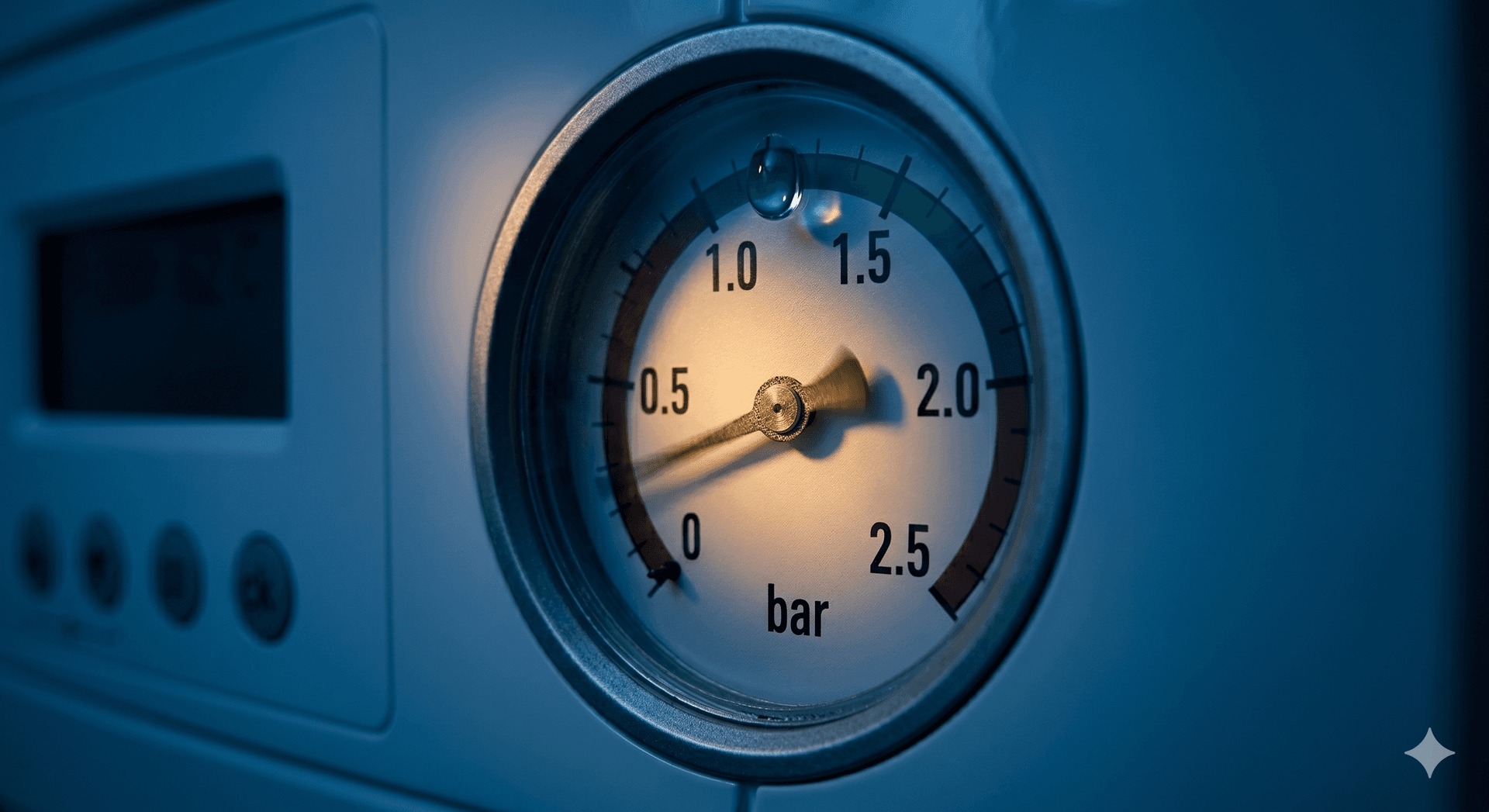
Boiler pressure loss is one of the calls we get most often across Milton Keynes — particularly in autumn when heating systems come back to life after a summer of being off. The phrase "my pressure keeps dropping" can mean anything from a five-minute fix you can do yourself, to a leak under the floorboards that needs a full callout.
This guide walks through the seven most common causes, ranked by how often we see them on the van. For each, we'll cover how to identify it, whether you can do anything yourself, and the typical cost in Milton Keynes if an engineer is needed.
First, How Much Pressure Loss Is Normal?
A healthy sealed system loses tiny amounts of pressure over weeks and months — that's normal as small amounts of air bleed out through the auto-air vent. What's not normal:
- Pressure dropping more than 0.3 bar in a week
- Pressure dropping every single day
- Boiler locking out on low pressure more than once a year
- Visible drips, damp patches, or staining anywhere near pipes or radiators
If any of those apply, you've got a problem worth investigating. Here are the seven causes in order of frequency.
The 7 Causes: At a Glance
| Cause | Symptom | How to Diagnose | Fix | MK Cost |
|---|---|---|---|---|
| 1. Failing expansion vessel | Pressure spikes high when hot, drops low when cold | Engineer pressure-test the vessel | Re-pressurise vessel or replace | £130 - £220 |
| 2. Pressure relief valve dripping | Water on driveway from external white pipe | Look outside under PRV pipe | Replace PRV (and often expansion vessel) | £140 - £260 |
| 3. Leak in heating pipework | Damp patches, staining, water under radiator | Visual inspection, thermal camera | Repair or replace pipe section | £150 - £450 |
| 4. Microleak at joint or valve | Slow daily pressure loss, no visible damp | Pressure-test and inspect joints | Tighten or remake joint | £90 - £180 |
| 5. Faulty pressure sensor | Gauge reads low but no actual loss | Compare digital and analogue readings | Replace sensor | £120 - £190 |
| 6. Auto-air vent stuck open | Wet patch near boiler air vent | Visual inspection at top of boiler | Replace AAV | £100 - £170 |
| 7. Recently bled radiators | One-off pressure drop after bleeding | Match drop to recent bleeding work | Top up via filling loop | DIY (free) |
1. Failing Expansion Vessel (Most Common)
The expansion vessel is a small sealed tank inside your boiler with a rubber diaphragm and a charge of air on one side. When water heats up and expands, the vessel absorbs the extra volume. After 7-10 years, the rubber diaphragm starts to leak, the air charge escapes, and the vessel can no longer absorb expansion — so pressure spikes when hot and water gets dumped via the pressure relief valve.
How to spot it: Watch your pressure gauge over a full heating cycle. If pressure climbs above 2.5 bar when the radiators are fully hot, then drops to 0.8 bar or lower when everything cools down — classic failing vessel.
DIY fix: None. The vessel sits behind the boiler casing — this is gas-safe-only work. A competent engineer can either re-charge the vessel (cheaper, short-term fix) or replace it (proper repair). In Milton Keynes typical cost £130-£220.
2. Pressure Relief Valve (PRV) Dripping
If the expansion vessel has already failed, or the PRV itself is worn, water gets dumped out of an external white plastic pipe sticking out of the wall. This is usually below the boiler on an external wall — often above a flowerbed or driveway.
How to spot it: Walk outside and find the external PRV discharge pipe. Look for water dripping, a wet patch underneath, or in winter, an icicle hanging off it.
DIY fix: None — PRV replacement involves draining and isolating the boiler. Worth knowing: the underlying cause is almost always a failed expansion vessel, so the engineer will usually replace both. MK typical cost £140-£260.
3. Leak in the Heating Pipework
Active leaks in pipework happen most often at:
- Radiator valve unions (where pipe meets valve)
- Compression joints under floorboards
- Towel rail connections in bathrooms
- Older copper pipe runs that have suffered corrosion
How to spot it: Check under every radiator and TRV for staining, drips or rust marks. Look for damp patches on ceilings below upstairs radiators. Lift loose floorboards if accessible. Check the boiler itself — water inside the casing or on the floor underneath is a sign.
DIY fix: A loose radiator valve nut can sometimes be tightened gently with a spanner — but only if you're confident. For anything else, especially under floors or in walls, call an engineer with leak-detection equipment. MK cost £150-£450 depending on access.
4. Microleak at Joint or Valve
Pinhole-sized leaks at compression joints can lose pressure without any visible water — the drip is so small it evaporates before it pools. These are the hardest to find and most common in homes 10+ years old.
How to spot it: Lay clean kitchen roll under suspect joints for 24 hours and check for damp marks. Or invite an engineer to do a sealed-system pressure test.
DIY fix: None reliably. Some hardware shops sell "leak sealer" liquids that get added to the system — these can work as a stopgap but mask the underlying issue and gum up the boiler if overused. MK proper-fix cost £90-£180.
5. Faulty Pressure Sensor
The pressure gauge on the front of the boiler is driven by a sensor inside. After many years (or after limescale build-up in hard water areas of MK), the sensor can give false low readings even though actual pressure is fine.
How to spot it: The boiler locks out on low pressure, you check via an independent test gauge, and pressure is actually 1.2 bar. Or the gauge needle is stuck or twitchy.
DIY fix: None — the sensor is integral to the boiler. MK cost £120-£190.
6. Auto-Air Vent Stuck Open
The auto-air vent (AAV) on top of the boiler releases air automatically. If it sticks open, it slowly lets water out as a fine spray or drip.
How to spot it: Damp marks on top of the boiler or down the back of the casing. A persistent slow drip from the upper boiler housing.
DIY fix: None safely — replacing it involves removing the boiler casing, which voids warranty if you're not Gas Safe registered. MK cost £100-£170.
7. Recently Bled Radiators
This is the only "cause" you don't need to fix — you just need to top up. Bleeding releases air, and pressure drops to compensate. If you bled 3 radiators yesterday and the gauge is now reading 0.6 bar, that's expected. Top up via the filling loop and you're done.
How to fix: Use our repressurise your boiler guide to top up to 1.2 bar. If pressure stays put for the next few days, you're sorted.
How to Find a Hidden Leak Yourself
- Walk every radiator and check under each valve. Use a torch and dry kitchen roll to wipe joints — any moisture transferring means a slow weep.
- Check ceilings below upstairs radiators for stains, discoloration or bulging plaster.
- Lift loose floorboards near radiator connections if you can do so safely.
- Look at the external PRV pipe on the outside of your house.
- Inspect the boiler casing for visible water, rust or limescale tracks.
- Lay kitchen roll under joints for 24 hours to catch slow weeps.
- If nothing found, book an engineer with leak detection equipment.
Is Boiler Pressure Loss Dangerous?
Pressure loss itself isn't dangerous in the immediate sense — your boiler will lock out and refuse to fire long before anything catastrophic happens. However, two scenarios do matter:
- Hidden water damage: A slow leak under floorboards can rot joists, damage ceilings, and cause £1,000s of secondary damage long before you notice.
- Repeatedly topping up: Every time you add mains water, you bring in fresh oxygen and limescale, which accelerates corrosion and sludge build-up. After a year of weekly top-ups, the radiators are clogged with sludge and the boiler heat exchanger is calcified. Common in Newport Pagnell and parts of Bletchley where mains water hardness is higher.
You should never have to top up your boiler more than 2-3 times a year. If you do, get the cause diagnosed.
When to Call a Gas Safe Engineer
- You've topped up more than twice in a month
- Pressure drops below 0.5 bar repeatedly
- You can see water under or near the boiler
- The external PRV pipe is dripping
- You suspect a leak but can't locate it
- The boiler is over 8 years old and pressure is dropping daily (likely expansion vessel)
Plumbline MK are Gas Safe registered and cover all Milton Keynes postcodes for diagnostics, expansion vessel work, leak detection and repair. We give a fixed-price quote before any work begins. Annual boiler servicing usually catches expansion vessel and PRV issues before they leave you in the cold. For urgent breakdowns see our emergency plumbing page or our walkthrough on what to do when your boiler breaks down.
Need expert help? Contact Plumbline MK for a free, no-obligation quote. Call 07805 844 016 for same-day response across Milton Keynes and surrounding areas.
Frequently Asked Questions
Is a boiler losing pressure dangerous?
Pressure loss itself won't cause an explosion or gas hazard — the boiler will lock out long before anything serious happens. The real risks are secondary: hidden water leaks rotting floors and ceilings, and repeatedly topping up bringing in fresh oxygen and limescale that accelerates corrosion of the heat exchanger and radiators. Get the cause diagnosed rather than topping up indefinitely.
How much pressure loss in a week is normal?
Almost none. A healthy sealed heating system should hold pressure within 0.1-0.2 bar over a full week. Drops of 0.3 bar or more per week indicate water is leaving the system somewhere and the cause should be investigated. Drops of 0.5 bar or more per day usually mean an active leak or a failed expansion vessel.
Can I just keep topping up my boiler indefinitely?
No. Every top-up introduces fresh oxygenated mains water into the heating system, which speeds up internal corrosion, builds sludge in radiators, and calcifies the boiler heat exchanger — especially in hard water areas of MK. After 12 months of weekly top-ups, you'll likely need a power flush and may have shortened your boiler's life by years. Always diagnose and fix the underlying cause.
How do I find a heating leak myself?
Check under every radiator valve with a dry cloth, inspect ceilings below upstairs radiators, look at the external pressure relief pipe outside your house, and lay clean kitchen roll under suspect joints for 24 hours to catch slow weeps. If nothing visible, you likely have a hidden leak under floorboards or behind plaster and need an engineer with leak-detection gear.
How long does an expansion vessel last?
Typically 7-10 years. The rubber diaphragm inside slowly perishes, the air charge leaks out, and the vessel stops absorbing expansion — which manifests as pressure climbing too high when hot and dropping too low when cold. It's the single most common cause of "boiler losing pressure" calls in Milton Keynes. Catching it during a routine service is much cheaper than a breakdown callout.
Need Professional Advice?
Our Gas Safe registered engineers are ready to help with all your heating needs. Get a free, no-obligation quote today.