How to Unblock a Bath: Step-by-Step
TL;DR
Block the overflow with a wet cloth before you plunge - without that, the pressure escapes and plunging does nothing. Most bath blockages are hair bound together with soap scum sitting just below the waste, and a plastic drain claw pulls them out in seconds. Hot water and washing-up liquid first will loosen the soap holding it together.
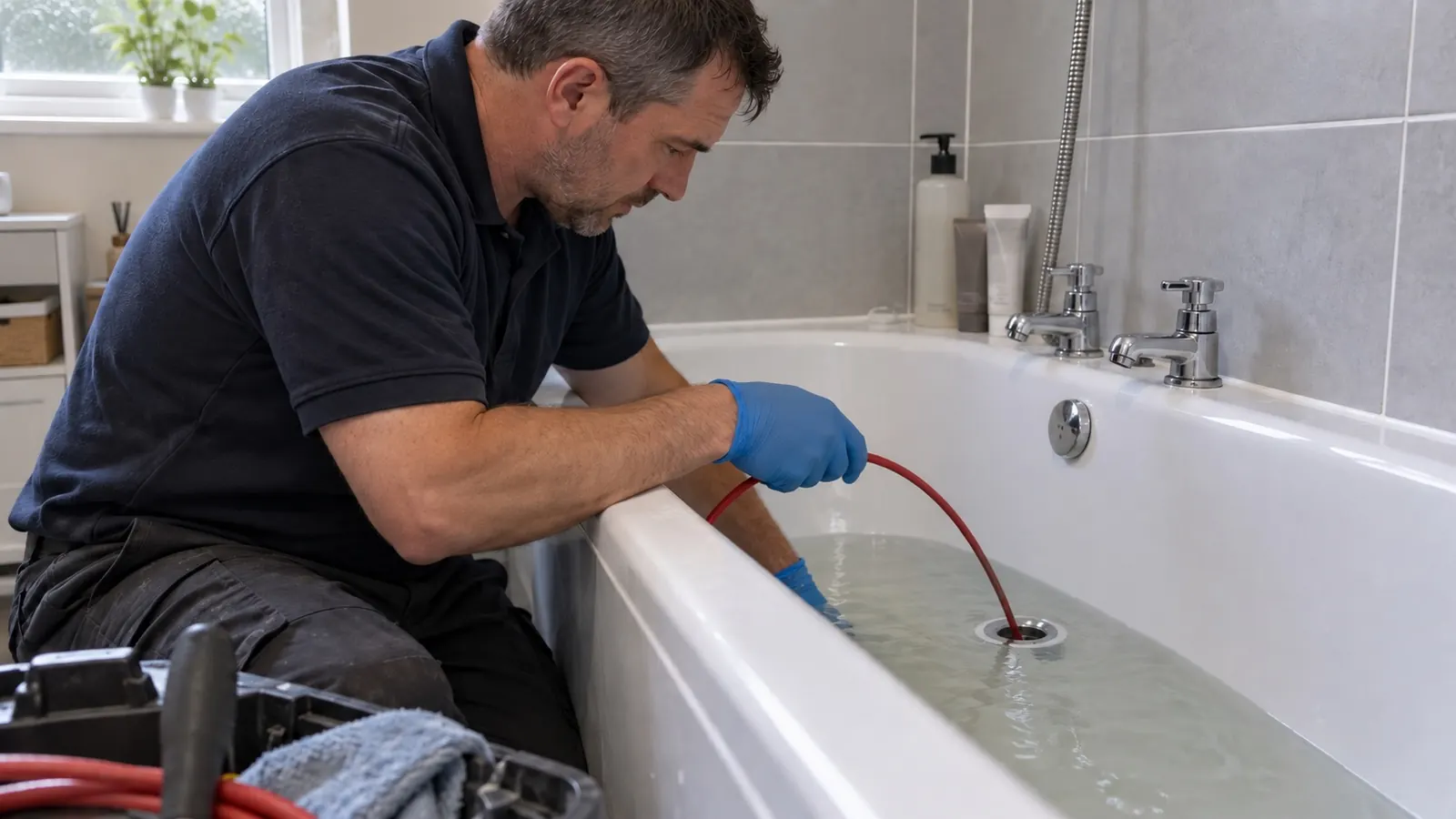
A bath that empties slowly rarely blocks suddenly. It creeps - a little slower each month - until one day the water is still sitting there twenty minutes after you pulled the plug.
The cause is nearly always the same: hair, bound together and stuck in place by soap scum, sitting in or just below the waste fitting. It is unpleasant but genuinely simple to clear, and you can usually do it without taking anything apart.
Step 1: Hot Water and Washing-Up Liquid
Soap scum is what holds a hair blockage together, and it softens with heat and detergent.
Squeeze washing-up liquid down the plughole, leave it five minutes, then pour a kettle of hot water down slowly. Use hot rather than fiercely boiling water - bath wastes are plastic, and repeated boiling water softens the joints.
If the bath is currently full of standing water, bail most of it out first, or the hot water will simply dilute into it and cool before it reaches the blockage.
Step 2: Plunge It - With the Overflow Blocked
This is the step people get wrong, and it is the difference between plunging working and plunging achieving nothing at all.
Every bath has an overflow - the chrome plate at the end below the taps - and it connects to the same waste pipe below. When you push down on a plunger, the pressure takes the easiest available path, and that path is straight out of the overflow.
The method
- Stuff a wet cloth firmly into the overflow opening. Press it in properly - a loose cloth will not seal.
- Leave a few centimetres of water in the bath, enough to cover the plunger cup.
- Use a flat cup plunger, seal it over the plughole, and plunge with firm, steady strokes for about twenty seconds.
- Pull away sharply at the end to break the seal.
Repeat two or three times. If the water starts to move, keep going - partial progress usually becomes full clearance.
Step 3: Use a Drain Claw
If plunging has not done it, this almost certainly will, and it is the most satisfying and least pleasant part of the job.
A drain claw is a long, thin plastic strip with barbs along both edges. They cost very little and are sold specifically for this. Feed it down through the plughole as far as it will go, twist it, and pull it back out slowly.
What comes out will be worse than you expect. Have a bin bag ready.
If your bath has a pop-up waste operated by a lever, you may need to remove the stopper first - most unscrew or lift and twist out. Some are held by a small screw under the plate.
Repeat until the claw comes back clean. Then run the hot tap for a minute to flush the loosened residue through.
Step 4: Clean the Trap
If the claw comes back clean and the bath still drains slowly, the blockage is further along, in the trap itself.
Bath traps are harder to reach than sink traps - they usually sit under the bath, accessible through a side panel or an access hatch. If your bath is boxed in with no panel, this becomes a job that may need the panel cutting or removing, at which point calling someone is reasonable.
If you can reach it, the process is the same as for any trap: bowl underneath, unscrew the collars by hand, clean it out, reassemble hand-tight with the washers seated flat. Our sink unblocking guide covers the detail of removing and refitting a trap without causing a leak.
What Not to Use
Caustic drain cleaners are a poor choice for a bath. They are diluted by any standing water, they can damage the plastic waste and the trap seals, and if they do not work, whoever opens that trap next is dealing with caustic solution.
They are also ineffective against hair specifically - hair is protein, and the products aimed at fat do relatively little to it. A mechanical tool works better and costs less.
An enzyme drain maintainer used monthly is a sensible preventive measure once the bath is running freely again. The Chartered Institute of Plumbing and Heating Engineering has useful guidance on looking after domestic waste systems.
If the Bath and Other Fittings Are Both Slow
If the basin, shower or toilet are also draining slowly, or if the bath gurgles when another fitting is used, the restriction is in the shared waste rather than the bath. Working on the bath trap will not help. Check the outside drain first.
Water rising in the bath or shower tray when the toilet is flushed is a particularly clear sign - it means the blockage is downstream of both, and it needs dealing with promptly before it backs up further.
Stopping It Coming Back
- Fit a hair catcher over the plughole. It is the single most effective thing you can do, and it takes seconds to empty into a bin.
- Run the hot tap for thirty seconds after a bath or shower to carry soap residue past the trap while it is still warm.
- Use an enzyme maintainer monthly rather than waiting for a blockage.
- Brush hair before showering rather than after - a surprising amount of loose hair comes out dry.
- Do not ignore slow drainage. It is the early stage of a blockage and takes five minutes to fix now.
Soap-based products contribute more scum than shower gels, and in a hard water area they produce noticeably more residue because the soap reacts with dissolved minerals - Anglian Water publishes local hardness data. If your bath blocks repeatedly, that combination is often why.
Frequently Asked Questions
Why does my bath drain slowly but not block completely?
Because the blockage is partial - a layer of hair and scum has narrowed the pipe without closing it. It will keep getting worse. Clearing it at this stage is far easier than waiting.
Can I use a plunger on a shower tray as well?
Yes, and the same principle applies. Shower trays have shallower traps, which block more readily but are usually easier to reach. There is no overflow to block on most trays, which makes plunging more effective straight away.
Why does my bath smell as well as drain slowly?
The same hair and soap layer holds bacteria. Clearing the blockage generally clears the smell. If it lingers afterwards, look at whether the trap is holding water - our guide to smelly drains covers dry traps and failed seals.
Is it worth using a drain snake instead of a claw?
For hair, a claw is better - the barbs grip and pull it out. A snake tends to push through the middle of a hair blockage without removing it, so the bath drains for a few days and then slows again.
If It Is Still Slow
If the plughole is clear, the claw comes back clean and the bath still will not empty properly, the restriction is in the trap or the waste run beyond it - and on a boxed-in bath that often means getting access first. We cover Milton Keynes and the surrounding area for blocked wastes and plumbing repairs. Get in touch and let us know what you have tried.
Need Professional Advice?
Our Gas Safe registered engineers are ready to help with all your heating needs. Get a free, no-obligation quote today.