How to Read a Water Meter
TL;DR
Read only the black digits — the red ones are fractions of a cubic metre and are not billed. To test for a hidden leak, turn off every tap and appliance, note the reading, wait an hour without using any water, then read it again. If it has moved, water is escaping somewhere between the meter and your taps.
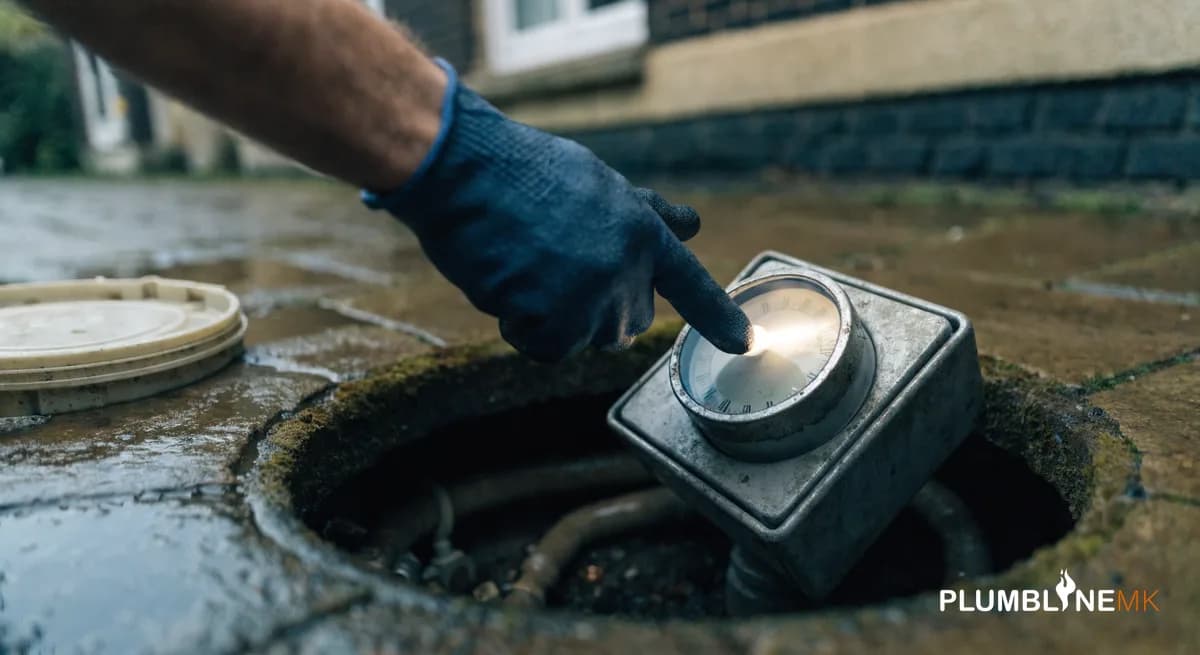
Most people never look at their water meter until a bill arrives that does not look right. It is worth knowing how to read one anyway, because the meter is also the single most reliable leak detector you own — and it will find a leak long before a damp patch appears.
Finding the Meter
British water meters sit in one of three places:
- Outside, in a small chamber at the boundary of the property, usually under a round or rectangular plastic lid set into the path or grass verge. This is the most common location.
- Inside, near the internal stopcock — often under the kitchen sink or in a downstairs cupboard.
- In a shared chamber for flats, with several meters together and each labelled by property.
Outside chambers usually need a screwdriver or a meter key to lift the lid. They fill with soil, leaves and occasionally water, so a torch and something to scoop with are useful. If yours is flooded, a turkey baster or a small cup will clear enough to see the dial.
Reading the Dial
Modern meters show a row of digits, and the important thing is which ones you actually need.
- Black or white digits on a dark background: whole cubic metres. This is what you are billed for.
- Red digits, or digits after a decimal point: fractions of a cubic metre — hundreds and tens of litres. Not billed, but essential for leak testing.
One cubic metre is 1,000 litres. When you give a reading to your supplier, quote only the black figures, including any leading zeros.
Dial meters
Older meters have several small circular dials instead of a digital row. Read them left to right, and where a pointer sits between two numbers, take the lower one. These are less common now but still in service.
Smart meters
Some newer meters transmit readings automatically and may only show a display when you press a button or wave a hand over the face. The reading principle is the same.
Using the Meter to Find a Hidden Leak
This is the genuinely useful part, and it costs nothing.
- Turn off every tap in the house. Make sure the washing machine and dishwasher are not mid-cycle, and nobody is about to use a toilet.
- Check that any automatic system — a water softener regenerating, or a garden irrigation timer — is not about to run.
- Go to the meter and write down the full reading, including the red digits. Photograph it if that is easier.
- Leave the property untouched for at least an hour. Two is better. Overnight is best of all.
- Read it again.
If the reading has moved and nobody has used water, you have a leak. There is no other explanation — the meter only turns when water passes through it.
Narrowing down where
Repeat the test with the internal stopcock closed. If the meter still creeps, the leak is between the meter and the stopcock — usually the underground supply pipe, which in most cases is the homeowner's responsibility from the boundary inward. If it stops, the leak is inside the house.
Our guide to finding a water leak covers narrowing it down room by room from there, and where to find your stopcock if you are not sure.
The Usual Culprits
When a meter creeps and nothing is visibly wet, the cause is almost always one of these:
- A leaking toilet. By far the most common. Water passes silently from the cistern into the pan and straight down the drain. See our guide to a toilet that keeps running.
- A dripping tap, particularly one in a rarely used bathroom.
- An underground supply pipe leak — no visible sign at all unless the ground stays unusually green or soft.
- A leaking outside tap or an irrigation system.
- A failing shower valve weeping into the tray.
Reading for Billing
If you are submitting a reading rather than leak testing:
- Quote only the black digits, with leading zeros.
- Photograph the meter face as a record.
- Submit on a consistent day each period so consumption comparisons make sense.
- Read it on the day you move into or out of a property, so you are not billed for someone else's water.
Water quality and supply standards are overseen by the Drinking Water Inspectorate, and water companies operate guaranteed standards that require them to investigate a reading which jumps unexpectedly. Water UK publishes guidance on metering and what suppliers must provide, and your own supplier can tell you whether a leak allowance applies to your account.
Frequently Asked Questions
My meter moves very slightly overnight. Is that a leak?
Any movement with no water use is water escaping. A very small amount could be a slowly weeping tap or a toilet leaking intermittently. It is still worth finding — small leaks rarely stay small.
Who is responsible for a leak on the supply pipe?
Generally the water company up to the boundary, and the property owner from the boundary into the house. Many suppliers offer a free or subsidised repair scheme for a first supply-pipe leak, so it is worth asking before paying for the work.
Can I get a refund if a leak inflated my bill?
Often yes. Most suppliers operate a leak allowance that adjusts the bill once the leak is repaired, usually on the condition that you fix it promptly and provide evidence. Contact them before assuming you have to pay it.
The meter chamber is full of water. What does that mean?
Usually rainwater rather than a leak — chambers are not sealed. If the water is clear, constantly present in dry weather and the meter is also creeping, that is a different matter and worth reporting.
If the Meter Says You Have a Leak
A creeping meter with no visible damp usually means the leak is underground or under a floor, and finding it needs proper detection equipment rather than lifting floorboards at random. We cover Milton Keynes and the surrounding area for leak detection and plumbing repairs. Get in touch and tell us what the meter did over an hour with everything off.
Need Professional Advice?
Our Gas Safe registered engineers are ready to help with all your heating needs. Get a free, no-obligation quote today.