How to Find a Water Leak at Home
TL;DR
Confirm it first with the meter: everything off, note the reading, wait an hour, read again. Then halve the problem - close the internal stopcock and repeat. If the meter still moves, the leak is on the underground supply pipe. If it stops, work through the house isolating one fitting at a time until the movement stops.
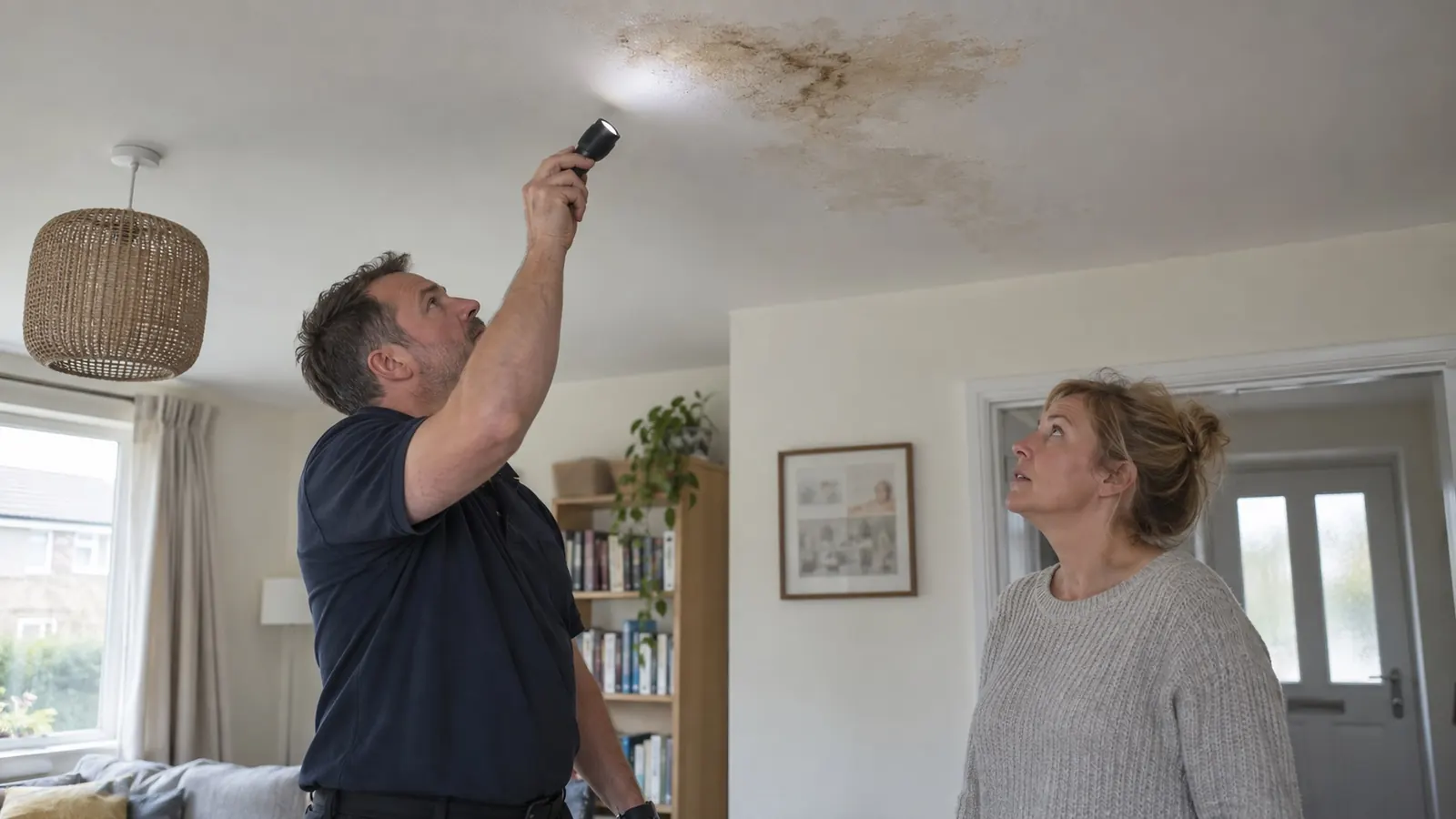
A leak you can see is a plumbing job. A leak you cannot see is a detective job, and doing it in the right order saves lifting floors that did not need lifting.
This is the sequence, from confirming there is a leak at all to narrowing it to a single fitting.
Step 1: Confirm It With the Meter
Before anything else, establish that water really is escaping.
- Turn off every tap and appliance. Check nothing is mid-cycle and no automatic system is due to run.
- Read the meter, including the red fraction digits, and photograph it.
- Wait an hour - longer is better - without using any water.
- Read it again.
Movement with no use means water is escaping. Our guide to reading a water meter covers the detail.
Step 2: Inside or Outside?
This single test halves the search area.
Close the internal stopcock and repeat the meter test.
- Meter still moves: the leak is between the meter and the stopcock - the underground supply pipe. That needs leak detection equipment rather than DIY, and many water companies offer a free or subsidised first repair, so contact them before paying for work.
- Meter stops: the leak is inside the house. Continue below.
Step 3: Rule Out the Obvious Suspects
Before hunting for hidden pipework, check the things that leak silently and account for most cases.
- Toilets. The single most common hidden leak. Put food colouring in each cistern and wait thirty minutes without flushing - colour in the pan means it is passing water. See a toilet that keeps running.
- Taps, especially in a rarely used bathroom or an outside tap.
- The shower valve, weeping into the tray where it is invisible.
- The overflow pipe outside - a trickle means a float valve is not shutting off, in either a cistern or the loft tank.
- Appliance hoses behind the washing machine and dishwasher.
Step 4: Isolate Section by Section
If nothing obvious shows up, use the isolation valves to divide and conquer.
Close the valves on one fitting at a time - or one floor if there is a valve for it - and repeat the meter test after each. When the meter stops moving, the leak is on whatever you just isolated.
This is slow, because each test needs an hour, but it is far cheaper than exploratory lifting of floors.
Step 5: Look for the Physical Signs
While you wait between tests, go looking:
- Ceiling stains. Remember water travels along joists, so the stain marks where it dripped, not where it leaked.
- Warm patches on the floor. A leak on a hot pipe under a solid floor sometimes shows as a warm area.
- Musty smell in a cupboard or under a bath.
- Blistering paint or lifting flooring near pipe runs.
- Unusually green or soft ground along the line of the supply pipe outside.
- Sound. At night with everything off, a hiss or a trickle in a quiet house is worth following.
Heating Leaks Are Different
A sealed heating system does not pass through the water meter, so a heating leak will not show on it. The symptom is different: boiler pressure that keeps dropping.
If you are topping the system up more than once or twice a year, there is a leak on the heating circuit - often a radiator valve, a towel rail, or pipework under a floor. Our guides to repressurising a boiler and a boiler that keeps losing pressure cover that side.
When to Stop and Call Someone
Bring in help when:
- The meter test points to the underground supply pipe.
- You have isolated it to a section but the pipework is buried in a wall or under a solid floor.
- Water is affecting electrics or a ceiling is bulging.
- The leak is significant enough that leaving it while you test is causing damage.
Your supplier may help trace a leak on the supply pipe - for this area, Anglian Water. Professional detection uses acoustic equipment, thermal imaging and tracer gas to pinpoint a leak without opening up the building. That is almost always cheaper than lifting a floor in the wrong place.
Insurance
Most buildings policies cover damage caused by escape of water, and many also cover trace and access - the cost of finding the leak and making good afterwards. Check before you start opening anything up, because policies often require the insurer to be involved first.
Suppliers may also apply a leak allowance to adjust a bill inflated by a leak once it is repaired. Water UK publishes guidance on what customers can expect.
Frequently Asked Questions
How much water does a small leak waste?
A weeping joint can pass several hundred litres a week without ever showing as a puddle. That is why the meter finds leaks long before you see damp.
Can I find a leak without a meter?
It is much harder. On an unmetered supply, look for the physical signs and use the isolation-valve method with a listening approach instead, or ask your supplier - some will fit a temporary meter to help.
Why is my boiler pressure dropping but the meter is not moving?
Because the sealed heating system is a separate circuit that does not pass through the meter. That is a heating leak, not a supply leak.
Is a slow leak urgent?
More than it feels. Slow leaks cause the expensive damage precisely because they run for months unnoticed - rotting joists and saturating plaster while nothing visible happens.
If You Cannot Trace It
A confirmed leak with no visible source usually means buried pipework, and finding it properly needs detection equipment rather than guesswork. We cover Milton Keynes and the surrounding area for leak detection and plumbing repairs. Get in touch and tell us what the meter did with the stopcock closed - that alone tells us which side of the house to look at.
Need Professional Advice?
Our Gas Safe registered engineers are ready to help with all your heating needs. Get a free, no-obligation quote today.