Toilet Keeps Running? Five Common Causes
TL;DR
Take the cistern lid off and look. If water is flowing over the top of the overflow pipe, the fill valve is not shutting off — adjust or replace it. If the water level is below the overflow but still draining into the pan, the flush valve seal has failed. A few drops of food colouring in the cistern will confirm which, without touching anything.
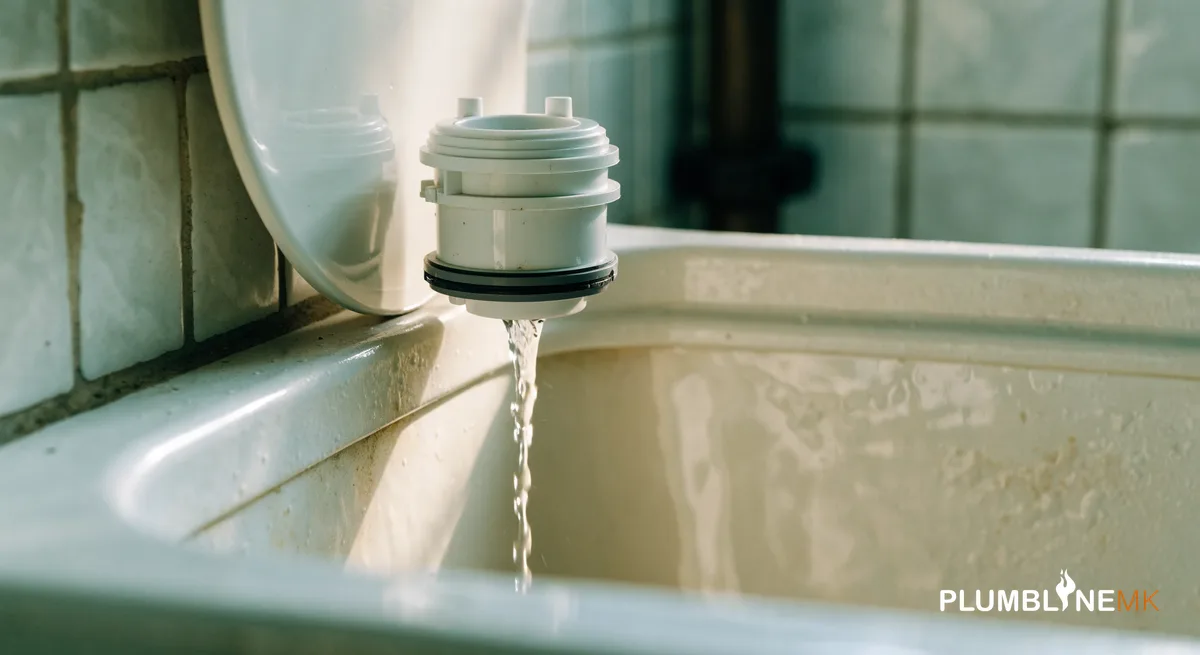
A running toilet is the most expensive plumbing fault in most homes, and the easiest to ignore because nothing visibly goes wrong. A cistern leaking continuously into the pan can waste several hundred litres a day — the equivalent of leaving a tap running around the clock.
There are only five real causes, and a two-minute test will tell you which one you have.
The Test That Identifies It
Take the cistern lid off and set it somewhere safe — they are heavy and chip easily. Now look at where the water is going.
- Water flowing into the overflow pipe: the fill valve is not shutting off. Causes 1 and 2 below.
- Water level sitting below the overflow, but you can hear or see water trickling into the pan: the flush valve is leaking. Causes 3 and 4.
If you cannot see it clearly, put a few drops of food colouring into the cistern and leave it half an hour without flushing. Colour appearing in the pan means the flush valve is passing water. No colour means the problem is on the fill side.
Cause 1: The Float Is Set Too High
The fill valve stops when the float reaches its set point. If that point is above the overflow, the cistern can never stop filling — it just runs into the overflow indefinitely.
This is common after someone has adjusted the level to improve a weak flush and gone slightly too far.
Fix: lower the float. On a float-arm cistern, bend the arm gently downward or turn the adjustment screw where it meets the valve. On a modern float-cup design, squeeze the clip on the side and slide it down the rod. Aim for the water sitting about 25mm below the top of the overflow.
Cause 2: A Worn Fill Valve
If the float is correctly set and the valve still will not shut off cleanly, the valve itself has worn. The diaphragm or seal inside has hardened, and it no longer closes fully against the water pressure.
The symptom is often a hissing that never quite stops, or a cistern that refills briefly every few minutes without anyone using it.
Fix: some valves take a replacement diaphragm; on many modern ones it is easier and barely more expensive to fit a whole new fill valve. Isolate the water at the small valve on the supply pipe first, then flush to empty the cistern.
In hard water areas fill valves scale up and fail sooner than they otherwise would — Anglian Water publishes hardness figures by postcode — which is worth knowing if yours has not lasted as long as you expected.
Cause 3: A Failed Flush Valve Seal
This is the most common cause overall, and the most wasteful, because the water goes straight down the pan rather than into an overflow you might notice.
The flush valve sits at the bottom of the cistern with a large rubber seal. Over time that seal hardens, distorts, or picks up grit and limescale, and it stops sitting flat. Water then passes continuously.
Fix: isolate and drain the cistern, lift the valve out — most twist and release — and inspect the seal. Often it simply needs cleaning: run a finger round it and remove any grit or scale, and check the seat it lands on is clean too. If the rubber is hard, cracked or visibly deformed, replace it. Take the old one with you, as sizes vary.
Cause 4: A Dual-Flush Button Not Returning
Dual-flush cisterns leak far more often than single-flush ones, simply because there are more moving parts and a larger seal.
A very common cause is mechanical rather than worn: the push rods connecting the buttons to the valve are misaligned or slightly too long, so the valve never fully closes after a flush. The toilet then trickles until someone presses the button again.
Fix: press each button and watch the valve. If it does not drop fully back down, adjust the rod length — most are threaded for exactly this. Check the button assembly is not sitting proud or catching on the flush plate.
Water UK has highlighted leaking loos as one of the single largest sources of wasted water in British homes, and dual-flush cisterns are disproportionately represented.
Cause 5: A Warped or Damaged Overflow
Less common, but worth checking if nothing else fits. Internal overflow pipes can crack or work loose at the base, letting water escape into the pan below the level you would expect.
Look for a hairline split along the overflow tube, or movement where it joins the flush valve body. Replacement is usually part of replacing the flush valve assembly.
How Much It Is Costing You
A continuously running toilet passes somewhere between 200 and 400 litres a day depending on the fault. On a metered supply that adds up quickly, and it is entirely avoidable for the cost of a rubber seal.
If you are on a meter and suspect a leak but cannot see it, our guide to reading a water meter explains how to confirm it: turn everything off, note the reading, wait an hour, and check whether it has moved.
Frequently Asked Questions
Why does my toilet run for a while after flushing then stop?
That is normal — the cistern is refilling. It should stop within about a minute. Anything longer, or a refill that starts on its own when nobody has flushed, is a fault.
Can a running toilet cause damp or damage?
Not usually, because the water goes into the pan and away. The cost is on the bill rather than the building. The exception is a cistern overflowing externally, which older properties sometimes route through an outside wall.
Is it worth replacing the whole cistern mechanism?
Often yes. If the fill valve and flush valve are both original and more than about ten years old, replacing both at once costs little more than one part and saves taking the cistern apart twice.
My toilet runs only occasionally, at random.
Classic failing flush valve seal. It leaks slowly until the level drops enough to trigger the fill valve, which then tops it up. The intermittent refill is the symptom, not the cause.
If You Would Rather It Was Just Sorted
Cistern parts are inexpensive but fiddly, and getting the wrong seal means taking it apart twice. We cover Milton Keynes and the surrounding area for plumbing repairs of exactly this kind. Get in touch and describe what you saw when you took the lid off — it usually identifies the part before we arrive.
Need Professional Advice?
Our Gas Safe registered engineers are ready to help with all your heating needs. Get a free, no-obligation quote today.