Central Heating Problems in Milton Keynes: A Complete Diagnosis & Fix Guide for 2026
TL;DR
Most central heating faults fall into ten common categories, from cold radiators to leaking joints. Some you can safely sort yourself, while others need a Gas Safe engineer. This guide helps you tell which is which and what a fix should cost in Milton Keynes in 2026.
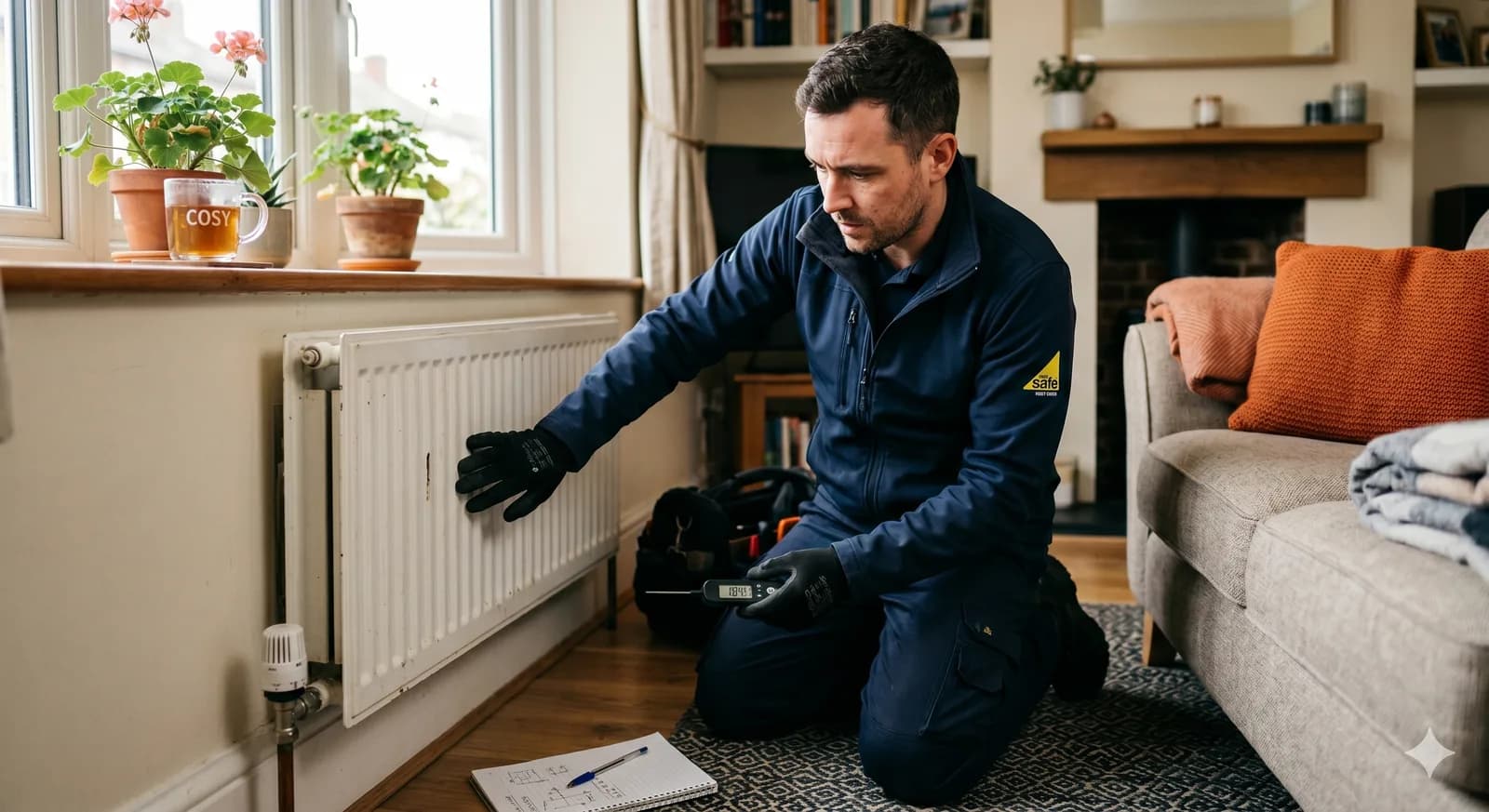
When your central heating starts playing up, it is rarely at a convenient moment. A cold radiator on a frosty MK morning or a boiler that refuses to fire can leave the whole house out of sorts, and it is not always obvious whether you are looking at a five-minute fix or a job for an engineer. The good news is that the vast majority of heating faults fall into a handful of well-understood categories.
This guide is the comprehensive reference we wish every Milton Keynes homeowner had to hand. We walk through the ten most common central heating problems, explain what causes each one, the signs to watch for, whether you can safely tackle it yourself, and a realistic 2026 cost if you need a professional. Use it to work out what is going on before you pick up the phone.
Quick reference: symptom to likely cause
If you are short on time, start here. Find your symptom in the table below, see the most likely cause, and check whether it is usually a do-it-yourself job or one for a Gas Safe engineer. The detailed sections that follow explain each fault in full.
| Symptom | Likely cause | DIY or pro? |
|---|---|---|
| One radiator cold at the top | Trapped air | DIY (bleed it) |
| Radiator cold at the bottom | Sludge build-up | Pro |
| Banging or whistling pipes | Kettling or air | Pro (usually) |
| Boiler keeps switching off | Low pressure or lockout | DIY first, then pro |
| No heating or hot water at all | Many causes | Pro (after basic checks) |
| Heating comes on at odd times | Thermostat fault | DIY or pro |
| Some radiators warm, some cold | Pump or balancing | Pro |
| Damp patch near a pipe | Leaking joint | Pro |
1. Cold radiators
A radiator that stays cold, or only warms up partly, is one of the most common complaints we hear across Milton Keynes. The cause depends on where the cold patch is. Cold at the top usually means trapped air, while cold at the bottom points to sludge (more on that below). If a whole radiator stays stone cold, the valve may be stuck or the system may need balancing.
Signs to look for: the top of the radiator is cool while the bottom is warm, or you can hear a faint gurgle. Can you fix it yourself? Yes, if it is trapped air. Turn off the heating, hold a cloth under the bleed valve at the top corner, and open it a quarter turn with a radiator key until water comes out instead of air. If radiators keep needing bleeding, that signals air getting in and is worth a professional look. For a stuck valve or a system that needs balancing, see our guide on how to balance radiators. Typical pro cost: £80 to £150 for diagnosis and balancing.
2. Noisy pipes and kettling
Heating systems make some noise, but banging, knocking, gurgling or a kettle-like rumble is not normal. Kettling is caused by limescale and sludge building up inside the heat exchanger, which makes water overheat and boil in patches. Milton Keynes sits in a hard water area, so scale builds up faster here than in soft water regions. Banging pipes can also be down to trapped air or pipes that expand against floor joists.
Signs to look for: a rumbling or whistling from the boiler, tapping as the system warms or cools. Can you fix it yourself? Bleeding radiators may help with air-related knocking, but kettling inside the boiler needs an engineer. Left alone it shortens the boiler's life. Typical pro cost: £100 to £200 for a chemical descale and inhibitor top-up, more if a power flush is needed.
3. Low boiler pressure
Most modern combi and system boilers need water pressure of around 1 to 1.5 bar when cold. If the pressure gauge on the front drops below 1 bar, the boiler may refuse to fire to protect itself. Pressure falls naturally over time, but a sudden or repeated drop suggests a leak somewhere in the system.
Signs to look for: the pressure gauge reads in the red or below 1, the heating cuts out, or you see a low-pressure fault code. Can you fix it yourself? Yes, topping up using the filling loop is a homeowner job, and we explain it step by step in our guide on fixing boiler pressure. If you have to top up more than once or twice a year, call an engineer to find the leak. Typical pro cost: £90 to £180 to trace and repair a minor pressure leak.
4. No heat at all
When neither the heating nor the hot water works, it can feel alarming, but the cause is often simple. Common culprits include a tripped fuse, a thermostat set too low, a programmer that has lost its settings after a power cut, low pressure, or a frozen condensate pipe in cold weather. On older systems a failed diverter valve or pump can also be to blame.
Signs to look for: the boiler display is blank, shows an error, or the system simply does nothing when you call for heat. Can you fix it yourself? Run the basic checks first: confirm the power is on, the programmer is set correctly, the thermostat is turned up, and the pressure is above 1 bar. In a cold snap, a gentle pour of warm (not boiling) water over an outside condensate pipe can clear a freeze. If none of that helps, it is an engineer's job. If you have heating but no hot water specifically, see our guide on diagnosing no hot water. Typical pro cost: £80 to £250 depending on the part.
5. Boiler lockout
A lockout is a safety shutdown. The boiler detects a fault, displays an error code, and stops firing to keep you safe. Causes range from low pressure and ignition failure to a blocked flue or a faulty flame sensor. The error code on the display is your first clue, so note it down before doing anything.
Signs to look for: a flashing fault code, a red warning light, or a reset button on the front panel. Can you fix it yourself? You can safely press the reset button once. If the boiler locks out again, do not keep resetting it, as repeated lockouts usually mean a genuine fault that needs investigation. Our boiler repair team can read the fault code and put it right. Typical pro cost: £90 to £300 depending on the underlying issue.
6. Sludge build-up
Over the years, rust and debris collect inside radiators and pipework, forming a thick black sludge. This is the single most common reason for radiators that are cold at the bottom, uneven heating across the house, and a boiler that has to work harder and costs more to run. Hard water around Milton Keynes makes the problem worse.
Signs to look for: cold spots low down on radiators, dirty water when you bleed them, and a noisy or sluggish system. Can you fix it yourself? No. Clearing sludge properly needs a power flush or a magnetic filter fitted by a professional. Our guide on whether you need a power flush will help you decide. Typical pro cost: £350 to £700 for a full power flush, depending on system size.
7. Thermostat failure
A faulty thermostat can make your heating come on at the wrong times, refuse to come on at all, or run constantly. Modern wireless and smart thermostats can also lose their connection or run flat on batteries, which homeowners sometimes mistake for a boiler fault.
Signs to look for: heating that ignores the schedule, a blank or unresponsive thermostat display, or rooms that never reach the set temperature. Can you fix it yourself? Often yes, at least to start. Replace the batteries, check the schedule, and make sure the unit has not been knocked off its setting. A wireless thermostat sometimes just needs re-pairing. If it is genuinely faulty, replacement is straightforward for an engineer. Typical pro cost: £100 to £250 supplied and fitted, more for a premium smart model.
8. Pump failure
The circulation pump pushes hot water around your radiators. When it weakens or fails, you get radiators that are warm near the boiler but cold further away, or no circulation at all. Pumps can seize after a long summer of standing idle, or wear out gradually over many years.
Signs to look for: the boiler fires but radiators stay cold, a humming or vibrating noise from the pump, or heat only in part of the house. Can you fix it yourself? No. A seized pump can sometimes be freed, but replacing one involves draining part of the system and working on the heating circuit, so it is a job for a qualified engineer. Typical pro cost: £180 to £350 for a replacement pump fitted.
9. Air locks
An air lock happens when a pocket of air gets trapped in the pipework or pump and blocks the flow of water. It is most common after the system has been drained, after a repair, or when the system has run low on water. The result is radiators that will not warm up no matter how long the heating runs.
Signs to look for: gurgling sounds, radiators that stay cold despite bleeding, or a problem that started right after a repair or refill. Can you fix it yourself? Sometimes bleeding the affected radiators clears it. A persistent air lock in the pump or pipework usually needs an engineer to release it properly. Typical pro cost: £80 to £150 to locate and clear.
10. Leaking joints
Leaks tend to appear at pipe joints, radiator valves, or around the boiler itself. Even a small drip can drop your system pressure, stain ceilings, and over time cause corrosion and rust that lead to sludge. Older compression joints and valves are common weak points.
Signs to look for: damp patches, green or white corrosion around fittings, dripping under a radiator valve, or pressure that keeps falling. Can you fix it yourself? No. Tightening a fitting wrongly can make a leak worse, and a leak inside the boiler must never be ignored. This is a job for a professional. If water is actively running, turn off the supply and call out our emergency plumbing team. Typical pro cost: £90 to £250 depending on the joint and how accessible it is.
When to call an emergency plumber vs when it can wait
Not every heating fault is an emergency, and knowing the difference saves you both worry and money. Treat it as urgent and call straight away if you smell gas (in which case ring the National Gas Emergency line on 0800 111 999 first), if water is leaking and cannot be stopped, if there is no heating or hot water during very cold weather, or if your boiler is making loud banging noises and locking out repeatedly. These situations can damage your home or pose a safety risk.
Other issues can usually wait for a normal appointment. A single radiator that is cold at the top, a thermostat that needs new batteries, a one-off low-pressure top-up, or slightly uneven heating are all worth sorting soon but are not emergencies. The most effective way to avoid surprises altogether is regular maintenance, so an annual boiler service is well worth booking. A service catches sludge, pressure drift and worn parts before they leave you cold in the middle of a Milton Keynes winter.
Talk to Plumbline MK
If you have worked through this guide and you are still not sure what is wrong, or you have spotted a fault that needs a Gas Safe engineer, we are here to help. Plumbline MK is based in Milton Keynes and our friendly, fully accredited team covers homes across MK and the surrounding areas. We will diagnose the problem honestly, explain your options in plain English, and give you a clear price before any work begins.
Call us on 07805 844 016 or 01908 229 560, or send us a message through our contact page and we will get back to you quickly. Whether it is a quick repair, a power flush, or an emergency call-out, we will get your central heating running properly again.
Need Professional Advice?
Our Gas Safe registered engineers are ready to help with all your heating needs. Get a free, no-obligation quote today.