Combi Boiler vs System Boiler: Which Is Right for Your Milton Keynes Home in 2026?
TL;DR
A combi boiler heats water on demand with no tank or cylinder, making it ideal for smaller homes with one bathroom. A system boiler stores hot water in a cylinder, which suits larger families and homes where several people need hot water at once. The right choice depends on your household size, hot-water habits, water pressure and the type of property you live in.
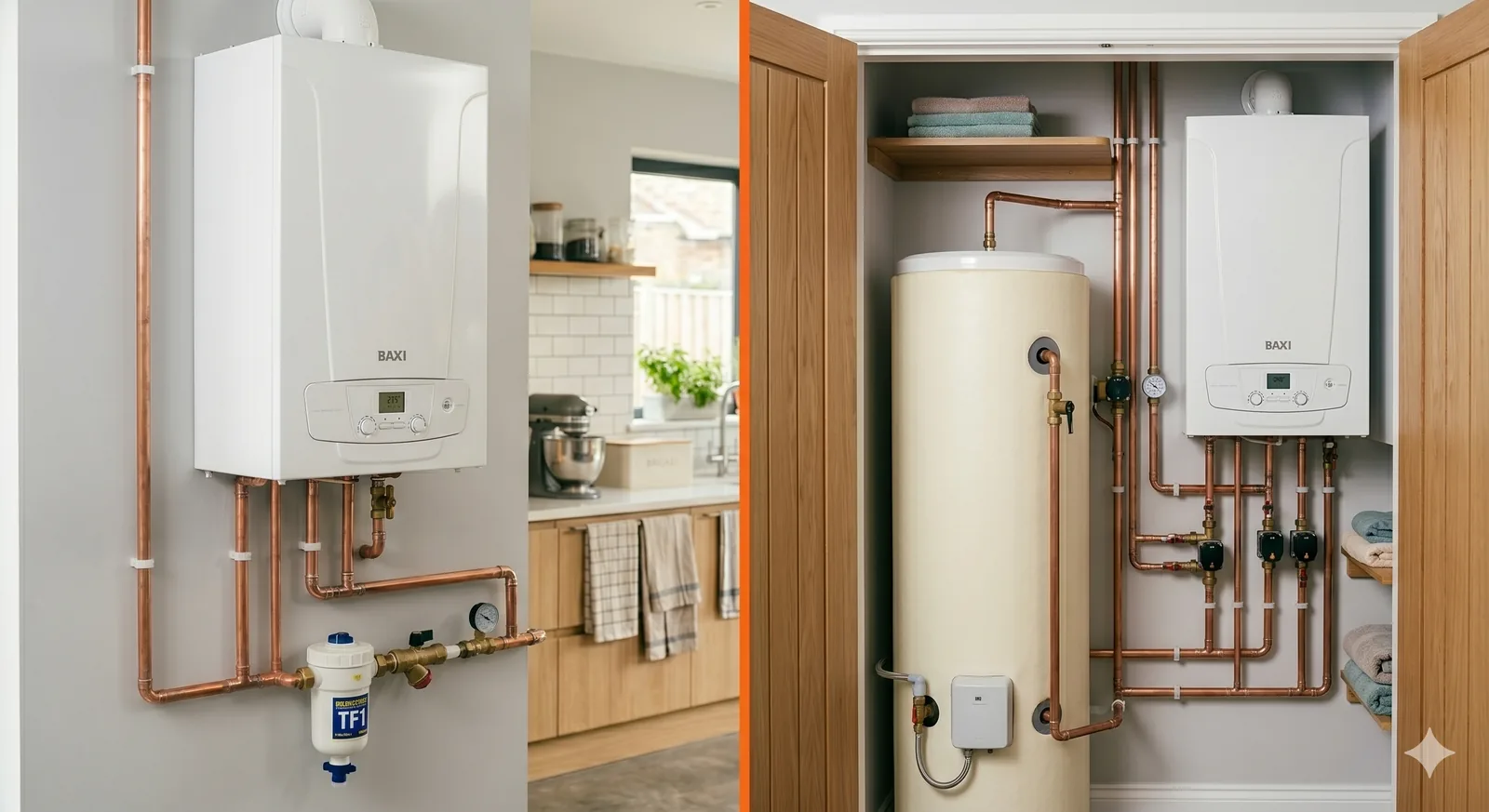
Choosing between a combi boiler and a system boiler is one of the biggest decisions you will make when replacing your heating in 2026. Both are excellent, modern, energy-efficient options, but they work in completely different ways, and the wrong choice can leave you with weak showers, long waits for hot water, or money spent on a system far bigger than you actually need. The good news is that the decision is rarely a coin toss. Once you understand how your household actually uses hot water, the right answer usually becomes obvious.
This guide is written specifically for Milton Keynes homeowners. We will explain how each type works, weigh up the pros and cons, look at the real-world differences in installation cost, pressure and flow, and explain what is involved if you decide to switch from one type to the other. We will also look at which type tends to suit different parts of MK, because a Victorian terrace in Bletchley and a new build in Brooklands have very different starting points. If you would like a more technical side-by-side, our combi vs system boiler comparison page sits alongside this guide.
How a combi boiler works
A combi (combination) boiler is a single, compact unit that provides both your central heating and your hot water directly from one appliance. There is no separate hot water cylinder and no cold water tank in the loft. When you turn on a tap or shower, the boiler fires up and heats the water instantly as it flows through, drawing it straight from the mains.
This on-demand approach is why combis are so popular in MK, particularly in flats, smaller houses and homes with a single bathroom. You only heat the water you use, there is no stored water sitting around losing heat, and you free up the cupboard space that a cylinder would otherwise occupy. The trade-off is that a combi can typically supply only one outlet at full strength at a time, because it is heating water on the fly rather than drawing from a ready reserve.
How a system boiler works
A system boiler works with a separate hot water cylinder, usually housed in an airing cupboard. The boiler heats water and stores it in that cylinder, ready to be drawn off whenever you need it. Unlike older conventional (or "regular") boilers, a system boiler has many key components built in, so it does not need a cold water tank in the loft, which makes it neater and quicker to install than a traditional setup.
Because the hot water is stored, a system boiler can serve several taps and showers at the same time without the flow dropping away. That makes it the natural choice for larger families and busy households. The trade-offs are that you need space for the cylinder, you lose some heat from stored water even with a well-insulated tank, and once the cylinder is empty you have to wait for it to reheat before you have a full supply again.
The pros and cons at a glance
| Factor | Combi boiler | System boiler |
|---|---|---|
| Hot water | On demand, unlimited but one outlet at a time | Stored, several outlets at once until cylinder empties |
| Space needed | Compact, no cylinder or tank | Needs a cylinder, usually in a cupboard |
| Best for | Flats and homes with one bathroom | Larger homes with two or more bathrooms |
| Mains pressure | Relies on good mains pressure | Less dependent on incoming pressure |
| Running efficiency | No standing heat loss from a tank | Small standing losses from the cylinder |
| Typical install cost | Lower, fewer components | Higher, cylinder and extra pipework |
Household size and hot-water habits
The single most important question is not how big your house is, but how your household uses hot water. A combi boiler shines when hot water demand is spread out across the day rather than concentrated. If you live alone, as a couple, or as a small family with one bathroom, a combi will almost always be the better fit. You get instant hot water, no waiting for a tank to heat, and lower running costs because nothing is stored.
A system boiler comes into its own when several people need hot water at the same time. Picture a household of four or five where the morning routine involves a shower running while someone fills the kitchen sink and the en-suite is in use too. A combi would struggle to keep all of those outlets at full strength, whereas a system boiler simply draws from its cylinder and keeps everyone happy. As a rough rule of thumb, if your home has two or more bathrooms, or you regularly have simultaneous demand, lean towards a system boiler. If you have one bathroom and demand is rarely simultaneous, a combi is usually ideal.
How each affects pressure and flow
This is where many Milton Keynes homes catch people out. A combi boiler delivers hot water at mains pressure, which gives lovely, strong showers without a separate pump, but only if your incoming mains pressure and flow rate are good in the first place. If your street has lower mains pressure, or your home is at the end of a long run of pipework, a combi can disappoint, especially when someone else turns on a tap and the available flow gets shared.
A system boiler is less reliant on incoming mains pressure for delivering stored hot water, and with an unvented (pressurised) cylinder you can enjoy excellent, balanced pressure across multiple outlets at once. This is one of the main reasons larger or older properties often stay with a cylinder. Before recommending either type, a Gas Safe engineer will check your actual mains pressure and flow rate, because that single measurement often settles the decision.
The installation cost difference
A combi installation is generally cheaper, because there are fewer components, no cylinder and less pipework to install or maintain. A system boiler costs more up front, partly because of the cylinder itself and partly because of the additional pipework and controls involved. The exact figures depend on the boiler you choose, the brand, the complexity of the job and whether you are keeping your existing layout or changing it.
It is worth thinking beyond the headline price, though. The cheapest option to fit is not always the cheapest to live with if it does not match your hot-water needs. For a full breakdown of what goes into the price, including labour, removal of old equipment and any pipework changes, see our guide to boiler installation costs in Milton Keynes. If you are also weighing up which make to fit, our comparison of Worcester Bosch and Vaillant for 2026 is a helpful read.
What happens when you switch from one type to the other
Switching from a system boiler to a combi is one of the most common upgrades we carry out in MK, usually to reclaim cupboard space and simplify the system. It involves removing the hot water cylinder, and often the old cold water tank and feed pipes in the loft, then adapting the pipework so the new combi can draw directly from the mains. Because you are removing components and rerouting pipes, it is more involved than a straight like-for-like swap, and a good engineer will pressure-test the mains beforehand to make sure a combi can deliver the flow you expect.
Going the other way, from a combi to a system boiler, is less common but sometimes the right move, typically when a household has grown or added a second bathroom and the combi can no longer cope with demand. This means finding space for a cylinder and adding the pipework and controls to support it. In both directions the work is well within the scope of a competent Gas Safe engineer, but it is not a job to rush. The key is to size the new system correctly for the home it is going into, not simply to match what was there before.
Which suits different parts of Milton Keynes
Milton Keynes is a real mix of property ages, and the type of home you live in often points towards a particular answer. Older properties in Central Milton Keynes, Bletchley, Wolverton and Stony Stratford frequently already have a hot water cylinder, an existing tank in the loft, and in some cases lower or more variable mains pressure. In these homes a system boiler can be the sensible choice, because it works comfortably with the existing layout and is less sensitive to pressure, while still giving strong, simultaneous hot water across the house. That said, plenty of these homes convert happily to a combi once an engineer has confirmed the mains can support it.
Newer developments such as Broughton, Brooklands, Oakgrove, Tattenhoe and Kingsmead are often built combi-ready, with good mains pressure, compact plant arrangements and a single main bathroom. In these properties a combi is frequently the obvious fit, delivering instant hot water, freeing up storage space and keeping running costs down. The exception is a larger new build with two or more bathrooms and a busy family, where a system boiler may still serve everyone better at peak times. The honest answer for any MK home is that pressure, flow and the way your household lives matter more than the postcode, which is exactly why an on-site check is worth so much.
Answer these questions to find your best fit
You can get a long way towards the right decision by answering a handful of practical questions honestly:
- How many bathrooms do you have? One bathroom leans towards a combi; two or more leans towards a system boiler.
- Do people often need hot water at the same time? Frequent simultaneous demand favours a system boiler with a stored cylinder.
- How big is your household? One or two people usually suits a combi; a busy family of four or five often suits a system boiler.
- Is cupboard or loft space precious to you? If you want to reclaim that space, a combi removes the cylinder and tank entirely.
- Is your mains water pressure strong? Good pressure makes a combi excellent; weaker pressure may make a system boiler the safer bet.
- Are you planning to extend or add a bathroom? If your demand is about to grow, size for the future, not just today.
If your answers point clearly in one direction, you can be confident in that choice. If they are mixed, that is a strong sign you would benefit from an in-person assessment, where mains pressure and flow can be measured and the options talked through properly. You can also read our fuller combi vs system comparison or learn more about our boiler installation service in Milton Keynes.
Talk to Plumb Line MK about the right boiler for your home
Every home and household is different, and the best way to be certain is to have a Gas Safe registered engineer assess your property in person. At Plumb Line MK we will measure your mains pressure and flow, look at how your household uses hot water, and give you honest, jargon-free advice on whether a combi or system boiler is the right fit, along with a clear, upfront quote. There is no pressure and no obligation, just straight guidance from a local team that installs both types across Milton Keynes every week.
To book your free assessment or simply ask a question, call us on 07805 844 016 or 01908 229 560, or send us a message through our contact page. We will help you choose the boiler that genuinely suits your home, so you can enjoy reliable heating and hot water for years to come.
Need Professional Advice?
Our Gas Safe registered engineers are ready to help with all your heating needs. Get a free, no-obligation quote today.