What Is a System Boiler? A Plain Guide
TL;DR
A system boiler heats your radiators and a separate hot water cylinder, usually an unvented one fed straight from the mains. The pump and expansion vessel are built into the boiler, so there are no tanks in the loft. Because hot water is stored rather than made on demand, it can supply two or three showers at once at strong pressure. It suits homes with two or more bathrooms. The trade-offs are cylinder space and reheat time.
If a combi cannot keep up with your household's hot water, the next thing to look at is a system boiler. It is the standard choice for larger family homes. This guide explains what it is in plain terms, how it differs from a combi and a regular boiler, and how to tell whether your house needs one.
What a system boiler is
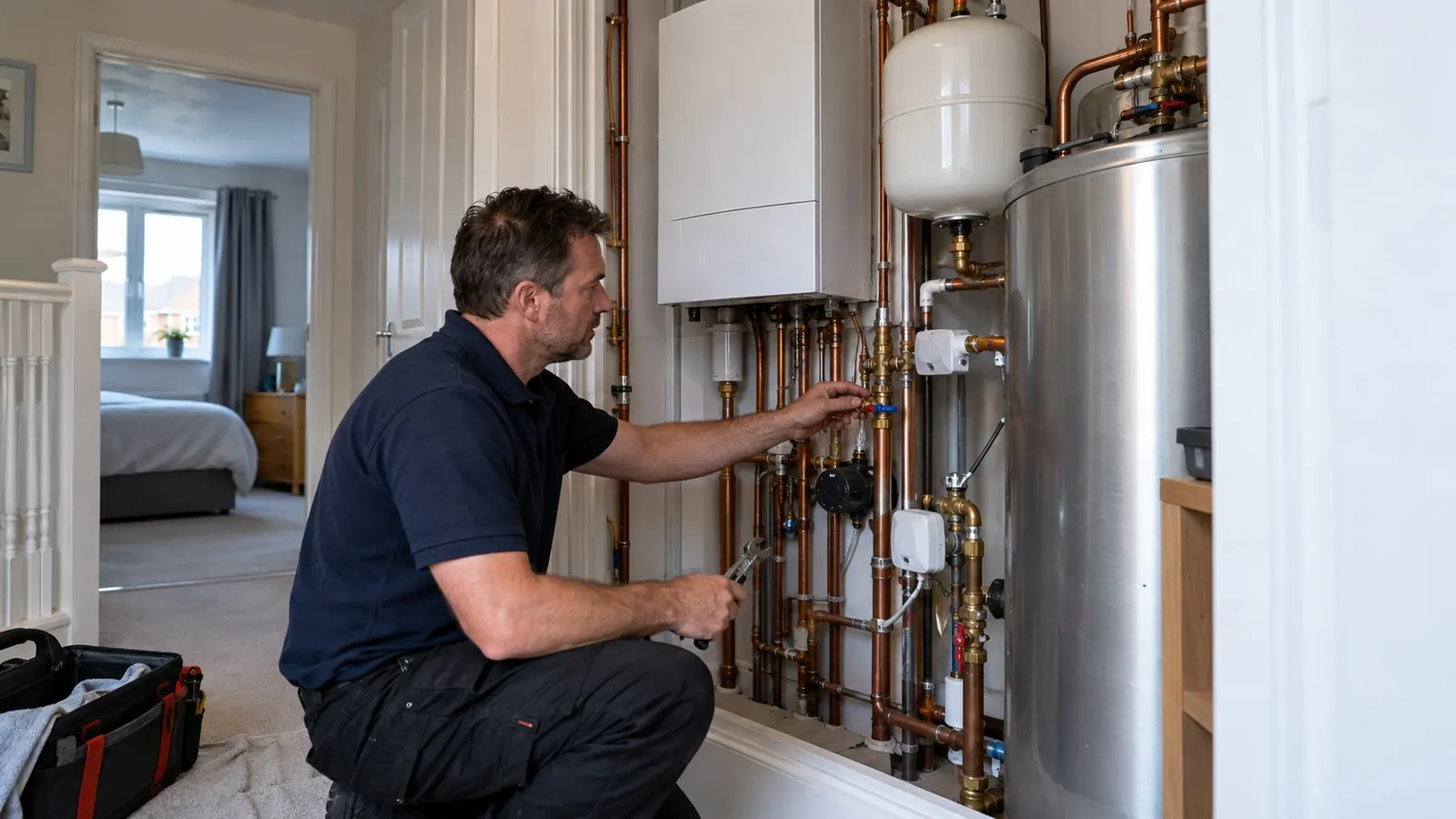
A system boiler is a central heating boiler that works with a separate hot water cylinder. The boiler heats water and sends it two ways: round the radiators, and through a coil inside the cylinder to heat the water stored there. The cylinder, usually in an airing cupboard, holds a tank of hot water ready for the taps.
What makes it a system boiler rather than a regular one is that the main working parts, the pump and the expansion vessel, are built into the boiler casing. There is no cold water tank or feed-and-expansion tank in the loft. The heating circuit is sealed and pressurised, like a combi's.
How it works day to day
In most modern installations the cylinder is unvented, meaning it is fed directly from the cold mains and holds the hot water at mains pressure. Turn on a shower upstairs and a tap downstairs and both get strong, even flow, because the water is already hot and already under pressure. That is the whole appeal.
The trade-off is that stored water runs out. Once the cylinder is emptied by three back-to-back showers, you wait while the boiler reheats it, which typically takes somewhere between twenty minutes and an hour depending on the cylinder size and the boiler output. Sizing the cylinder to the household is therefore the most important decision in the whole job. A programmer or smart thermostat schedules the reheat so the water is hot when the house wakes up.
System boiler vs combi
The one real difference is storage. A combi heats water on demand as it passes through and stores none. A system boiler stores it. Everything else follows from that.
- Several outlets at once. System boiler, excellent. Combi, poor. One combi shower is fine; two at once is a lukewarm compromise.
- Running out of hot water. System boiler, yes, until the cylinder reheats. Combi, never, though the flow is limited.
- Space. System boiler needs a cylinder cupboard. Combi needs a wall.
- Installation. System boiler has an extra major component to buy, fit and connect. Combi is the simplest and cheapest to install.
- Loft tanks. Neither has them.
- Typical home. System boiler for two or more bathrooms and bigger families. Combi for one bathroom and smaller households.
Our combi boiler guide covers the other side of this comparison.
System boiler vs regular (heat-only) boiler
A regular boiler also uses a cylinder, but the cylinder is usually vented, fed by gravity from a cold water tank in the loft, and the pump and expansion tank sit outside the boiler. Hot water pressure depends on how high the loft tank is above the tap, which is why showers in older houses can be feeble. Swapping a regular boiler and vented cylinder for a system boiler and unvented cylinder is one of the most common upgrades we do. It frees the loft, removes the risk of a tank leak through the ceiling, and transforms the showers. Our cylinder replacement guide explains what is involved.
Advantages
- Strong hot water at several outlets at once. The main reason families choose one.
- Mains-pressure showers without a separate pump.
- No loft tanks, so no frozen or leaking tanks and the roof space is yours.
- Tidy installation. Pump and expansion vessel are inside the boiler.
- Future flexibility. A cylinder can also be heated by solar thermal or, later, a heat pump. A combi cannot.
Disadvantages
- You need cylinder space. A typical unvented cylinder is the size of a tall, slim wardrobe. In a small terrace or a flat that space is often not there.
- Hot water can run out. Correct sizing keeps this rare, but it is a real limit.
- More to install and maintain. The cylinder has its own safety valves and expansion vessel, and Building Regulations (Approved Document G) require an unvented cylinder to be fitted by someone qualified to do so. It should be checked at the annual service alongside the boiler.
- Standing heat loss. Stored water cools slowly. Modern cylinders are well insulated, but it is not zero.
The point brochures leave out
An unvented cylinder is only as good as your mains supply. It stores water at mains pressure, so if the incoming main is weak, a system boiler will not give you the powerful showers you were sold. Before anyone quotes for one, they should measure the flow and pressure at your stopcock. If it is poor, the fix might be a new supply pipe, a different cylinder type, or accepting that a combi with one good shower is the honest answer. An installer who does not measure the mains is guessing with your money.
Which homes suit a system boiler
- Two or more bathrooms that get used at the same time in the morning.
- Larger detached and four-bedroom houses with a family who shower in shifts.
- Homes with an existing cylinder cupboard, especially those upgrading from an old regular boiler.
- Anyone planning for a heat pump or solar thermal in future.
If you are weighing up a family home, our best boiler for a three-bed house guide goes through the combi versus system decision room by room.
Looking after one
The boiler needs an annual service by a Gas Safe registered engineer to keep the manufacturer warranty valid and to confirm it is burning safely. The cylinder's safety valves, expansion vessel and temperature controls should be checked at the same visit. In hard water areas the cylinder coil and the immersion element scale up over time, and a scale reducer on the cold feed is worth fitting from day one. Anything on the gas side or inside the boiler casing is the engineer's job, not a DIY one.
Frequently asked questions
Do I need a cylinder with a system boiler?
Yes. The cylinder is where the hot water comes from. Without one, a system boiler heats radiators and nothing else.
How much does a system boiler cost?
It depends on the boiler brand and output, the cylinder size, whether there is already a cylinder cupboard and suitable pipework, and the state of the existing system. A quote is only meaningful after a survey that includes measuring your mains flow. Anyone giving a firm figure over the phone is guessing.
Can I switch from a combi to a system boiler?
Yes, if you have room for the cylinder and the mains supply is good enough. It is a bigger job than a like-for-like swap because the cylinder and its pipework are new.
Which is more efficient?
Both are condensing boilers with the same efficiency rating. A combi wastes nothing on stored water; a system boiler loses a little standing heat but can run the boiler in its most efficient range for longer. In practice the difference is small compared with how well the system is set up and controlled.
If you are in Milton Keynes or the surrounding towns and want to know whether your house needs a system boiler or whether a good combi would do, Plumbline MK will measure the mains, look at the bathrooms and tell you straight. We are Gas Safe registered (957816) and fit Worcester Bosch, Vaillant, Ideal and Baxi system boilers with unvented cylinders. See our boiler installation page or get in touch.
Need Professional Advice?
Our Gas Safe registered engineers are ready to help with all your heating needs. Get a free, no-obligation quote today.