Water Hammer: Why Your Pipes Bang
TL;DR
Water hammer is the shockwave created when fast-moving water is stopped suddenly - usually by a quarter-turn tap, a washing machine valve, or a float valve slamming shut. The fixes are an arrestor near the offending valve, properly clipped pipework, or slowing the closure itself. Loose pipes make it louder but are rarely the root cause.
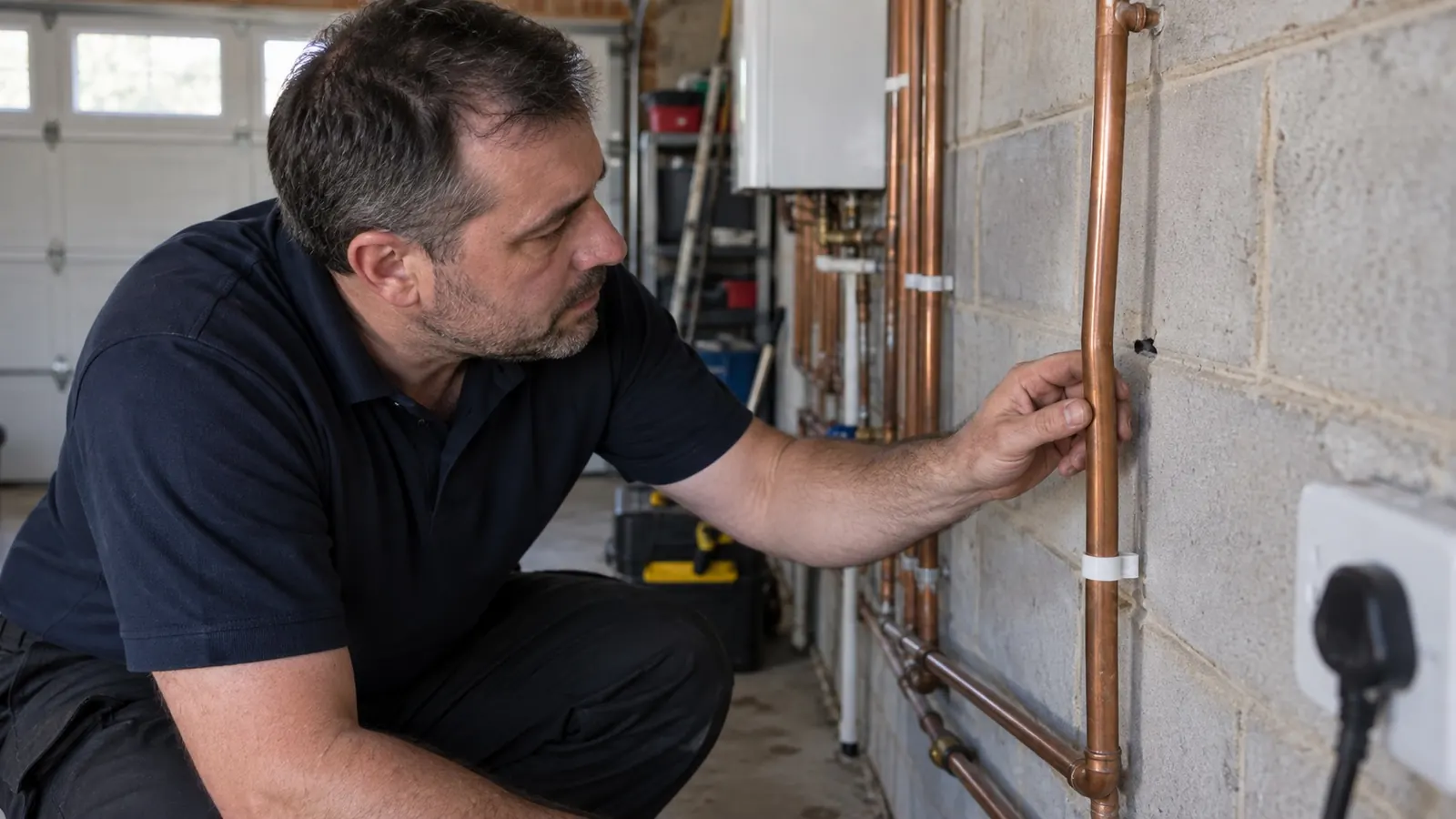
Over years that repeated shock works joints loose and stresses fittings. It is worth fixing.
What Causes It
Fast-closing valves
The usual culprit. A quarter-turn lever tap goes from fully open to fully shut in a fraction of a second. So do the solenoid valves in washing machines and dishwashers, which is why the bang so often coincides with an appliance filling.
Traditional taps that take several turns to close cause almost no hammer, because the flow reduces gradually.
Float valves slamming
A worn float valve in a toilet cistern or a loft tank can snap shut at the last moment rather than closing progressively. Our guides to a toilet that keeps running and the loft tank cover the valve side.
High mains pressure
The higher the pressure and the faster the flow, the bigger the shock. Some areas have genuinely high incoming pressure, and a pressure reducing valve is the answer.
Unsecured pipework
Loose pipes do not cause water hammer, but they turn a small shock into a loud bang by letting the pipe move and strike a joist or a wall. Clipping them properly is often the difference between hearing it and not.
The Fixes, in Order
1. Identify which fitting triggers it
Operate each tap and appliance in turn and note which one produces the bang. If it happens when the washing machine fills, the fix goes near the washing machine - not in the airing cupboard where the noise is loudest.
Noise travels along pipework, so where you hear it is rarely where it starts.
2. Fit a water hammer arrestor
A small device containing an air chamber or a sprung piston that absorbs the shock. Fitted on the supply as close as practical to the offending valve.
This is the most effective fix for appliance-related hammer. Arrestors are inexpensive, and on a washing machine supply one can often be fitted to the isolation valve without cutting into pipework at all.
3. Clip the pipework properly
Where pipes run under floors or in a cupboard, check they are clipped at sensible intervals - roughly every metre for horizontal 15mm copper, more often on smaller pipe.
Foam pipe insulation where a pipe passes through a joist stops the knock without restricting the pipe.
4. Reduce the pressure
Your supplier can tell you the pressure at your boundary - for this area, Anglian Water. If the whole house has very high mains pressure, a pressure reducing valve on the incoming main lowers it to something more comfortable. This also reduces wear on every fitting in the house.
5. Replace the offending valve
A float valve that slams can be replaced with an equilibrium or damped-closure type designed to close progressively. On a tap, a slower-closing type solves it at source.
What Does Not Work
- Turning the stopcock down. It reduces flow but leaves the shock behind, and it starves every outlet in the house.
- Wrapping the pipe in insulation alone. Muffles the noise; the shock still stresses the joints.
- Ignoring it. Repeated shock loading is how joints work loose. A hammer that has been going on for years is worth dealing with before it finds a joint under a floor.
Older Systems: Recharging the Air Chamber
Some older installations have a vertical dead-leg of pipe near an outlet, acting as an air cushion. Over time that air dissolves into the water and the cushion disappears.
Recharging it means turning off the water, draining the system through the lowest tap, and letting air back in. It works, but the air will dissolve again eventually - a modern arrestor is the permanent version of the same idea.
Frequently Asked Questions
Is water hammer dangerous?
Not immediately, but it is a genuine cause of long-term damage. Repeated pressure spikes loosen compression joints and stress fittings, and the eventual leak is often somewhere inaccessible.
Why did it start suddenly?
Usually a new appliance with a fast solenoid valve, a new quarter-turn tap, a change in mains pressure, or a float valve that has begun to slam as it wears.
Where should an arrestor go?
As close as possible to the valve causing the shock. Fitting one where the noise is loudest rather than where it originates is the most common mistake.
Can banging pipes be a heating problem instead?
Yes, and the distinction matters. Water hammer happens when a tap or appliance shuts off. Banging when the heating runs is usually kettling or trapped air, which is a different issue entirely.
If It Persists
Persistent hammer that survives an arrestor usually means high mains pressure or pipework that needs re-clipping in places you cannot easily reach. We cover Milton Keynes and the surrounding area for plumbing repairs. Get in touch and tell us which tap or appliance sets it off.
Need Professional Advice?
Our Gas Safe registered engineers are ready to help with all your heating needs. Get a free, no-obligation quote today.