Cold Water Tank in the Loft Explained
TL;DR
A loft tank stores cold water and feeds the hot water cylinder and, in older systems, the bathroom taps by gravity. Homes with a combi boiler or an unvented cylinder do not need one. The three things worth checking are that it has a close-fitting lid, that the insulation is intact, and that the float valve shuts off cleanly.
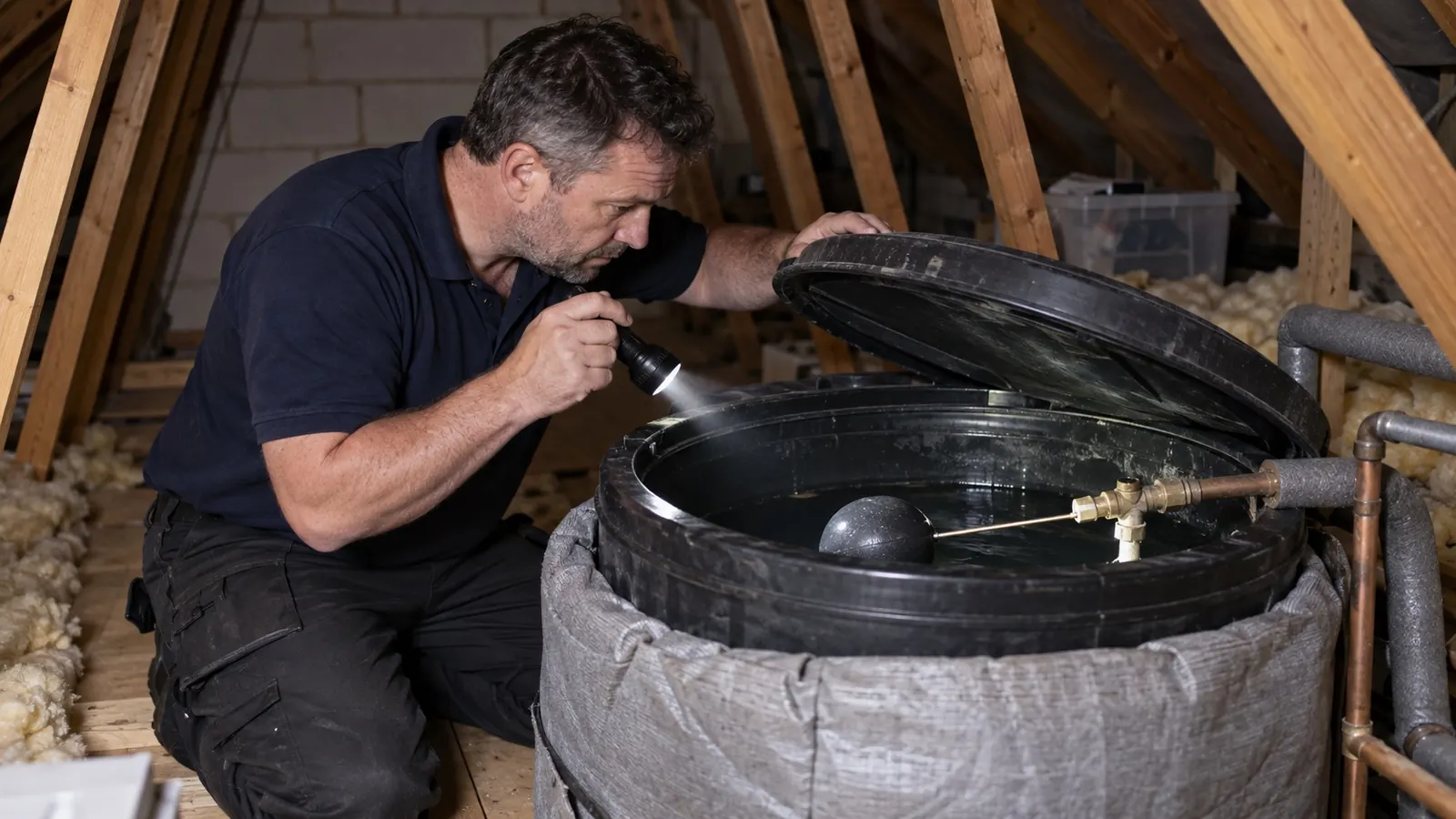
If you have a large plastic tank sitting on a platform in your loft, it is doing a specific job - and whether you still need it depends entirely on what kind of hot water system the house has.
This guide covers what it does, when it can go, and the maintenance that stops it causing trouble.
What It Actually Does
The loft tank is a cold water store. Mains water enters it through a float valve, and gravity then pushes water out to wherever it is needed. The height of the tank above the outlets is what creates the pressure - which is why gravity-fed showers on the top floor are always the weakest in the house.
In a traditional British system it feeds:
- The hot water cylinder, which heats that water and sends it to the hot taps
- The cold taps in the bathroom, in older installations
- The toilet cisterns, sometimes
The kitchen cold tap is almost always fed directly from the main instead, because that is the tap intended for drinking, and Anglian Water supplies it straight off the network. Water that has been sitting in an open loft tank is not the same as water straight off the main.
There is often a second, much smaller tank alongside it. That one is the feed and expansion tank for the central heating - a separate circuit entirely, and it should never be plumbed into the drinking supply.
Which Systems Need One
- Gravity-fed with a hot water cylinder: yes. The tank is essential.
- Combi boiler: no. A combi heats mains water on demand, so there is nothing to store. Many homes still have a redundant tank left in the loft after a combi conversion.
- Unvented cylinder: no. These run at mains pressure and are fed directly.
If you have a combi and a tank, it is almost certainly disconnected and can be removed. Do check before assuming - occasionally an old tank still feeds something.
The Three Things Worth Checking
1. The lid
A cold water storage tank must have a close-fitting, rigid lid. It stops dust, insects and - the reason it genuinely matters - rodents and birds getting into the water. An uncovered or badly fitting tank is a genuine contamination risk, and a dead animal in a tank contaminates everything downstream of it.
The lid should also allow the tank to breathe through a screened vent rather than being airtight.
2. The insulation
The tank and its pipework need insulating, but the loft insulation should not run underneath the tank. That sounds counterintuitive and it is deliberate: a little warmth rising from the house below is what stops the tank freezing in a cold snap.
Insulate the sides, the lid and every exposed pipe. Leave the underside open to the room below.
3. The float valve
The float valve shuts the inlet off when the tank is full. When it wears, it either drips continuously - which sends water out through the overflow pipe on the outside wall - or fails to open properly, which starves the system.
A trickle from an overflow pipe outside the house is almost always a failed float valve, in either the cold tank or a toilet cistern. It is an inexpensive part.
Common Problems
- Water hammer - banging pipes as the float valve slams shut. Usually cured by fitting a valve with a damped closure or an equilibrium valve.
- Slow refill - a scaled or partly blocked float valve. Common in hard water areas.
- Debris in the water - black specks usually mean a perished washer somewhere; grit means the tank needs cleaning and a proper lid fitting.
- Freezing - the classic cause of a burst pipe in a loft. Insulation on the sides but not underneath, plus a small amount of heat from below, is the standard protection.
- Overflowing - float valve again, or an overflow pipe blocked with debris.
If the tank runs low or empties, air enters the outlet pipes and you get airlocks - our guide to clearing an airlock covers the symptoms.
Should You Remove It?
If you are converting to a combi or an unvented cylinder, the tank becomes redundant and can go. Points to consider:
- Removing it frees usable loft space and eliminates the risk of a loft flood, which is the single most damaging domestic leak there is.
- Some people prefer to keep a stored supply so that a mains interruption does not leave the house without water. That is a real, if modest, benefit.
- A gravity system with good pressure at ground level can perform perfectly well, and converting purely for its own sake is not always worth the cost.
If it stays, it should be properly covered, insulated and in sound condition. An old galvanised steel tank that has begun to corrode should be replaced rather than patched.
Water Quality
Stored water is not the same as mains water. It sits, it warms slightly in summer, and if the tank is uncovered it collects whatever is in the loft. That is why the kitchen cold tap should always be on the mains, and why the tank needs a proper lid.
Water quality standards for domestic supplies are overseen by the Drinking Water Inspectorate, and stored water in a private system is the householder's responsibility to keep sound.
Frequently Asked Questions
Why is there insulation everywhere except under my tank?
Deliberate. Leaving the underside uninsulated lets a little warmth from the house rise to the tank, which is what stops it freezing. Insulating underneath is a common and well-meaning mistake.
Can I drink water from a loft tank?
It should not be your drinking supply. Use the kitchen cold tap, which is fed directly from the main. Stored water in an open or poorly covered tank is not suitable for drinking.
My overflow pipe outside is dripping. What is it?
Almost certainly a float valve that is no longer shutting off - either in the loft tank or a toilet cistern. Inexpensive to fix and worth doing promptly, since it runs continuously.
Do I still need the tank if I fit a combi?
No. A combi heats mains water on demand, so there is nothing to store. The tank can be drained and removed once you have confirmed nothing else is fed from it.
If Something Is Not Right Up There
Loft tanks are the source of the most damaging domestic leaks we attend, simply because the water has the whole house to fall through. If yours is uncovered, corroded, or the float valve is not shutting off, it is worth dealing with. We cover Milton Keynes and the surrounding area for plumbing repairs and system upgrades. Get in touch.
Need Professional Advice?
Our Gas Safe registered engineers are ready to help with all your heating needs. Get a free, no-obligation quote today.