Low Water Pressure at Home? MK Fixes
TL;DR
Low water pressure in your home means a weak flow from taps and showers, and it's different from low boiler pressure (which is about your sealed heating system). Common causes include a partly closed stopcock, peak-time demand on the network, a shared supply, a leak, old narrow pipework, or a faulty pressure-reducing valve. Start by testing several taps and checking your internal stopcock is fully open. Some fixes are a plumber's job; some are the water company's. In Milton Keynes the mains supplier is Anglian Water.
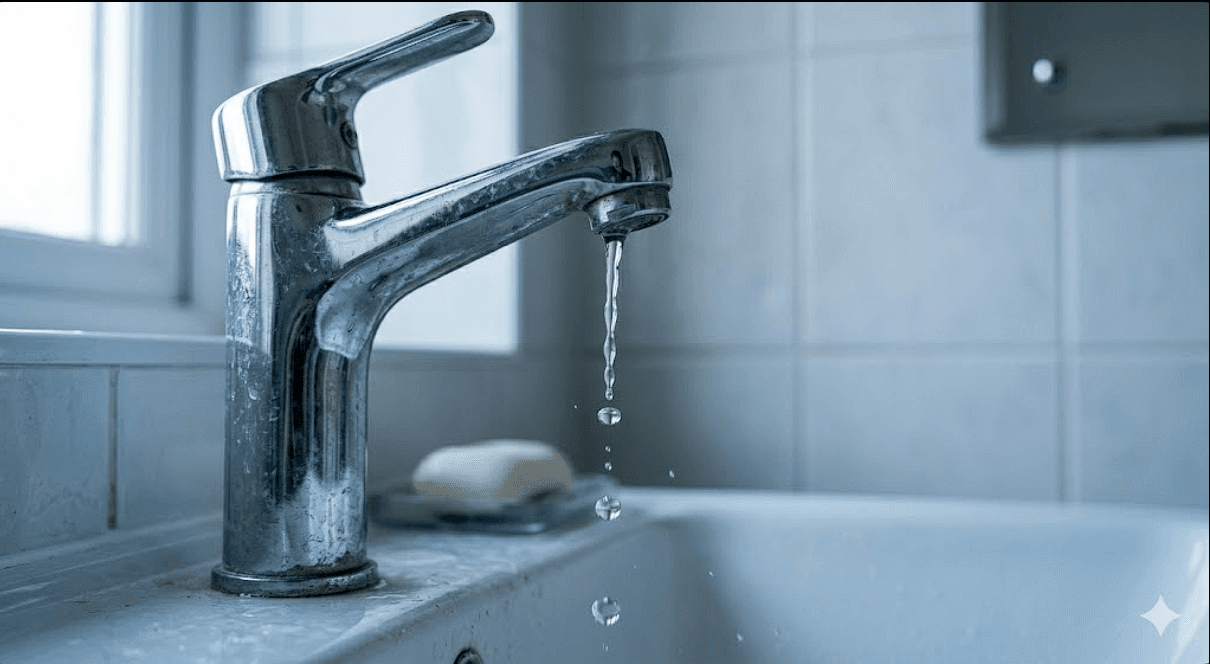
You turn on the shower and it dribbles. The kitchen tap takes an age to fill a pan. Two taps running at once and neither has any force. Low water pressure is one of the most common household plumbing complaints — and one of the most misunderstood, because people often confuse it with a completely different problem.
In this guide we'll clear up that confusion first, then walk through every likely cause of low mains pressure, the checks you can do yourself, and — crucially — who is actually responsible for fixing it. Some of these problems are a plumber's job; others sit firmly with your water company. Knowing which is which can save you a wasted callout.
First: Low Water Pressure Is Not Low Boiler Pressure
This is the single most important thing to get straight. The two sound similar but are entirely separate systems.
Low boiler pressure refers to your sealed central heating system — the loop of water that runs through your boiler and radiators. It's shown on the pressure gauge on the front of the boiler and should read 1 to 1.5 bar when cold. If it drops, you top it up yourself using the filling loop. This has nothing to do with the water coming out of your taps.
Low water pressure (the subject of this article) is about the mains supply — the cold water entering your home from the street, which feeds your taps, shower, and (on a combi boiler) your hot water. It's a separate pipe network entirely.
So if your shower is weak, that's a mains water pressure issue. If your radiators aren't getting warm and the boiler gauge is low, that's a boiler pressure issue — and our guide to central heating not working in Milton Keynes covers that instead. Getting this distinction right means you call the right person.
Common Causes of Low Mains Water Pressure
Once you know it's the mains supply, there are several possible culprits.
- A partly closed stopcock. Your internal stopcock (the valve that shuts off your water supply) may have been turned down — perhaps after recent work — and never fully reopened. This is one of the most common and easily fixed causes.
- Peak-time demand. If pressure drops only at busy times — early morning, evening — the local network may simply be under heavy demand. This often affects whole streets.
- A shared supply. Some properties, especially older ones, share a single supply pipe with neighbours. When several households draw water at once, pressure drops for everyone.
- A water company issue. Mains repairs, a burst in the street, or general supply problems in your area can reduce pressure temporarily or longer-term.
- A leak. A leak on your supply pipe — between the street and your home — bleeds away pressure before the water reaches your taps. Look for unexplained damp patches or a rising water bill.
- Old or narrow pipework. Older homes sometimes have narrow lead or steel supply pipes that have furred up internally over decades, restricting flow. Milton Keynes' hard water accelerates internal scaling.
- A faulty pressure-reducing valve. Some homes have a pressure-reducing valve (PRV) fitted. If it fails or is set too low, it chokes the flow into the property.
Checks You Can Do Yourself
Before calling anyone, spend ten minutes on these — they'll often point straight to the cause.
1. Test several taps
Is the problem at every tap, or just one? If only one tap is weak, the issue is local — a blocked aerator or isolation valve at that tap, not your whole supply. If every tap and the shower are weak, it's a whole-property or mains issue.
2. Check your internal stopcock is fully open
Find your stopcock — usually under the kitchen sink — and make sure it's turned fully anticlockwise (open). It's surprising how often a half-closed stopcock is the entire problem. Turn it gently; old stopcocks can be stiff.
3. Check the outside stop valve
There may also be an external stop valve, often near the boundary under a small cover. If you can access it safely, check it's fully open too.
4. Ask your neighbours
If neighbours have the same low pressure, the cause is on the network side — a water company matter. If it's only your home, the problem is on your side of the boundary.
5. Note the timing
Keep a mental note of when pressure is worst. Consistently low all day points to pipework or a valve; low only at peak times points to network demand.
Who Fixes What?
This table shows the likely cause for each symptom and who is responsible for resolving it.
| Symptom | Likely cause | Who fixes it |
|---|---|---|
| Low pressure at one tap only | Blocked aerator or isolation valve | You or a plumber |
| Low pressure at every tap, all day | Partly closed stopcock or faulty PRV | You (stopcock) or a plumber (PRV) |
| Low pressure only at peak times | Network demand | Water company (Anglian Water) |
| Whole street affected | Mains issue or repairs | Water company (Anglian Water) |
| Damp patches, rising water bill | Leak on your supply pipe | Plumber (your side of boundary) |
| Old home, gradually worsening flow | Furred or narrow internal pipework | Plumber (pipe upgrade) |
When It's a Plumber's Job
If the low pressure is on your side of the boundary, a plumber can help. Common solutions include adjusting or replacing a faulty pressure-reducing valve, tracing and repairing a supply-pipe leak, upgrading old narrow pipework to modern wider-bore pipe, or fitting a pump or accumulator to boost flow where the mains genuinely can't deliver enough.
A good plumber will diagnose properly first — measuring the incoming pressure and flow rate — so you're not paying for a fix that won't solve the real problem. If a leak is found, that can sometimes be urgent; our emergency plumbing service can respond quickly across MK.
When It's the Water Company's Job
In Milton Keynes, the mains water supplier is Anglian Water. If your whole street is affected, if the problem coincides with mains works, or if pressure is only ever low at peak demand, that's a network matter for Anglian Water — and they're obliged to maintain a minimum standard of pressure at the boundary. Contact them directly to report it; they can check for issues in the area and, if needed, test the pressure at your boundary stop tap.
If Anglian Water confirms the supply at your boundary is fine but pressure inside the house is still poor, that confirms the problem is on your side — and that's when to call a plumber.
Need expert help? Contact Plumbline MK for a free, no-obligation quote. Call 07805 844 016 to speak to a Gas Safe registered local plumber covering all of Milton Keynes, including Wolverton and Bletchley. We diagnose low-pressure problems properly before quoting any work. If you've also noticed odd plumbing sounds, our guide to cold radiators and noisy pipes may help.
Frequently Asked Questions
What is the difference between low water pressure and low boiler pressure?
Low water pressure refers to the mains supply feeding your taps and showers — a weak flow from your taps. Low boiler pressure refers to your sealed central heating system and is shown on the gauge on your boiler, where it should read 1 to 1.5 bar. They are completely separate systems: a weak shower is a water pressure issue, while cold radiators with a low boiler gauge is a boiler pressure issue.
Why is my water pressure low only sometimes?
Pressure that drops only at certain times — typically early morning and evening — usually points to peak demand on the local network rather than a fault in your home. When many households draw water at once, pressure falls for everyone on the supply. If this is the pattern, it's a matter for your water company, Anglian Water in Milton Keynes, rather than a plumber.
Can a plumber fix low water pressure?
A plumber can fix low pressure when the cause is on your side of the property boundary — for example a faulty pressure-reducing valve, a leak on your supply pipe, or old furred-up pipework that needs upgrading. A plumber can also fit a pump or accumulator to boost flow. If the cause is on the network side, that is the water company's responsibility instead.
Who is responsible for water pressure?
Responsibility is split at the property boundary. Your water supplier — Anglian Water in the Milton Keynes area — is responsible for the mains supply up to the boundary and must maintain a minimum pressure standard. Everything from the boundary into and around your home is your responsibility, and that's where a plumber can diagnose and fix the problem.
Need Professional Advice?
Our Gas Safe registered engineers are ready to help with all your heating needs. Get a free, no-obligation quote today.