Ideal Boiler L2 Error: Causes and Fixes in Milton Keynes
TL;DR
L2 on an Ideal boiler (Logic, Logic+, Logic Max, Vogue) is an ignition lockout: the boiler tried to light and its flame sensor did not confirm a flame, so it shut down as a safety measure. The usual causes are the gas supply, a frozen condensate pipe in cold weather, a worn ignition electrode, or a gas valve or circuit board fault. Check the gas and condensate pipe, reset up to three times, then call a Gas Safe engineer.
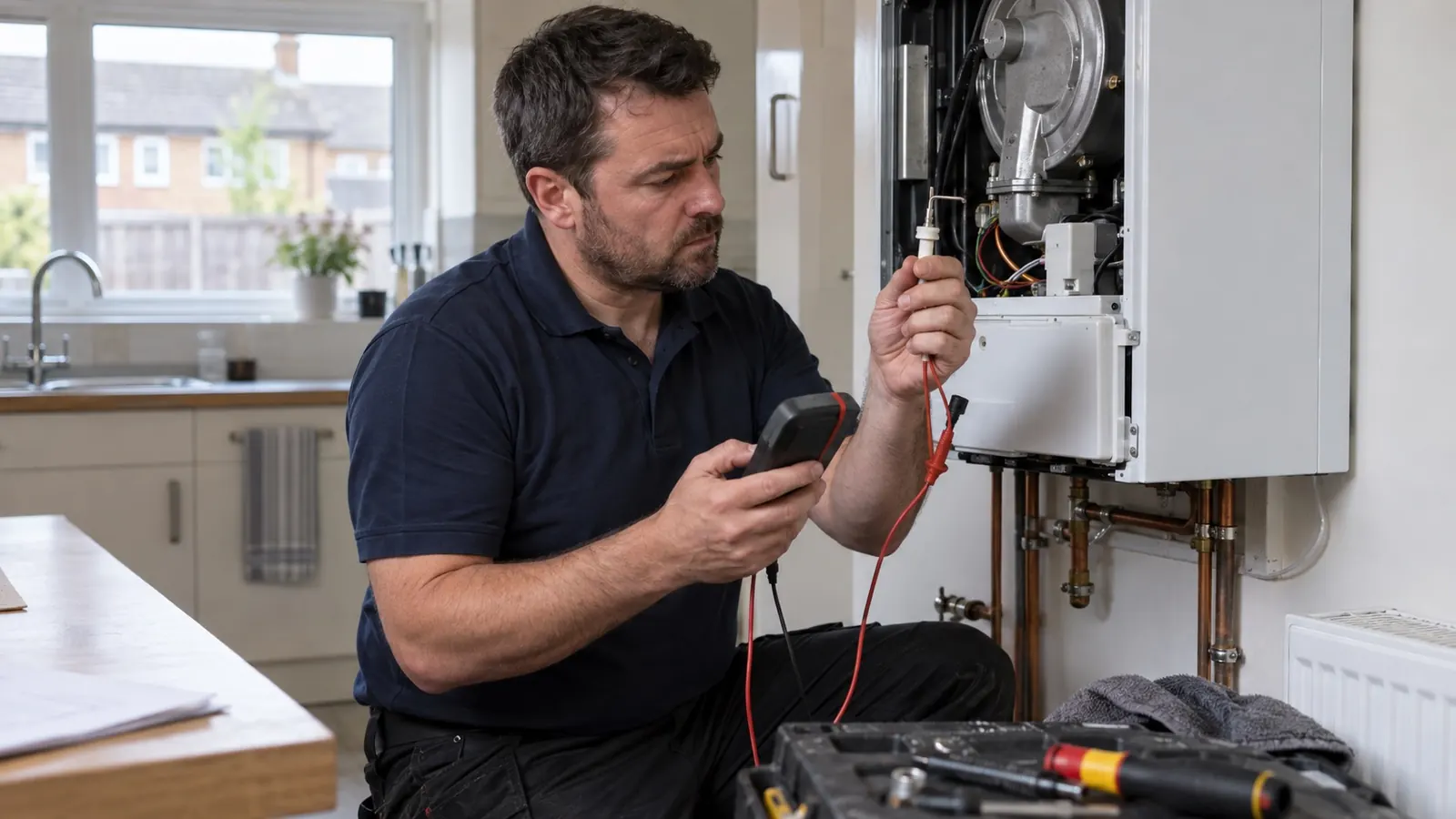
If your Ideal boiler has gone cold and the display shows L2, it has locked itself out because it could not light. It is one of the most common codes we are called to across Milton Keynes, especially on frosty mornings, and it is not always a sign of an expensive repair. Sometimes the cause is something you can sort in two minutes. Sometimes it is a worn part inside the boiler. This guide helps you tell the difference.
What L2 means on an Ideal boiler
L2 appears on Ideal's Logic, Logic+, Logic Max and Vogue ranges and means ignition lockout. When the boiler starts, the fan runs, the gas valve opens, the electrode sparks, and a flame should establish at the burner. A sensor confirms the flame is there. If it does not see one after a set number of attempts, the boiler stops trying and locks out rather than keep releasing gas. Ideal's own literature lists L2 as "flame loss" or ignition lockout for this reason.
The lockout is the boiler protecting you. It is doing its job. But the reason it could not light still needs finding, and resetting it over and over does not do that.
The common causes
- Gas supply. The boiler cannot light without gas. Meter turned off after work on the supply, a prepayment meter out of credit, an emergency control valve knocked closed, or a wider supply problem in the street.
- Frozen condensate pipe. The most common winter cause in Milton Keynes. The plastic pipe that drains acidic water from the boiler freezes where it runs outside, the boiler cannot drain, and it locks out. You often hear gurgling first.
- Ignition electrode or lead. The spark gets weak, the electrode cracks or moves out of position, and the burner lights late or not at all. A wear item on any boiler more than a few years old.
- Flame detection fault. The boiler is lighting but the sensing electrode or its connection cannot prove it, so the boiler shuts down anyway.
- Gas valve. A spark but no flame, and other gas appliances work fine. The valve is not opening properly.
- PCB. The circuit board is not running the ignition sequence correctly. Usually shows as an L2 with no clear pattern, sometimes alongside other codes.
- Condensate trap or flue problem. A blocked trap or a flue issue can upset combustion enough to prevent a stable flame. Less common, but it is why an engineer checks the whole chain rather than just swapping the electrode.
Safe checks you can do yourself
Three things, and only these three. None of them involve the boiler casing or any gas fitting.
- Check the gas is on. Try the hob or gas fire. If nothing gas-powered works, the problem is your supply, not the boiler. Check the emergency control valve at the meter is open (the lever in line with the pipe, not across it) and that a prepayment meter has credit. If you have had a meter exchange or any work on the gas supply recently, it may simply have been left off.
- Check the condensate pipe. Find the white or grey plastic pipe that leaves the bottom of the boiler and runs outside to a drain or soakaway. If it is below freezing and the outside section feels solid, it is probably frozen. Pour warm water, never boiling, along the pipe, concentrating on bends, vertical sections and the point where it exits the wall. A hot water bottle wrapped in a tea towel held against the pipe also works. Then reset.
- Reset the boiler, up to three times. Turn the mode knob to reset (or press the reset button, depending on the model) and wait. If it lights and stays lit, the L2 was a passing glitch, perhaps a brief supply dip. If L2 comes back after three attempts, stop. Repeated resets do not fix anything and can hide a fault that needs proper attention.
If you smell gas at any point, leave the property, do not operate light switches, and call the National Gas Emergency Service on 0800 111 999.
Everything beyond these checks is inside the boiler. By law, work on a gas appliance must be done by a Gas Safe registered engineer. You can check any engineer's card on the Gas Safe Register.
What an engineer does on an L2 call
We work through the ignition chain in order: gas supply and working pressure, condensate route and trap, the electrode gap and lead, flame signal, fan, gas valve, then the PCB. Most L2 faults are found in the first three steps and fixed in the same visit. The electrode and lead are common van-stock parts for Ideal boilers, and Ideal spares are well stocked at Milton Keynes merchants, so even a gas valve rarely needs a long wait.
What the repair costs depends on what is found, and we will not guess at it in a blog. A frozen condensate pipe cleared and insulated on the visit is the cheapest outcome. An electrode is a modest part. A gas valve or PCB is a bigger part and more labour. On a Logic more than twelve or so years old, a PCB can be the point where we tell you honestly that the money is better spent towards a new boiler than into the old one, and we would rather have that conversation than fit an expensive board to a boiler with two winters left in it. Our boiler repair page explains how we quote before starting work.
Stopping L2 coming back
- Insulate the condensate pipe. Foam lagging on the outside run, or rerouting it to an internal drain, prevents most winter lockouts. Ideal's installation instructions also allow a larger diameter external pipe for the same reason.
- Keep the heating ticking over in a cold snap. A low overnight setting keeps warm condensate moving through the pipe.
- Annual service. An engineer checks the electrode gap, flame signal, gas pressure and condensate trap before they cause a breakdown. It is also what keeps the Ideal warranty valid. See our boiler servicing page.
- Do not ignore an occasional L2. A lockout once a fortnight is a component on the way out. It is cheaper to replace it in October than to lose heating in January.
- Watch the pressure. If you are losing pressure alongside L2, that is a separate fault worth mentioning when you call. Our boiler losing pressure guide explains what to look for.
Frequently asked questions
Can I reset an Ideal boiler showing L2?
Yes, up to three times. Wait a few minutes between attempts to see whether it lights and stays lit. If L2 returns after the third reset, leave it locked out and call an engineer.
Is an L2 error dangerous?
The lockout itself is a safety feature, not a danger. It stops gas being released when a flame cannot be confirmed. The risk comes from trying to force the boiler to run or from opening it up yourself. If you smell gas, leave and call 0800 111 999.
Why does my Ideal boiler show L2 in cold weather?
Almost always a frozen condensate pipe. Once thawed the boiler usually clears on reset. If it happens every winter, the pipe needs insulating or rerouting.
Why does L2 keep coming back?
A recurring L2 points to a worn electrode, a failing gas valve, a PCB fault, or a condensate pipe that keeps freezing. Each reset clears the code, not the cause. An engineer can identify which part it is so it stops.
Is L2 covered by the warranty?
If the boiler is within its Ideal warranty and has been serviced annually, component failures such as an electrode, gas valve or PCB are normally covered. A frozen condensate pipe is not a boiler defect and will not be. Check your registration paperwork.
Ideal repairs across Milton Keynes
We are an Ideal approved installer and repair Ideal boilers across Milton Keynes, including Bletchley, Newport Pagnell and Wolverton. If your boiler is stuck on L2 after the checks above, get in touch or call 07805 844 016.
Need Professional Advice?
Our Gas Safe registered engineers are ready to help with all your heating needs. Get a free, no-obligation quote today.