Boiler Pressure Too High? How to Fix It
TL;DR
Boiler pressure above roughly 2.75 bar (when cold) is too high. The quickest fix is to bleed a radiator to release water and bring the pressure down — and check the filling loop is fully closed, as a loop left open is the most common cause. If the pressure keeps climbing on its own, the expansion vessel or pressure relief valve may be faulty and needs a Gas Safe engineer.
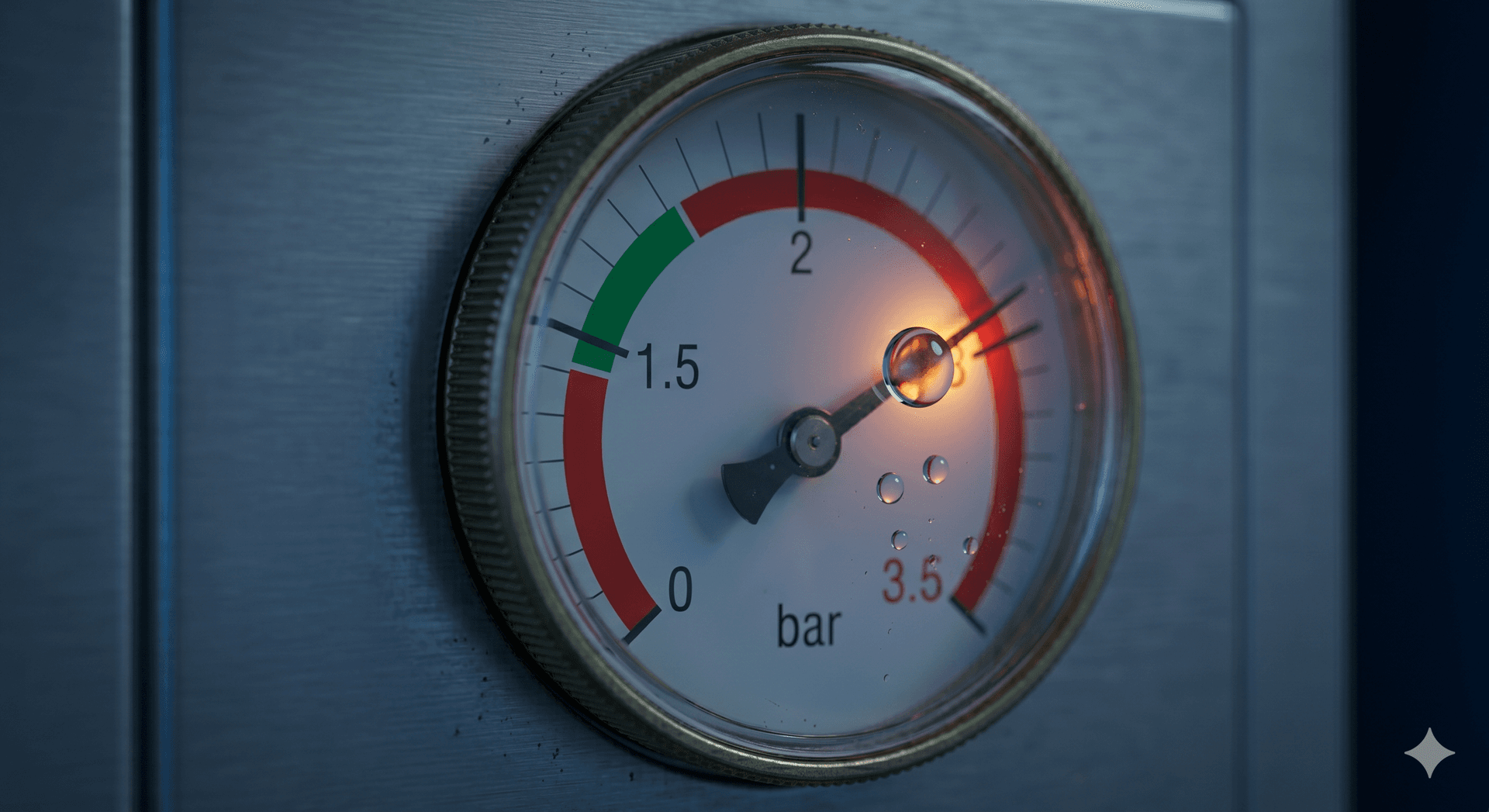
A boiler pressure gauge sitting in the red zone is an unsettling sight — but in most cases, high boiler pressure is straightforward to deal with, and you can often sort it yourself in a few minutes. This guide explains what counts as "too high", why it happens, and exactly how to bring the pressure back down safely.
How High Is Too High? The Direct Answer
When your system is cold, the pressure should sit between 1 and 1.5 bar. It's too high once it climbs above roughly 2.75 bar, and definitely a problem above 3 bar. The two quickest things to do are:
- Check the filling loop is fully closed — a loop left even slightly open will keep pushing mains water into the system and raise the pressure.
- Bleed a radiator to release a little water and bring the pressure down into the green zone.
If you're not sure what counts as a healthy reading in the first place, our guide on what your boiler pressure should be explains the ideal numbers.
What Causes High Boiler Pressure?
There are three common culprits, and they range from a two-minute fix to a job for an engineer.
1. The filling loop has been left open (most common)
The filling loop is the silver braided hose, with a valve or tap at each end, used to top up your system. If it isn't closed fully after repressurising, mains water keeps trickling in and the pressure creeps up and up. This is by far the most frequent cause we see in Milton Keynes homes — and the easiest to fix. Our guide on how to repressurise a boiler shows where the loop is.
2. A faulty expansion vessel
The expansion vessel absorbs the extra pressure created when water heats and expands. If it loses its air charge, there's nowhere for that expansion to go — so the pressure spikes sharply every time the heating fires up. A tell-tale sign is pressure that's normal when cold but shoots toward 3 bar when hot. Re-charging or replacing the vessel is a job for a Gas Safe engineer.
3. A faulty pressure relief valve (PRV)
The PRV is a safety device that releases water if pressure gets dangerously high, venting through a small copper pipe outside. If it fails or gets stuck, pressure can build unchecked. Conversely, a PRV stuck slightly open will cause the opposite problem — a system that keeps losing pressure. Either way, the PRV itself should only be replaced by a qualified engineer.
How to Reduce Boiler Pressure by Bleeding a Radiator
This is the safest DIY method. Bleeding a radiator releases a small amount of water from the system, which lowers the overall pressure. Here's how:
- Turn the heating off and let the system cool down. Working on a cold system is safer and gives an accurate reading.
- Double-check the filling loop is fully closed at both ends. There's no point releasing pressure if more water is coming in.
- Find a radiator to bleed — choose one upstairs, as it's furthest from the boiler.
- Place a cloth and a small bowl under the bleed valve at the top corner of the radiator to catch drips.
- Insert the radiator key (or a flat-head screwdriver on newer valves) and turn it slowly anti-clockwise — just a quarter to half a turn.
- Let water trickle out for a few seconds, watching the boiler pressure gauge as you do.
- Close the valve firmly as soon as the gauge reaches 1.2-1.5 bar. Don't overdo it — you can always release a little more.
- Wipe up any spills and recheck the gauge after a few minutes to confirm it's stable.
If you've never bled a radiator before, our full radiator bleeding guide walks through it in more detail. It's a water-side job, so it's perfectly safe to do yourself.
High Pressure: Causes and Costs in Milton Keynes
| Cause | DIY or Engineer? | Typical MK Cost |
|---|---|---|
| Filling loop left open | DIY — close the valve, bleed a radiator | £0 |
| Re-charging expansion vessel | Gas Safe engineer | £80 - £150 |
| Replacing expansion vessel | Gas Safe engineer | £150 - £300 |
| Replacing pressure relief valve | Gas Safe engineer | £100 - £200 |
| Diagnostic callout | Gas Safe engineer | £60 - £90 |
Costs are typical guide prices for the Milton Keynes area and vary with boiler make, parts and access. We'll always confirm a price before starting any boiler repair work.
When to Call a Gas Safe Engineer
Bleeding a radiator handles the immediate problem, but call an engineer if:
- The pressure climbs back up again within hours or days, even with the filling loop closed
- The pressure jumps sharply only when the heating is hot (a classic expansion vessel symptom)
- Water is constantly dripping from the overflow pipe outside (a possible PRV fault)
- You've bled radiators repeatedly and the pressure won't stay in range
These all point to a component fault that needs proper diagnosis. Plumbline MK covers the whole of Milton Keynes, including Bletchley and Newport Pagnell, and we can usually attend the same day for urgent issues.
Is High Boiler Pressure Dangerous?
Modern boilers are designed with the pressure relief valve as a safety backstop, so a reading of 2.5-3 bar isn't an immediate danger — the PRV will vent excess water before pressure becomes hazardous. However, persistently high pressure stresses seals, joints and the heat exchanger over time, and a leaking PRV slowly loses water from your system. It's worth resolving promptly rather than ignoring.
Need expert help? Contact Plumbline MK for a free, no-obligation quote. Call 07805 844 016 for same-day response across Milton Keynes and surrounding areas.
Frequently Asked Questions
Is high boiler pressure dangerous?
It's rarely an immediate danger because the pressure relief valve vents excess water before pressure reaches hazardous levels. However, persistent high pressure stresses the boiler's seals and components, and a constantly discharging valve slowly drains your system. It's best fixed promptly rather than left.
Can I bleed a radiator to reduce boiler pressure?
Yes — bleeding a radiator releases a small amount of water from the system and lowers the pressure. It's a safe water-side job. Turn the heating off first, check the filling loop is closed, open the bleed valve gently, and stop once the gauge reads 1.2-1.5 bar.
Why does my boiler pressure keep rising?
The most common reason is a filling loop that hasn't been fully closed, allowing mains water to keep entering the system. If the loop is definitely shut and pressure still rises — especially when the heating is hot — the expansion vessel has likely lost its charge and needs a Gas Safe engineer.
How much does an expansion vessel cost in Milton Keynes?
Re-charging an existing expansion vessel typically costs £80-£150, while a full replacement is usually £150-£300 depending on the boiler make and access. We always confirm the price after diagnosis and before carrying out any work.
Need Professional Advice?
Our Gas Safe registered engineers are ready to help with all your heating needs. Get a free, no-obligation quote today.