Central Heating Not Working? MK Fix Guide
TL;DR
Most central heating problems in Milton Keynes have straightforward causes — trapped air, sludge buildup, or a stuck TRV. Bleed radiators yourself (cold at top), but call a Gas Safe engineer for cold-at-bottom issues, pump failures, or kettling noises. A power flush costs £300–£600 and is especially important in MK’s hard water area.
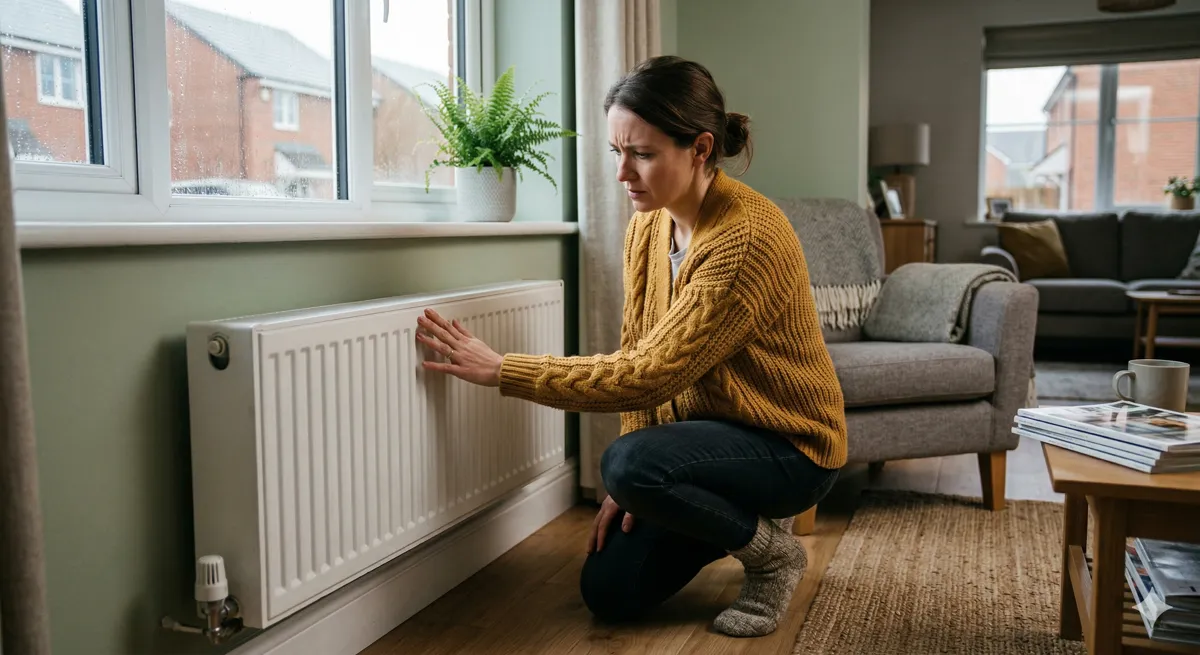
Few things are as frustrating as coming home to a cold house when your heating should be on. You’ve checked the thermostat, tried turning it off and on again, and still nothing. The radiators are lukewarm in some rooms, stone cold in others, and the boiler seems to be running but achieving nothing useful.
If you’re in Milton Keynes, you’re not alone. Central heating problems are one of the most common callouts for plumbers across MK, especially in older estates around Fishermead, Netherfield, and Bletchley where heating systems have been working hard for decades.
The good news? Most central heating issues have straightforward causes, and some you can even diagnose yourself before calling an engineer. Here’s a practical guide to working out what’s gone wrong and what to do next.
Common Central Heating Problems in Milton Keynes Homes
Central heating systems are surprisingly simple in principle — a boiler heats water, a pump pushes it around pipes, and radiators release the heat into your rooms. When something goes wrong, it’s usually one of a handful of causes.
| Symptom | Likely Cause | DIY or Professional? |
|---|---|---|
| Radiators cold at the top | Trapped air in the system | DIY — bleed the radiator |
| Radiators cold at the bottom | Sludge buildup (magnetite) | Professional — powerflushing needed |
| One radiator cold, others hot | TRV stuck or needs balancing | DIY to check — may need engineer |
| All radiators cold, boiler running | Pump failure or diverter valve | Professional — Gas Safe engineer |
| Banging or kettling noises | Limescale on heat exchanger | Professional — common in MK hard water |
| Boiler pressure dropping below 1 bar | Slow leak or faulty PRV | Check filling loop first — then call engineer |
| Heating works but no hot water | Diverter valve stuck | Professional — internal boiler component |
Radiators Cold at the Top — Air in the System
This is the single most common radiator issue, and it’s one you can fix yourself in about five minutes. Air gets trapped at the top of your radiators over time, preventing hot water from filling the whole panel. You’ll notice the top of the radiator is cool to the touch while the bottom is warm.
To bleed a radiator, you need a radiator bleed key (available from any hardware shop in MK for under £2). Turn your heating off and let the system cool for 10 minutes. Place a cloth underneath the bleed valve at the top corner of the radiator, insert the key, and turn anti-clockwise. You’ll hear air hissing out. Once water starts to trickle, close the valve. Check your boiler pressure afterwards — it should sit between 1 and 1.5 bar. If it’s dropped below 1 bar, repressurise via the filling loop underneath the boiler.
Radiators Cold at the Bottom — Sludge Buildup
If your radiators are hot at the top but cold at the bottom, that’s a different problem entirely. This is caused by magnetite sludge — a mix of rust and debris that settles at the bottom of radiators over time. It’s especially common in Milton Keynes because MK sits in a hard water area, which accelerates corrosion inside heating systems.
Sludge buildup can’t be fixed by bleeding. The system needs a professional power flush, which involves pumping a chemical solution through your entire heating system at high pressure to clear the debris. For a typical 10-radiator MK home, expect to pay £300–£600. It takes 4–8 hours, but the improvement in heating performance is usually dramatic.
Worth knowing:
Milton Keynes’ hard water means limescale and sludge build up faster here than in soft water areas. If your system is over 8 years old and has never been flushed, there’s a good chance it’s affecting your heating efficiency.
One Radiator Cold While Others Are Hot
When just one radiator refuses to warm up, the cause is usually localised. Start by checking the thermostatic radiator valve (TRV) — that’s the numbered dial on one side. If it’s set to the right number but the radiator is cold, the TRV pin might be stuck. You can sometimes free it by removing the plastic head and gently pressing the pin up and down with pliers. If that doesn’t work, the TRV likely needs replacing — a straightforward job for a plumber.
The other possibility is a balancing issue. Radiators closest to the boiler get more flow than those furthest away. Balancing involves adjusting the lockshield valve on each radiator to even out the flow. It’s a fiddly job that takes patience and a radiator thermometer, so most homeowners prefer to have an engineer do it.
Banging, Kettling, and Strange Noises
Loud banging when your heating kicks in, or a rumbling sound from the boiler itself, usually points to limescale buildup on the heat exchanger. This is called “kettling” because the boiler starts to sound like a kettle boiling. In Milton Keynes, where the water is particularly hard, kettling is one of the most
frequent boiler complaints engineers deal with.
Kettling reduces your boiler’s efficiency and, if left untreated, can lead to heat exchanger failure — one of the most expensive boiler repairs. A power flush combined with fitting a magnetic filter (like a MagnaClean) can resolve the issue and prevent it coming back.
When Your Boiler Pressure Keeps Dropping
If your boiler pressure keeps falling below 1 bar, you’ve either got a slow leak somewhere in the system or the pressure relief valve (PRV) is faulty. Start by checking for visible leaks around radiator valves, pipe joints, and underneath the boiler. Even a tiny drip can cause pressure to drop over days.
If you can’t see a leak, repressurise the system using the filling loop (a small valve or flexible hose underneath the boiler). Open it slowly until the pressure gauge reads 1.0–1.5 bar, then close it. If you’re having to do this more than once a month, there’s an underlying issue that needs an engineer to investigate.
What You Can Fix Yourself vs When to Call an Engineer
| Task | DIY Safe? | Notes |
|---|---|---|
| Bleeding radiators | Yes | Simple and safe — no gas work involved |
| Repressurising via filling loop | Yes | Follow boiler manual instructions |
| Checking/unsticking TRV pin | Yes | Remove plastic head carefully |
| Balancing radiators | Possible | Time-consuming but no gas work |
| Power flushing | No | Requires specialist equipment |
| Replacing a pump or diverter valve | No | Internal boiler components — Gas Safe required |
| Fixing kettling/heat exchanger issues | No | Gas Safe registered engineer only |
| Topping up inhibitor | Possible | Can be done via a radiator but engineer recommended |
Quick tip: Before calling an engineer, note down your boiler model (printed on the front panel), the current pressure reading, and which radiators are affected. This helps the engineer prepare and can save time on the visit.
How Milton Keynes Housing Affects Your Heating System
The type of property you live in makes a big difference to the kind of central heating problems you’re likely to encounter. Milton Keynes has a uniquely varied housing stock, and local engineers who’ve worked across the city know what to expect in each area.
Properties on the 1960s and 70s estates in Fishermead and Netherfield often have older microbore pipework — narrower pipes that are more prone to sludge blockages and slower to heat. The 1970s BISF steel-framed houses in Bletchley have their own quirks, including non-standard pipework runs that can make troubleshooting harder.
Newer builds across Tattenhoe, Brooklands, and Broughton typically have modern manifold-based systems that are more efficient but still need regular maintenance. Even a 5-year-old system in a new build can develop sludge problems if no magnetic filter was fitted at installation.
| Older | terraces | in |
|---|---|---|
| Wolverton | and | Victorian |
| properties | in | Stony |
| Stratford | sometimes | still |
have gravity-fed conventional systems with a tank in the loft. These can develop air locks, have lower pressure, and may benefit from a system upgrade to a combi or system boiler.
Getting Your Central Heating Fixed in Milton Keynes
If you’ve worked through the DIY checks above and your heating still isn’t right, it’s time to call a Gas Safe registered engineer. For central heating work that involves the boiler or gas supply, it’s a legal requirement that the person doing the work is on the Gas Safe Register.
Plumbline MK covers central heating diagnostics and repairs across all Milton Keynes postcodes, from MK1 through to MK19 and surrounding areas including Newport Pagnell, Woburn Sands, and Buckingham. As a Gas Safe registered, manufacturer-accredited team with over 10 years in Milton Keynes and 100+ five-star reviews, we offer same-day response and transparent, fixed-price quotes with no hidden charges.
Whether it’s a quick radiator fix or a full system diagnosis, call us on 07805 844 016 or visit plumblinemk.co.uk to get in touch.
Need expert help? Contact Plumbline MK for a free, no-obligation quote. Call 07805 844 016 for same-day response across Milton Keynes and surrounding areas.
Frequently Asked Questions
How much does a central heating repair cost in Milton Keynes?
Most central heating repairs in Milton Keynes cost between £90 and £300, depending on the fault. A simple
| callout | and |
|---|---|
| diagnosis | typically |
| costs | £60–£100, |
| with | the |
| repair | on |
top.
Replacing
a thermostatic radiator valve is usually under £100 including parts and labour. More involved work like a pump replacement or diverter valve repair sits in the £150–£300 range. A full power flush for a 10-radiator system costs £300–£600. Always ask for a fixed-price quote before any work starts so there are no surprises.
Can I bleed my radiators myself or do I need a plumber?
Yes, bleeding radiators is a safe and simple DIY task that any homeowner can do. You just need a bleed key (under £2 from any hardware shop) and a cloth to catch drips. Turn off your heating, wait 10 minutes for the system to cool, then open the bleed valve at the top corner of the radiator until
water comes out. Close it, then check your boiler pressure — if it’s dropped below 1 bar, top it up using the filling loop. If bleeding doesn’t fix the problem, or if radiators are cold at the bottom rather than the top, you’ll need a professional to investigate.
When should I consider replacing my central heating system instead of repairing it?
Consider replacement when your system is over 15 years old and repairs are becoming frequent — more than two breakdowns a year is a strong signal. The 50% rule is a useful guide: if a repair costs more than half what a new system would cost, replacement makes more financial sense. Older systems running at 60–70% efficiency cost significantly more to run than modern condensing boilers at 92%+. A new combi boiler installation in Milton Keynes starts from around £1,800 supply and fit, with some local companies offering finance to spread the cost.
Need Professional Advice?
Our Gas Safe registered engineers are ready to help with all your heating needs. Get a free, no-obligation quote today.