Cold Radiators & Noisy Pipes: Milton Keynes Troubleshooting
TL;DR
Cold at top = bleed it. Cold at bottom = sludge (needs power flush). One cold radiator = check the TRV. Banging pipes = water hammer or limescale. Milton Keynes’ hard water accelerates sludge buildup — fit a magnetic filter (£120–£180) to prevent it.
You’re paying for heating that isn’t working properly. Some rooms are warm enough, others feel like the radiators are decorative. There’s an occasional bang from the pipes when the system kicks in, and you’ve got a nagging feeling the boiler is working harder than it should be.
If that sounds familiar, you’re dealing with one of the most common heating complaints in Milton Keynes — and the good news is that most of these issues can be identified with some basic checks before you even pick up the phone.
A Room-by-Room Approach to Diagnosing the Problem
Rather than guessing, work through your home systematically. Turn your heating on, set the thermostat to its maximum, and wait 30 minutes. Then check every radiator in the house. Feel the top, middle, and bottom. Note which ones are hot, which are warm, and which are cold — and where on each radiator the heat stops.
This simple exercise tells you a lot. If most radiators are hot but one or two are completely cold, the problem is localised. If all radiators are lukewarm, the issue is systemic — likely the boiler, pump, or a circulation problem.
| What You Find | What It Means | What to Try First |
|---|---|---|
| Hot at bottom, cold at top | Air trapped in the radiator | Bleed the radiator with a bleed key |
| Hot at top, cold at bottom | Sludge settled at the base | Professional power flush needed |
| Completely cold, others fine | TRV stuck closed or valve shut | Check TRV setting and lockshield valve |
| All radiators lukewarm | Pump issue, low pressure, or sludge throughout | Check boiler pressure, then call engineer |
| Radiators hot downstairs, cold upstairs | Weak pump or air lock in upper pipes | May need pump upgrade or system bleed |
| Clicking/ticking when heating on | Normal — pipes expanding | No action needed |
| Banging or loud knocking | Water hammer or loose pipes | Check pipe clips; may need engineer |
| Rumbling from the boiler | Limescale on heat exchanger (kettling) | Professional descaling or power flush |
Understanding Why Milton Keynes Homes Are Especially Prone
Milton Keynes sits in a hard water area, which means the water flowing through your heating system has a higher mineral content. Over time, this creates limescale deposits on your boiler’s heat exchanger and contributes to sludge building up inside radiators and pipes.
The effect is cumulative. A system that’s been running for 8–10 years in MK without a flush or magnetic filter will almost certainly have some degree of sludge buildup. Homes with older microbore pipework — common in Fishermead, Netherfield, and parts of Bletchley — are especially vulnerable because the narrower pipes clog faster.
Worth knowing:
A magnetic filter fitted to your heating system catches metallic debris before it circulates. If you don’t have one, ask your engineer about fitting a MagnaClean or similar device during your next service. It typically costs £120–£180 fitted and can significantly extend the life of your boiler and radiators.
Step-by-Step: Bleeding Your Radiators Properly
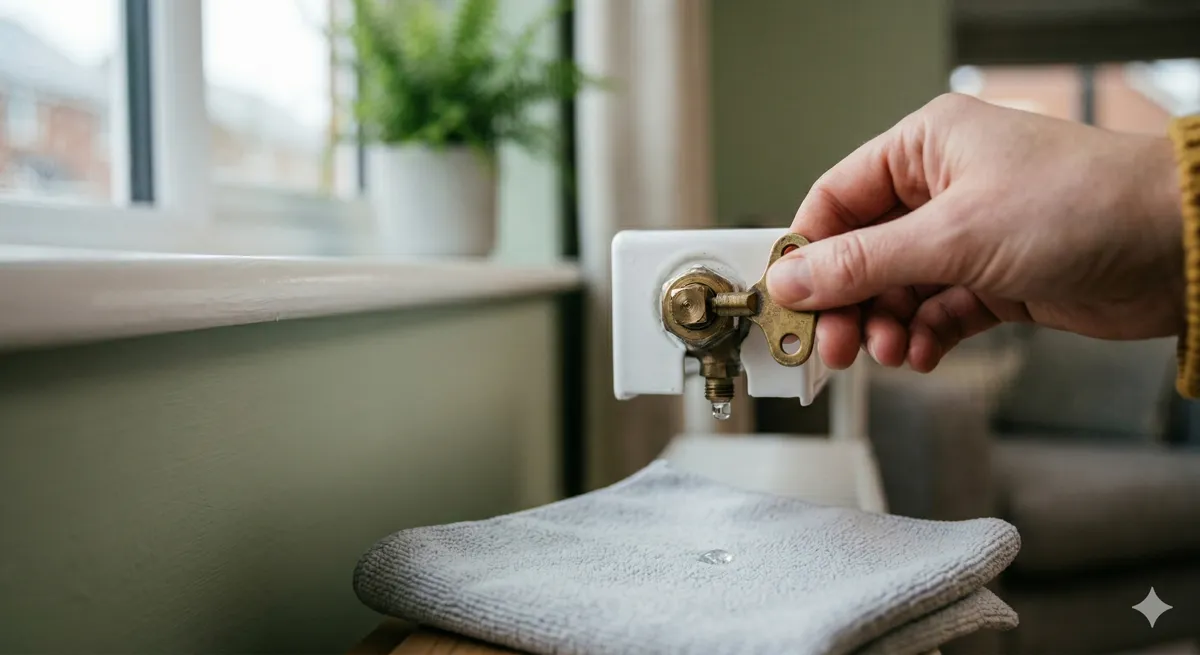
Bleeding radiators is the first thing to try when you’ve got cold spots at the top. Here’s how to do it properly:
Step 1:
Turn off your central heating and wait at least 10 minutes for the water to stop circulating.
Step 2:
Start with the radiator furthest from the boiler (usually upstairs at the far end of the house).
Step 3:
Place a cloth or small container under the bleed valve. Insert your bleed key and turn anti-clockwise — slowly.
Step 4:
You’ll hear air hissing out. Hold steady until water starts to trickle, then close the valve quickly.
Step 5:
Move to the next radiator and repeat. Work your way back towards the boiler.
Step 6:
Check your boiler pressure gauge. If it’s dropped below 1 bar, use the filling loop to bring it back to 1.0–1.5 bar.
Step 7:
Turn the heating back on and check each radiator after 30 minutes.
Quick tip:
If you’re bleeding radiators regularly — more than once every few months — there’s likely air entering the system through a leak or a faulty component. That’s worth having an engineer investigate rather than just bleeding repeatedly.
Power Flushing: When Bleeding Isn’t Enough
If your radiators are cold at the bottom, or if several radiators are underperforming despite bleeding, the problem is almost certainly sludge. A power flush is the standard solution.
During a power flush, an engineer connects a pump to your system and circulates a chemical cleaning solution at high pressure through every radiator and pipe. This breaks up sludge, magnetite, and limescale, flushing it out of the system. The process takes 4–8 hours for a typical MK home.
| System Size | Typical Cost (MK, 2026) | Time Required |
|---|---|---|
| 5–8 radiators | £300–£450 | 4–5 hours |
| 8–12 radiators | £400–£600 | 5–7 hours |
| 12+ radiators | £500–£700+ | 6–8 hours |
After a power flush, your engineer should add inhibitor to the system (a chemical that prevents future corrosion) and ideally fit a magnetic filter if one isn’t already in place.
When Noisy Pipes Need Attention
Some pipe noise is completely normal. Gentle clicking or ticking when the heating turns on is just copper pipes expanding as hot water flows through them. This is common in newer builds across Emerson Valley and Brooklands where pipes run through floor joists and wall cavities.
Loud banging, however, is a different matter. This is usually “water hammer” — caused by water suddenly stopping or changing direction in the pipes. It can be caused by loose pipe clips, a faulty valve, or high water pressure. Persistent banging is worth having an engineer look at, partly because it’s annoying but also because it can stress pipe joints over time.
A deep rumbling or “kettling” sound from the boiler itself indicates limescale buildup on the heat exchanger. This is common in Milton Keynes due to the hard water and should be addressed promptly — left untreated, it can lead to heat exchanger failure, which is one of the most expensive boiler repairs at £300–£600+ for parts and labour.
Getting Expert Help in Milton Keynes
If you’ve tried bleeding your radiators and checking the basics but your heating still isn’t performing, a Gas Safe registered engineer can run proper diagnostics. This usually involves checking pump output, measuring flow and return temperatures, testing valves, and assessing whether the system
needs flushing.
Plumbline MK specialises in central heating diagnostics and repairs across all MK postcodes. We’re Gas Safe registered, accredited by Worcester Bosch, Vaillant, Baxi, and Ideal, and offer transparent fixed-price quotes. With 100+ five-star reviews and same-day response as standard, we’re here to get your heating working properly. Call 07805 844 016 or visit plumblinemk.co.uk.
Need expert help? Contact Plumbline MK for a free, no-obligation quote. Call 07805 844 016 for same-day response across Milton Keynes and surrounding areas.
Frequently Asked Questions
What is power flushing and do I really need it?
Power flushing is a deep clean of your central heating system using chemicals and high-pressure water flow to remove sludge, rust, and limescale from radiators and pipes. You likely need it if your radiators are cold at the bottom, your boiler is making kettling noises, or your system is over 8 years old and has never been flushed. In Milton Keynes’ hard water area, sludge builds up faster than average, making regular flushing more important. A power flush for a typical MK home costs £300–£600 and takes 4–8 hours. The improvement in heating performance is usually noticeable immediately.
Why is my heating system so noisy?
Heating system noise is usually caused by one of three things. Gentle clicking is normal pipe expansion and nothing to worry about. Loud banging (“water hammer”) is caused by sudden changes in water flow, often from loose pipes or a faulty valve. A rumbling or kettling sound from the boiler indicates limescale buildup on the heat exchanger — this is especially common in hard water areas like Milton Keynes. While clicking is harmless, banging and kettling should both be checked by a Gas Safe engineer to prevent further damage.
How often should radiators be serviced in a hard water area like Milton Keynes?
In a hard water area like Milton Keynes, your heating system benefits from an annual boiler service that includes checking radiator performance and system pressure. A full power flush is recommended every 5–8 years, or sooner if you’re noticing cold spots or reduced efficiency. Fitting a magnetic filter and ensuring the system has adequate inhibitor can extend the intervals between flushes. Your annual boiler service (£80–£120) should include a check of the heat exchanger condition, which is where hard water causes the most damage.
Need Professional Advice?
Our Gas Safe registered engineers are ready to help with all your heating needs. Get a free, no-obligation quote today.