Hive Thermostat Not Working: Fixes
TL;DR
A smart thermostat is three separate devices — the wall unit, the receiver wired to the boiler, and the hub connecting them to the internet. Almost every fault is a break in one of those links. Work out which link is broken before changing anything, because the fix for a connection problem is completely different from the fix for a heating problem.
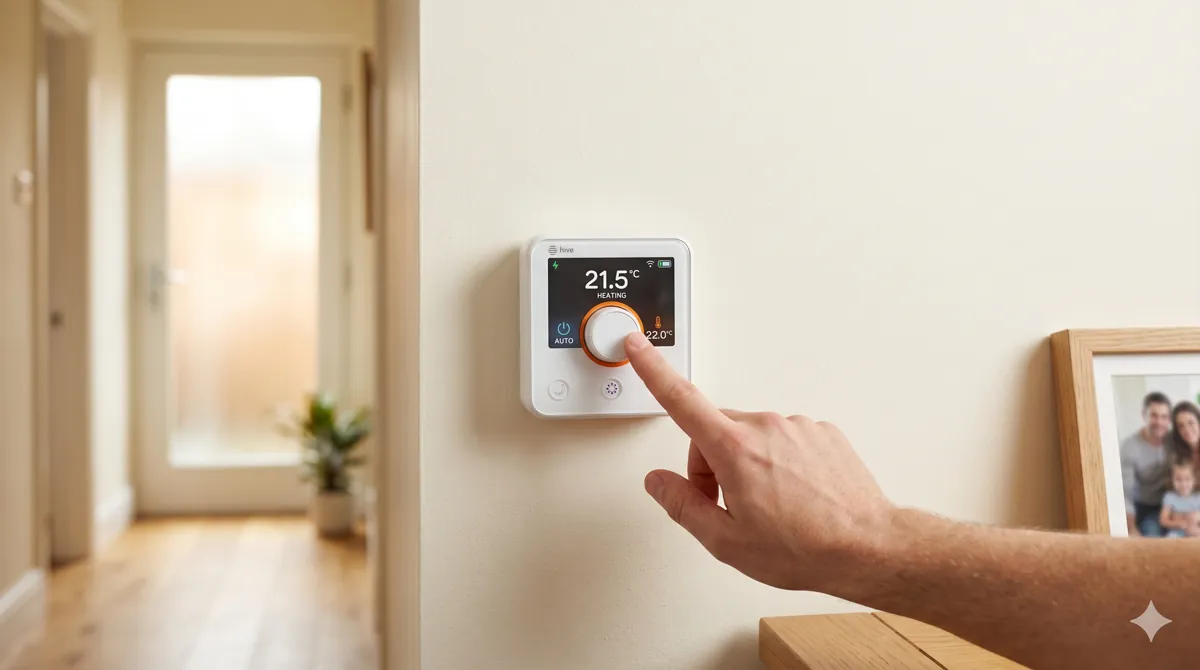
When a smart thermostat stops behaving, the instinct is to blame the thermostat. Usually the thermostat is fine. The system has three parts and they can fail independently, so the first job is working out which one is actually at fault.
Understand the Three Parts
- The thermostat. The unit on the wall. Measures room temperature and decides when heat is wanted.
- The receiver. Wired to the boiler, usually mounted beside it. This is what actually switches the boiler on and off.
- The hub. Plugged into your router. Connects the system to the internet so the app works.
Critically, the thermostat and receiver talk to each other directly by radio. The hub is only for remote control. That single fact resolves a lot of confusion: if the heating works but the app does not, your hub is the problem and your heating is fine.
Start Here: Which Symptom Do You Have?
The App Cannot Connect, But Heating Works
A hub or internet problem, not a heating problem. Check the hub is powered and its indicator is normal, check the ethernet cable to the router is seated, and restart the router. If the router has been changed or its password updated recently, the hub may need reconnecting.
Your heating will carry on running its stored schedule throughout. Nothing urgent is happening.
The Thermostat Screen Is Blank
Almost always batteries, on the wireless models. Replace all of them together with good quality alkalines rather than mixing old and new. If it is a wired unit, check the fused spur or the relevant circuit.
After a battery change the unit may take a minute or two to re-establish its link with the receiver. Give it time before assuming it is broken.
Thermostat and Receiver Have Lost Each Other
The thermostat shows a connection warning, or you change the temperature and nothing happens at the boiler. This is a pairing or signal problem.
Causes: dead batteries, the thermostat having been moved further from the receiver, a new large metal appliance or foil-backed insulation in the path, or the pairing having dropped after a power cut. Re-pairing per the manufacturer's instructions resolves most cases. If it drops repeatedly, the distance or the obstruction is the issue and the thermostat may need relocating.
The Boiler Runs When It Should Not
Check the obvious first: hot water schedules that overlap heating, holiday or frost protection modes, and boost timers left running. Then check whether the receiver is stuck — if the app says off and the receiver light indicates a call for heat, the receiver or its wiring is the suspect.
One frequent cause is a manual override left on the receiver itself from the last time someone worked on the boiler. It is worth a look before assuming a fault.
The Boiler Does Not Run When It Should
Now you need to separate control faults from heating faults. If the receiver clicks and shows it is calling for heat but the boiler does nothing, the problem is the boiler, not the thermostat. Check the boiler display for a fault code and read our guide on a boiler not firing up.
If the receiver does not respond at all, you are back to a pairing or wiring problem.
Rooms Never Reach the Set Temperature
This usually is not a thermostat fault at all. If the boiler runs but rooms stay cold, look at the heating system: unbalanced radiators, air in the system, undersized radiators, or a failing pump. Our guides on bleeding radiators and radiator sizing cover the usual culprits.
Also check where the thermostat is. One sited above a radiator, in direct sunlight, or in a draughty hall will read the room wrongly and shut the heating off early. Placement causes more complaints than electronics do.
The Order To Work Through
- Does the app connect? If not and heating works, it is the hub.
- Does the thermostat screen work? If not, batteries or power.
- Does the thermostat show a connection to the receiver? If not, re-pair.
- Does the receiver respond when you demand heat? If not, pairing or wiring.
- Does the boiler fire when the receiver calls? If not, it is a boiler fault.
- Does the house get warm? If not, it is a heating system issue.
Working through in this order stops you replacing a thermostat to fix a pump.
When To Call Someone
Battery changes, re-pairing and router restarts are all reasonable to do yourself. Anything behind the receiver's cover, at the boiler's terminals, or involving the wiring centre is not — a miswired heating control can leave a boiler firing when it should not, or a hot water circuit that never satisfies. Work on the gas side of the appliance must be done by someone on the Gas Safe Register.
If the fault is the heating system rather than the control, the Chartered Institute of Plumbing and Heating Engineering has guidance on balancing and commissioning sealed systems, which is where most persistent cold-room complaints are actually resolved.
Getting More Out Of It Once It Works
A smart thermostat only saves money if the rest of the system is set up to let it. Lower the boiler flow temperature so it condenses properly, balance the radiators, and set a schedule that reflects your actual routine. Our guide on choosing and configuring a smart thermostat covers this in detail.
Frequently Asked Questions
Will my heating work if the internet is down?
Yes. The schedule is stored locally and the thermostat talks to the receiver directly. You lose the app, not the heating.
How often do the batteries need changing?
Typically once a year or so. Replace them all at once, and treat a sudden drop in responsiveness as an early warning.
Can I move the thermostat to another room?
Wireless units, yes, within radio range. It changes which room controls the heating, so pick a representative living space.
Why does the boiler keep short-cycling?
Usually flow temperature set too high, an oversized boiler, or too few radiators open. It is a system setup issue rather than a thermostat fault.
The receiver is clicking but nothing happens.
The control side is working and the boiler is not responding. Check the boiler for a fault code and treat it as a boiler problem.
If You Are Stuck
If you have worked through the sequence and the fault is at the boiler or in the wiring, we can take it from there. Call 07805 844 016 or get in touch.
Need Professional Advice?
Our Gas Safe registered engineers are ready to help with all your heating needs. Get a free, no-obligation quote today.