Baxi Boiler Fault Codes Explained
TL;DR
Most Baxi fault codes fall into four families: pressure faults, ignition faults, temperature and overheat faults, and sensor or electrical faults. Pressure faults are usually fixable by a homeowner. Ignition and overheat faults are not - a boiler that locks out on ignition has already tried and failed several times, and repeatedly resetting it is the wrong response.
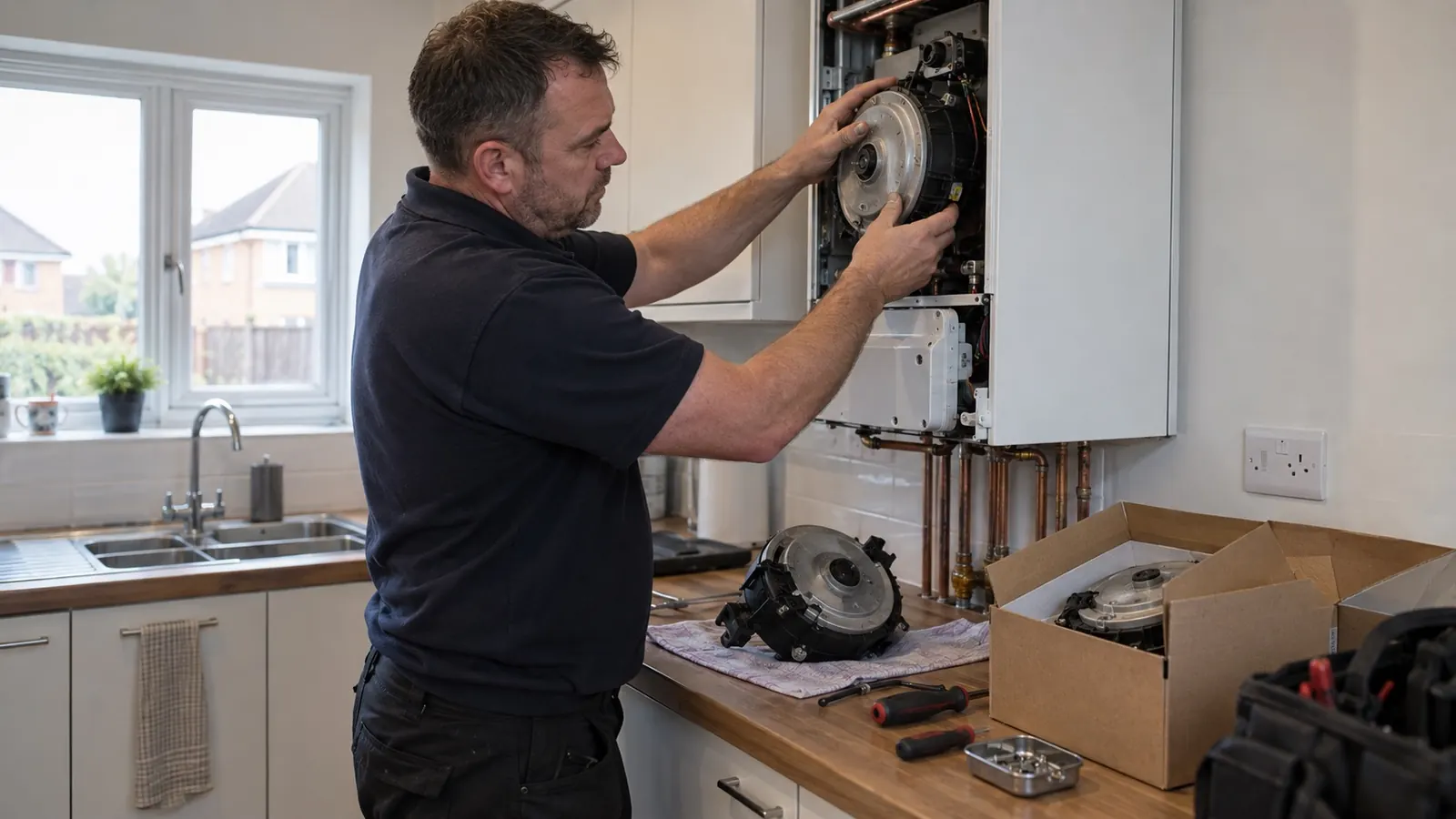
A fault code is the boiler telling you which of its safety checks failed. It is diagnostic information, not a verdict, and knowing which family a code belongs to tells you immediately whether it is something you can address or something that needs an engineer.
Codes vary between models and generations, so always cross-check the specific code against the manual for your exact appliance. What follows is the pattern behind them, which is far more useful than a list.
The Four Families
1. Pressure Faults
The most common thing homeowners see. The boiler monitors the water pressure in the sealed heating circuit and refuses to fire if it falls outside a safe band.
Low pressure normally means the system has lost water. Sometimes that is from bleeding radiators, sometimes from a small leak, sometimes from a failing expansion vessel. Topping up via the filling loop restores operation, and the gauge should sit around 1 to 1.5 bar cold.
The important part is what happens next. If it drops again within days or weeks, you have a leak or a component fault and repeated topping up is masking it - while introducing fresh oxygenated water that corrodes the system from the inside. Our guide on radiator leaks covers the most common source.
High pressure - above roughly 2.5 to 3 bar - usually points to a waterlogged expansion vessel or a filling loop left open. That is an engineer job.
2. Ignition and Flame Faults
These mean the boiler tried to light, failed to detect a flame, and locked out. Modern appliances make several attempts before giving up, so by the time you see the code the boiler has already retried.
Common causes are a gas supply problem, a failed ignition electrode, a dirty or failed flame sensing probe, a gas valve fault, or a blocked or frozen condensate pipe backing up into the appliance.
One reset is reasonable. If it locks out again, stop. Repeatedly resetting an ignition lockout means repeatedly attempting to introduce gas into a combustion chamber where combustion is not being confirmed, and that safety interlock exists for a reason. Our guide on a boiler not firing up goes through the diagnostic sequence properly.
3. Temperature and Overheat Faults
The boiler detected water hotter than it should be, or a temperature rising faster than expected. Almost always this means water is not moving through the heat exchanger fast enough.
Causes include a seized or failing pump, air trapped in the system, closed valves, a blocked heat exchanger from sludge and scale, or a failed thermistor reading incorrectly.
Overheat faults are worth taking seriously because the underlying cause - restricted flow - is what eventually cracks heat exchangers. If the boiler is also making a rumbling or bubbling noise, read our guide on boiler kettling, which describes the same underlying problem at an earlier stage.
4. Sensor, Fan and Electrical Faults
These cover a failed thermistor, a fan not reaching its target speed, an air pressure switch not proving, or a circuit board fault. The boiler is not detecting a dangerous condition - it is detecting that it can no longer verify conditions are safe, and shutting down accordingly.
Fan and air pressure faults deserve particular attention because they relate to safe removal of combustion products. Anything in this family that involves the flue or the fan is a stop-immediately-and-call-an-engineer situation. Our guide to boiler flue regulations explains why the flue side is treated so strictly.
What You Can Safely Do Yourself
- Read and note the exact code - take a photo of the display before resetting.
- Check the pressure gauge and top up if low, following the manufacturer's instructions.
- Check the thermostat and programmer are actually calling for heat.
- Check other gas appliances work, which tells you whether the supply is the issue.
- In cold weather, check the external condensate pipe for a freeze.
- Reset once.
What You Should Not Do
Do not remove the boiler casing. Do not reset repeatedly. Do not adjust gas settings. Do not attempt to clear a blocked heat exchanger yourself. All work on the gas side of the appliance must be done by an engineer on the Gas Safe Register, and you can verify any engineer's registration and the categories they are qualified for before letting them start.
If you smell gas at any point, do not touch electrical switches. Turn the supply off at the meter, ventilate, leave the property and call the national gas emergency line on 0800 111 999.
What an Engineer Will Actually Do
A competent diagnosis is not a parts lottery. The engineer will read the fault history from the boiler where the model supports it, check the gas supply and working pressure, test the relevant sensors against their expected resistance values, verify the flue and combustion with an analyser, and check system water quality. The last of these matters more than most people realise, because sludge is behind a large share of what present as component faults. The Chartered Institute of Plumbing and Heating Engineering publishes guidance on system water treatment for exactly this reason.
Preventing the Next One
Most repeat faults trace back to system condition rather than the appliance. An annual service, a working inhibitor dose, a clean magnetic filter and correct pressure will prevent a meaningful proportion of the callouts we attend. It is unglamorous, and it works.
Frequently Asked Questions
Can I clear a code by turning the boiler off at the wall?
Usually yes, but you have cleared the display, not the fault. The code will return.
Why does the same code keep coming back?
Because the underlying condition is unchanged. Recurrence is diagnostic information - tell your engineer the frequency and the pattern.
Does a fault code mean my boiler needs replacing?
Rarely by itself. It means a component or a system condition needs attention. Replacement becomes the sensible option when repair costs approach a large share of a new appliance on an old boiler.
Is it safe to keep using the hot water if only heating has locked out?
If the boiler has locked out, it has stopped. Do not attempt to work around a lockout.
How long does a diagnosis take?
Most straightforward faults are identified within an hour. Intermittent faults take longer, which is why noting when and how often it happens genuinely helps.
Getting It Fixed
Our Gas Safe registered engineers diagnose and repair all major boiler brands. If you have a code on the display, note it down and call 07805 844 016, or get in touch and we will advise on the likely cause.
Need Professional Advice?
Our Gas Safe registered engineers are ready to help with all your heating needs. Get a free, no-obligation quote today.