Dripping Tap? How to Fix It in an Hour
TL;DR
Turn off the water at the isolation valve under the sink first, then plug the plughole so nothing small disappears down it. Traditional taps with separate hot and cold handles need a new rubber washer. Modern quarter-turn mixer taps need a new ceramic cartridge. Both are inexpensive parts and the job takes about half an hour once the water is off.
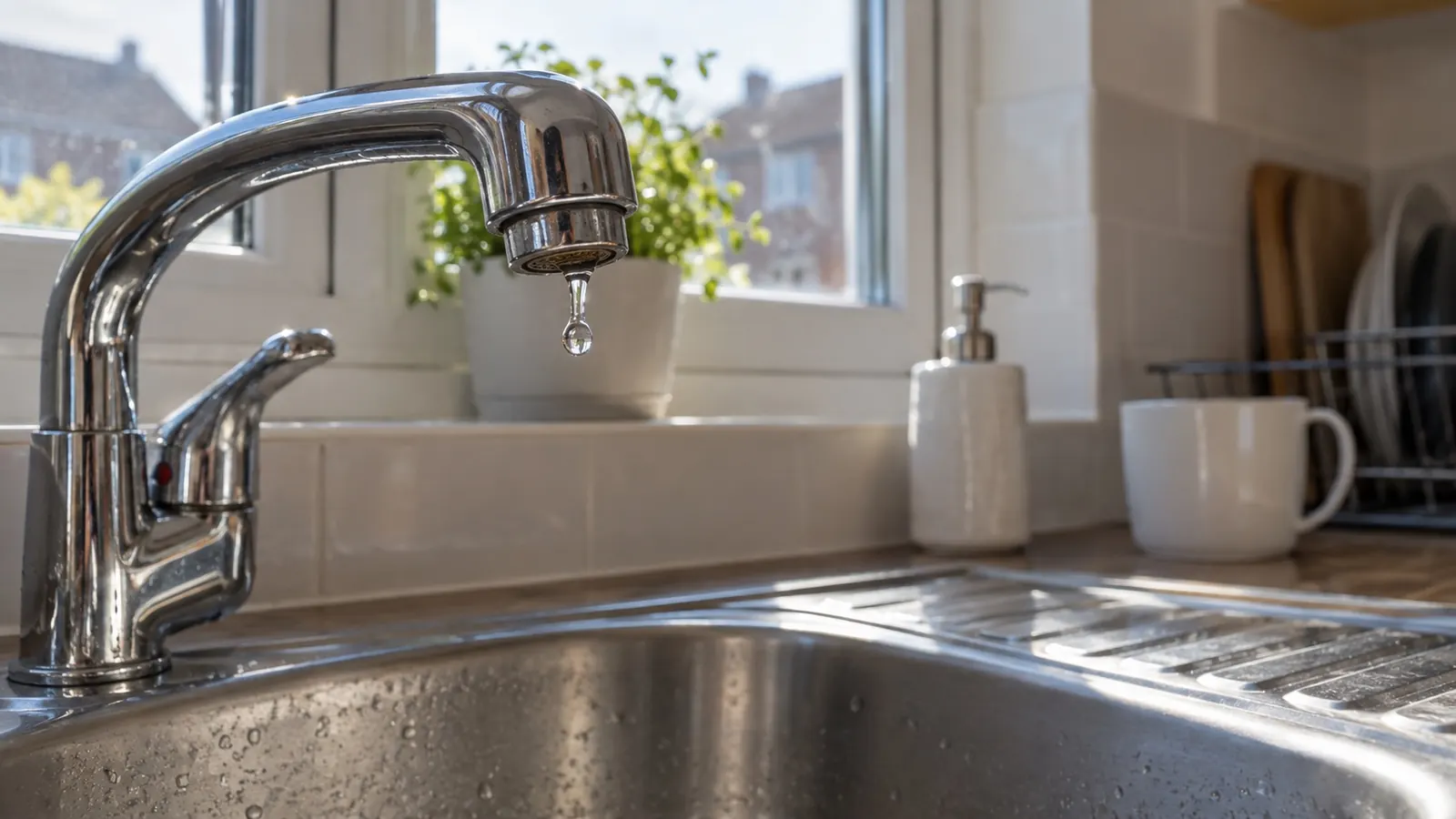
A dripping tap is the plumbing problem people put up with longest. It is not an emergency, it does not flood anything, and it is easy to stop noticing. But a tap dripping once a second wastes several thousand litres a year, and if it is the hot tap you are paying to heat every drop of it.
The fix is almost always a part costing a couple of pounds. The difficulty is not the repair - it is knowing which part, and that depends entirely on the type of tap you have.
Step 1: Turn the Water Off
Look under the sink or basin for two small valves on the pipes feeding the tap, usually with a slot for a flat screwdriver. Turn each a quarter turn so the slot sits across the pipe rather than along it. That isolates the tap without affecting the rest of the house.
If there are no isolation valves, you will need the main stopcock instead - usually under the kitchen sink, in a downstairs cupboard, or near the front door in older properties. Turn it clockwise to close.
Then open the tap fully to drain the water sitting in the pipe, and leave it open while you work.
The step everyone skips
Put the plug in, or push a cloth into the plughole. Tap repairs involve small screws, washers and circlips, and a plughole is exactly the right size to swallow all of them. This single step saves more repairs than any other.
Step 2: Work Out Which Tap You Have
There are two families, and they fail in different ways.
Traditional taps
Separate hot and cold, and you turn the handle through several rotations to open them. Inside is a threaded spindle pressing a rubber washer down onto a seat. When that washer hardens or splits, water gets past and the tap drips.
Fix: a new rubber washer.
Quarter-turn and lever mixer taps
A single lever, or handles that move only a quarter turn from off to fully open. These use a ceramic disc cartridge - two polished discs that slide across each other. They last for years but eventually pick up grit or wear, and then they drip.
Fix: a new ceramic cartridge. Washers do not apply.
If you are unsure, turn the handle. Several full rotations means traditional. A quarter turn means ceramic.
Step 3: Replacing a Washer
- Prise off the cap on top of the handle - usually a small plastic disc marked hot or cold. A thin flat screwdriver under the edge will lift it.
- Undo the screw underneath and pull the handle off. If it is stuck, wiggle rather than lever, or you will crack it.
- Unscrew the metal shroud beneath, by hand if possible. If you need a spanner, wrap the chrome in a cloth first so the jaws do not mark it.
- Undo the large nut on the headgear with an adjustable spanner and lift the whole spindle out.
- The washer sits on the bottom, held by a small nut or a push fit. Prise it off, noting which way round it sits.
- Fit the new washer, reassemble in reverse, and tighten firmly but without forcing.
Take the old washer with you when buying a replacement. Sizes vary and a near-miss will not seal.
Step 4: Replacing a Ceramic Cartridge
Very similar, and slightly easier because there is no small washer to lose.
- Remove the cap and screw and lift the lever off.
- Undo the retaining nut or grub screw holding the cartridge.
- Lift the cartridge straight out. Note its orientation - many have a lug that must line up with a notch in the tap body.
- Take it with you to buy the replacement. Cartridges are not standardised and there are dozens of variants.
- Seat the new one, line the lug up, and tighten just enough to hold it. Over-tightening cracks the ceramic.
When the Washer Is Not the Problem
If you have replaced the washer and it still drips, the seat it presses against is probably damaged. Years of a hard washer grinding down onto brass leaves a pitted or scored surface that no new washer will seal against.
The fix is a reseating tool, which cuts the brass flat again, or a seating washer that sits over the damage. Both are inexpensive. If the tap is old and the body is corroded, replacement is usually the better call.
Hard water accelerates all of this. Scale builds on the seat and inside the headgear, and the abrasive effect wears washers faster than in a soft water area - one reason taps in this part of the country tend to need attention sooner. The Chartered Institute of Plumbing and Heating Engineering has guidance on the effects of hard water on domestic fittings.
Dripping From the Spout vs the Base
Where the water appears tells you which part has failed.
- From the spout when the tap is off: washer or cartridge, as above.
- From around the base of the spout when running: the O-rings on the spout body have perished. On a mixer tap the spout usually pulls straight up once a small grub screw is released, and the O-rings slide off.
- From under the sink: not the tap at all - a supply connection or the waste. Our guide to a leaking waste pipe under the sink covers how to trace that.
Getting It Back Together
- Turn the water back on slowly, a quarter turn at a time, and watch the joints.
- Run the tap for a minute. Air in the pipe will spit at first - that is normal and clears.
- Check underneath with dry kitchen paper before putting anything back in the cupboard.
- If the tap now drips worse than before, the washer or cartridge is not seated squarely. Take it apart and reseat rather than tightening harder.
If turning the tap back on produces a sputtering flow that does not settle, you have trapped air in the pipe - our guide to clearing an airlock explains how to shift it.
Frequently Asked Questions
How much water does a dripping tap actually waste?
Water UK puts the figure at several thousand litres a year for a tap dripping once a second - somewhere around 5,500. On a metered supply that is a real cost, and if it is the hot tap you are paying to heat all of it before it goes down the drain.
Why does my tap drip only sometimes?
Usually a washer that has hardened rather than split. It seals when compressed tightly but relaxes as the metal cools or the pressure fluctuates. It will get steadily worse.
Can I fix a dripping tap without turning the water off?
No. As soon as the headgear is loosened, mains pressure will push water past it. Isolating first takes two minutes and prevents a genuinely messy situation.
Is it worth repairing an old tap or should I replace it?
Repair, if the body is sound and the chrome is not pitted. A washer or cartridge costs a fraction of a new tap plus fitting. Replace when the body is corroded, the spout O-rings have gone as well, or the tap is on its second or third repair.
If It Still Drips
If you have changed the washer or cartridge and the drip persists, the seat is usually worn - and on an older tap it is often more economical to replace than to keep repairing. We cover Milton Keynes and the surrounding area for plumbing repairs and tap replacement. Get in touch and tell us what you have already tried.
Need Professional Advice?
Our Gas Safe registered engineers are ready to help with all your heating needs. Get a free, no-obligation quote today.