Vaillant ecoTEC Plus Review
TL;DR
The ecoTEC Plus is a well-built combi with a stainless steel heat exchanger, quiet operation and genuinely good parts availability. The common faults we see are the diverter valve around year six to eight and the expansion vessel losing charge. It suits homes wanting long service life, and it is not the cheapest to buy or to repair.
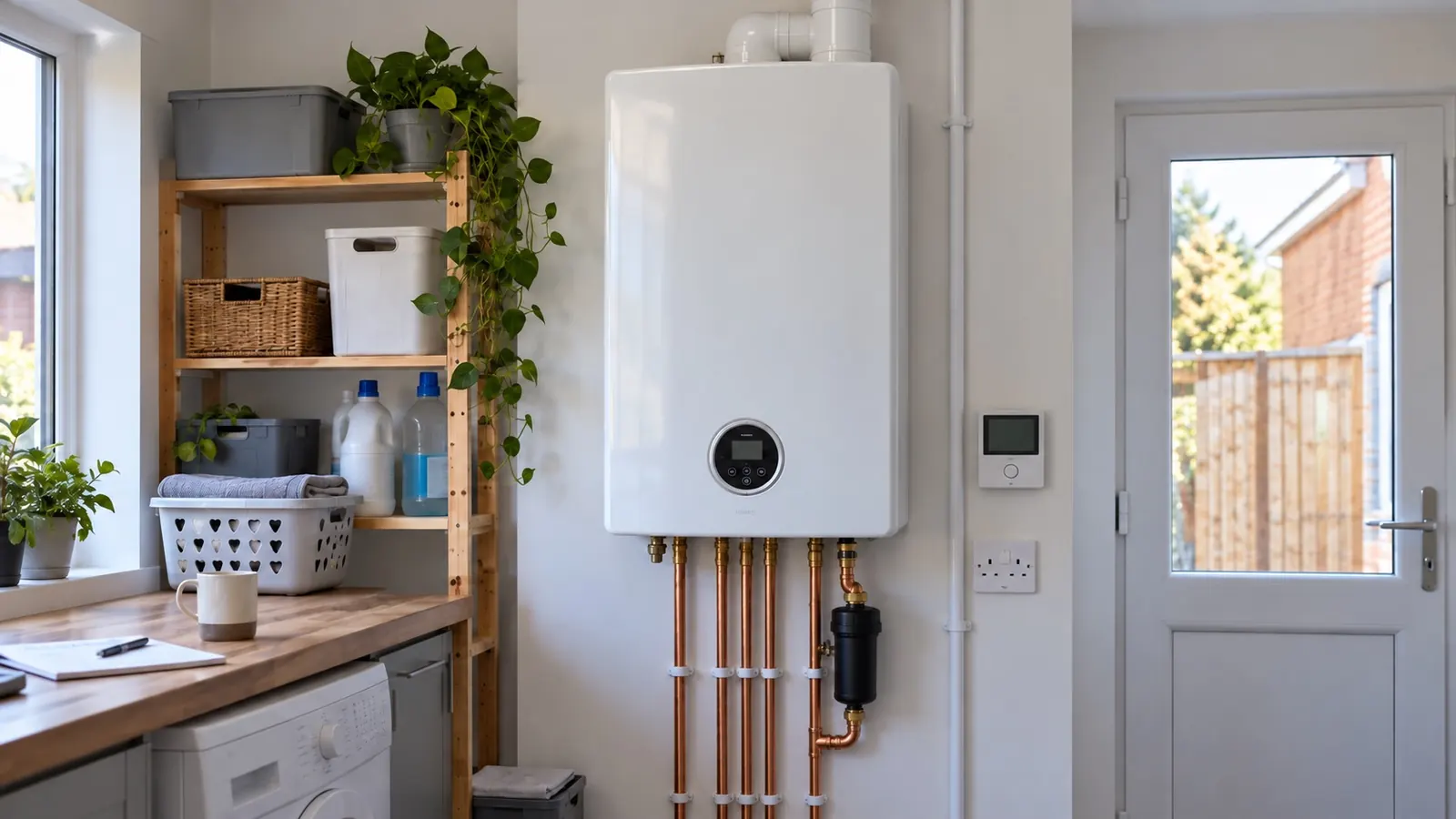
The ecoTEC Plus is one of the two boilers we fit most often, so this is written from the perspective of installing them, servicing them, and being called out when they stop. That is a different view from a spec sheet.
If you are weighing it against the other obvious candidate, our Greenstar 4000 review covers that side, and there is a direct head-to-head comparison as well.
What It Is
A wall-hung condensing combi, available in a range of outputs - typically around 25kW to 38kW for domestic use. There is also a system boiler version for homes with a cylinder.
Output is the important number when choosing: it determines hot water flow rate, not how warm the house gets. A 25kW unit will run one shower comfortably; a house with two bathrooms in simultaneous use wants 32kW or above.
What It Does Well
The heat exchanger
Stainless steel rather than aluminium. In practice that means better resistance to the acidic condensate that forms inside a condensing boiler, and better tolerance of poor water quality. In a hard water area this matters - Anglian Water publishes hardness figures by postcode and this region is firmly at the harder end.
It is quiet
Genuinely noticeably so, which matters if the boiler is in a kitchen or near a bedroom. The modulating fan and pump run down rather than cycling hard.
Parts availability
Excellent, and that is not a small thing. A boiler is only as good as the ability to get a diverter valve on a Tuesday afternoon in January. Vaillant parts are widely stocked and the range has been stable enough that older units are still well supported.
Modulation range
It throttles down well at low demand, which reduces short cycling in mild weather. That is easier on the components and quieter in use - see our guide to short cycling for why that matters.
What Goes Wrong
Every boiler has characteristic failures. These are the ones we actually attend.
The diverter valve, around year six to eight
The most common ecoTEC fault by some margin. The symptom is hot water working fine but the heating failing to come on, or the other way round - the valve sticks and stops switching between the two circuits.
It is a repairable fault and the part is not extreme, but it is the one to expect.
Expansion vessel losing charge
Shows as pressure that swings widely between cold and hot, or a boiler that needs repressurising repeatedly. Often the vessel simply needs recharging rather than replacing. Our guide to a boiler losing pressure covers diagnosis.
F22 and F75
The two fault codes we see most. F22 is low water pressure - usually genuine, sometimes a failed sensor. F75 points at the pump or pressure sensor not detecting flow on start-up, and is often a stuck pump after a summer idle rather than a failed part.
Our fault code guide covers the codes across brands.
Scaling on the plate heat exchanger
Hard water again. Shows as hot water that runs hot then lukewarm, or takes a long time to arrive. A scale reducer on the incoming main genuinely extends the life of this component in this area.
Who It Suits
- Homes planning to stay put. The build quality earns its money over fifteen years, not five.
- Anywhere noise matters - open-plan kitchens, flats, boilers near bedrooms.
- Hard water areas, given the heat exchanger material.
- Households wanting a long warranty, which on accredited installations can run to ten years.
Who It Does Not Suit
- A tight budget. It is not the cheapest to buy, and parts are mid-to-upper priced.
- A property being sold soon. The longevity argument does not pay back.
- A rental where the priority is lowest cost to install and replace.
Getting the Warranty You Are Promised
Long warranties are conditional, and the conditions are where people come unstuck:
- Registered within the stated period after installation
- Installed by an accredited installer for the longer terms
- Serviced annually, with proof - the most common reason a claim is refused
- A system filter fitted, and inhibitor dosed correctly
Keep every service record. A ten-year warranty with a gap in the service history is not a ten-year warranty.
Frequently Asked Questions
How long should an ecoTEC Plus last?
Fifteen years is realistic with annual servicing and decent water treatment. Twenty is not unusual. Neglected, expect closer to ten.
Is it worth paying more than a budget boiler?
If you are staying in the property, generally yes - build quality and parts support show up over time. If you are moving in a couple of years, the case is weaker.
What size do I need?
Driven by hot water demand, not house size. One bathroom, 25 to 28kW. Two bathrooms in simultaneous use, 32kW or more. Oversizing a combi hurts efficiency in mild weather.
Can any engineer service it?
Any Gas Safe registered engineer can legally service it. Longer manufacturer warranties may require an accredited installer for the installation itself - check the terms before booking.
If You Are Choosing Between Boilers
The right boiler depends on your hot water demand, incoming mains flow and how long you plan to stay. We cover Milton Keynes and the surrounding area for boiler installation, and we would rather size it properly than sell you the biggest one. Get in touch.
Need Professional Advice?
Our Gas Safe registered engineers are ready to help with all your heating needs. Get a free, no-obligation quote today.