Toilet Not Flushing Properly? Here's Why
TL;DR
A weak flush is usually caused by a low water level in the cistern, a worn flush valve seal, or a partially blocked rim. Take the cistern lid off and check the water is filling to the marked line - if it is low, adjusting the float usually fixes it in minutes. If the flush is strong but the pan empties slowly, the problem is drainage rather than the cistern.
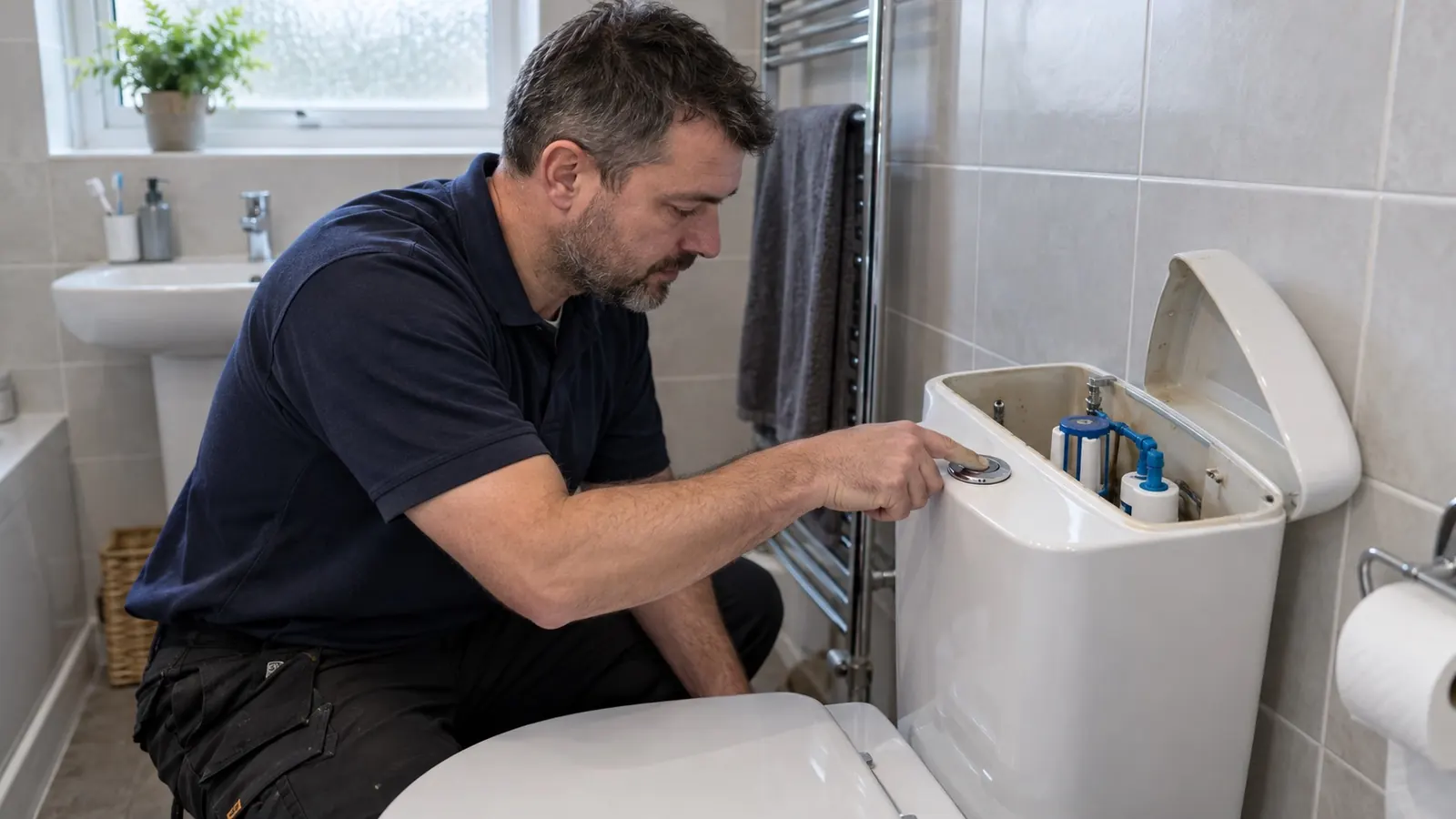
There is an important distinction to make before you start taking anything apart. A toilet that flushes weakly is a different problem from a toilet that is blocked, and they have completely different causes.
- Weak or incomplete flush, pan empties normally: the problem is in the cistern.
- Normal flush, water rises then drains slowly: the problem is in the drain - see our guide to unblocking a toilet.
This guide covers the first one. Almost all of it is straightforward, and most of the parts involved cost very little.
Start Here: Take the Lid Off
Lift the cistern lid off and set it somewhere safe - they are ceramic, heavy and easy to chip. If your toilet has a concealed cistern behind a wall or in furniture, access is through the flush plate, which usually unclips or twists off.
Flush once and watch what happens. You are looking for three things: how high the water fills, whether the flush mechanism lifts fully, and whether the water empties from the cistern quickly or dribbles away.
Cause 1: The Water Level Is Too Low
This is the most common cause of a weak flush, and often the quickest fix.
A cistern needs a certain volume of water to generate the flush. Most have a marked fill line inside - usually about 25mm below the overflow. If the water sits noticeably below it, there is simply not enough volume to clear the pan.
How to adjust it
The fill level is set by the float. There are two common types:
- Float arm (older): a plastic ball on a metal or plastic arm. Bend the arm gently upwards, or turn the adjustment screw where the arm meets the valve, to raise the level.
- Float cup (modern): a cylindrical float sliding on the fill valve. Squeeze the clip on the side and slide it up the rod.
Adjust in small increments, flushing and letting it refill between each. Raise it until it sits just below the overflow - not above it, or the cistern will continuously trickle into the pan, which wastes a great deal of water and is a common cause of a toilet that seems to run constantly.
Cause 2: A Worn Flush Valve Seal
If the water level is correct but the flush is still weak, look at the flush valve.
Most modern toilets use a drop valve - a plastic flap with a rubber seal that lifts to release the water. Over time the seal hardens, distorts or picks up scale, and stops sealing. Water then leaks slowly from the cistern into the pan, so the cistern is never quite full when you flush.
How to check
Turn the water supply off at the isolation valve - usually a small screw-slot valve on the pipe feeding the cistern, turned a quarter turn with a flat screwdriver. Mark the water level and leave it an hour without flushing. If the level has dropped, the valve is leaking.
A simpler test if you cannot isolate it: put a few drops of food colouring in the cistern and wait half an hour without flushing. Colour appearing in the pan confirms the seal has failed.
The seal is a low-cost part and usually replaceable without removing the whole valve. Take the old one with you when buying - there are many sizes and they are not interchangeable.
Cause 3: A Failed Siphon
Older cisterns - particularly those with a lever handle - often use a siphon rather than a drop valve. Inside is a plastic diaphragm that pushes water over the siphon to start the flush.
When that diaphragm splits or perishes, the classic symptom appears: you have to hold the handle down, or flush several times, to get a full flush. If that sounds familiar, this is almost certainly your problem.
Replacing a diaphragm is inexpensive but more involved than the other fixes, because the cistern usually has to be drained and the siphon removed. On a close-coupled toilet that can mean lifting the cistern off the pan. Manageable for a confident DIYer, but a reasonable point to call someone if you would rather not.
Cause 4: Blocked Rim Holes
If the cistern empties fully and quickly but the pan still does not clear properly, look under the rim.
Water enters the pan through a series of small holes around the underside of the rim. In hard water areas these scale up over the years, and as they narrow the flush loses its swirl and its scouring power. The giveaway is water running straight down one side of the pan rather than spiralling evenly.
How to clear them
Use a small mirror to look under the rim, and clear each hole with a piece of stiff wire or an unfolded paperclip. Then apply a limescale remover suitable for ceramics, leave it to work, and flush through. In areas with hard water this is worth doing as routine maintenance every year or two.
Hard water is a persistent nuisance in this part of the country and it affects far more than toilets - the same scale builds up in pipework, taps and heating systems. Anglian Water publishes the water hardness figures for your postcode if you want to check.
Cause 5: The Flush Mechanism Is Not Lifting Fully
On a push-button cistern, the buttons connect to the valve by short plastic rods. These can work loose, become misaligned or seize with scale, so the valve only opens partially.
Press the button and watch the valve. If it lifts only slightly, or sluggishly, adjust the rod length - most are threaded for exactly this. On a lever flush, check the lift chain or wire: too much slack and the valve will not open fully; too little and it will not close.
What a Healthy Flush Looks Like
- The cistern fills to the marked line and stops cleanly, with no ongoing trickle.
- One press or lever pull empties the cistern in a few seconds.
- Water enters the pan evenly all around the rim, with a clear swirl.
- The pan clears completely in one flush and refills to its normal level.
- The cistern refills within about a minute and then goes quiet.
If your toilet manages all five of those, the flush is working as designed.
Frequently Asked Questions
Why do I have to flush twice?
Usually a low cistern level or a leaking flush valve seal, so there is not enough water for a single effective flush. Check the fill level first - it is the quicker of the two to rule out. On dual-flush toilets, also check that the smaller button is not being used out of habit for larger loads.
Why does my dual-flush leak constantly into the pan?
Very common. Dual-flush valves have more moving parts and a larger seal, which picks up scale and debris. Often the seal simply needs removing and cleaning rather than replacing. It is worth acting on - Water UK has highlighted leaking loos as one of the largest sources of wasted water in UK homes.
Should I repair or replace the toilet?
Almost always repair. Cistern parts are inexpensive and the pan itself rarely fails. Replacement is only really worth it if the pan is cracked, the cistern is a very old design with no available parts, or you are refitting the bathroom anyway.
Could a weak flush mean a blocked drain?
If the flush itself is strong but the pan drains slowly afterwards, yes - that is a drainage restriction rather than a cistern fault. Our guide to unblocking a toilet covers what to do next.
If You Would Rather Not Take It Apart
Cistern parts are cheap but fiddly, and a siphon replacement in particular means draining and often lifting the cistern. If you would rather it was just sorted, we cover Milton Keynes and the surrounding villages for plumbing repairs of exactly this kind. Get in touch and describe the symptom - it usually tells us which part is involved before we arrive.
Need Professional Advice?
Our Gas Safe registered engineers are ready to help with all your heating needs. Get a free, no-obligation quote today.