Glow-worm Boiler Fault Codes: Full List
TL;DR
F codes are faults that stop the boiler; S codes are status messages showing what it is doing and are not faults at all. The most common are F1 or F22 for low pressure, F28 or F29 for ignition failure, and F75 for a pump or pressure sensor problem. Low pressure you can fix yourself; ignition faults need an engineer.
- F codes - faults. The boiler has stopped and needs attention.
- S codes - status. The boiler is telling you what it is currently doing. Not a fault.
If you are seeing an S code, nothing is wrong. For faults across other brands, see our multi-brand fault code guide.
Pressure Faults
F1 / F22 - low water pressure
The most common code on any boiler. System pressure has dropped below the minimum, and the boiler has shut down to protect itself.
You can fix this. Repressurise using the filling loop to 1 to 1.5 bar cold - our guide to repressurising a boiler covers it. If it drops again within days, there is a leak; see a boiler losing pressure.
F4 / F5 - temperature sensor fault
A flow or return sensor reading incorrectly, or its wiring has failed. Engineer required - it is inside the casing.
Ignition Faults
F28 - failed to ignite on start-up
The boiler attempted to fire and did not detect a flame. Causes include a dirty or worn ignition electrode, no gas supply, a condensate blockage, or a gas valve fault.
Before calling anyone: check other gas appliances work, and check the condensate pipe is not frozen if it is cold outside - our guide to frozen condensate pipes covers that.
Reset once. If it locks out again, stop resetting and get it looked at.
F29 - flame lost during operation
It lit, then went out. Often the same causes as F28, sometimes a flue or recirculation problem. Engineer required.
Pump and Flow Faults
F75 - no pressure change detected on pump start
The boiler started the pump and the pressure sensor saw no change, so it cannot confirm water is moving.
Very often a pump seized after standing idle over summer rather than a failed component. Also caused by a faulty pressure sensor or air in the system.
Worth bleeding the radiators and checking pressure first. Beyond that it is engineer work.
F73 / F74 - pressure sensor fault
The sensor itself is reading out of range or has failed. Engineer required.
Overheat and Safety
F20 - overheat safety cut-out
The boiler got too hot and shut down. Causes include restricted flow from sludge, a failed pump, closed valves, or a faulty thermostat.
Check that radiator valves are open and the pressure is correct. Repeated F20 means restricted circulation and needs proper diagnosis - often sludge, covered in our guide to kettling and sludge.
F13 - thermal safety fault
A protective device has operated. Engineer required, and not one to reset repeatedly.
Fan and Flue
F32 - fan fault
The fan is not running at the expected speed, or its sensor has failed. The fan drives combustion products out through the flue, so the boiler will not run without it. Engineer required.
Status Codes - Not Faults
- S0 - no heat demand. Nothing is calling for heat.
- S2 - pump running, heating mode.
- S3 - ignition sequence in progress.
- S4 - burner on, heating.
- S7 - pump overrun after heat demand ends. Normal.
- S8 - anti-cycling delay. The boiler is deliberately waiting before firing again.
S8 in particular worries people unnecessarily - it is the boiler protecting itself from short cycling, which our guide to short cycling explains.
What You Can Safely Do
- Low pressure codes: repressurise. Straightforward and safe.
- Any code, once: reset it. Once.
- Cold weather ignition faults: check the condensate pipe before anything else.
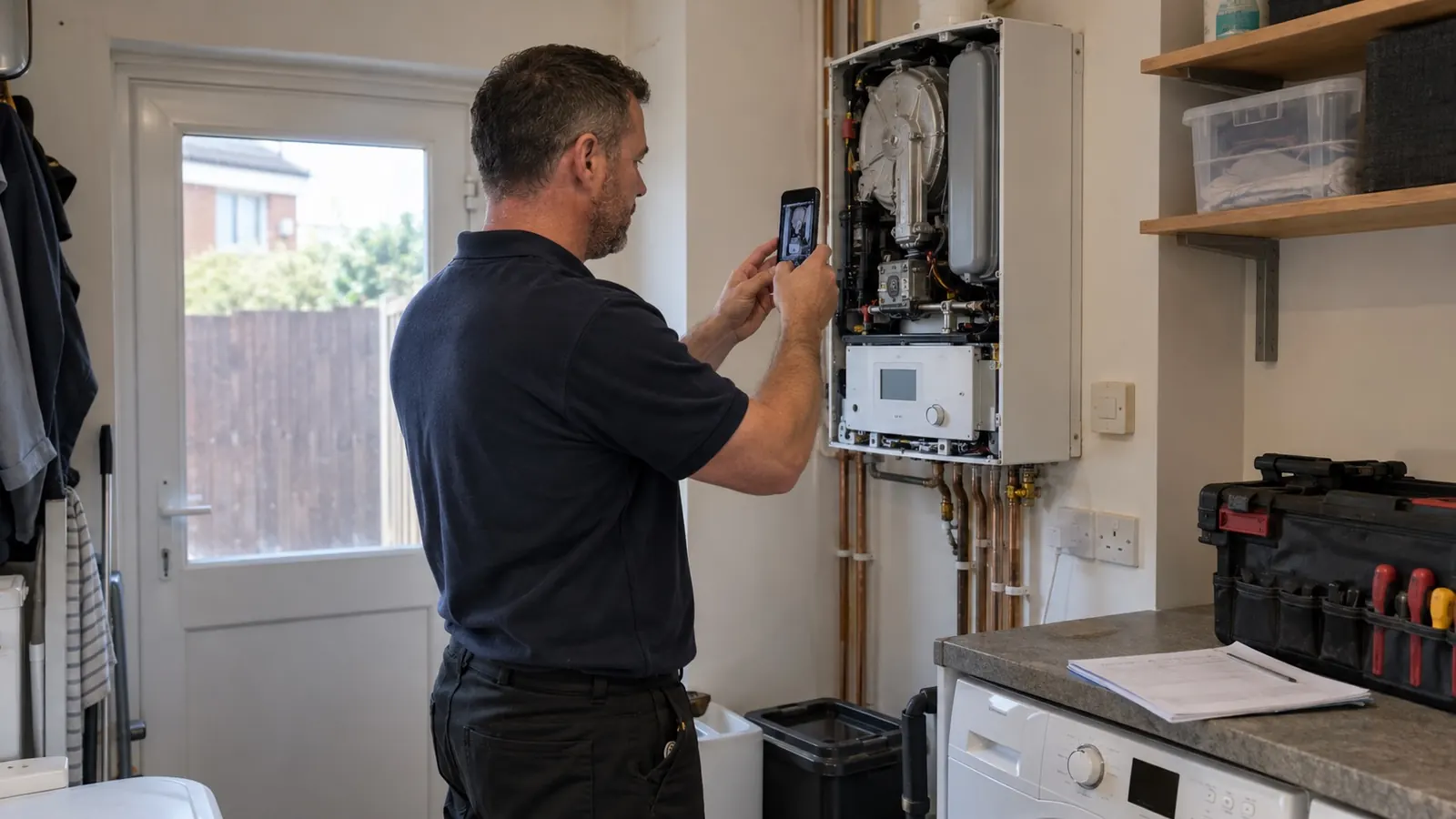
- Everything else: a Gas Safe registered engineer. Removing the casing is gas work and is illegal for anyone not registered.
Frequently Asked Questions
How many times can I reset a fault code?
Once. A code that returns immediately is reporting a real fault, and repeatedly clearing an ignition lockout in particular is not safe.
My boiler shows a code but seems to work.
Check whether it is an S code rather than an F code. S codes are status messages and mean nothing is wrong.
Why do the codes differ between models?
Glow-worm has used several control platforms over the years. Your boiler's manual is the definitive source for your specific model.
Does a fault code mean I need a new boiler?
Rarely. Most codes point at a component - sensor, pump, electrode, valve - rather than the boiler as a whole. Age and repair history matter more than the code itself.
If the Code Keeps Returning
A code that comes back after a reset is a real fault. We cover Milton Keynes and the surrounding area for boiler repair. Get in touch with the code and we will usually know what is involved before arriving.
Need Professional Advice?
Our Gas Safe registered engineers are ready to help with all your heating needs. Get a free, no-obligation quote today.