Boiler Making a Banging Noise? Causes and Fixes in Milton Keynes
TL;DR
A boiler that bangs or rumbles like a kettle is almost always kettling. Limescale and sludge have built up on the heat exchanger, so water gets trapped against hot metal, boils and steams. It is common in Milton Keynes because the water is so hard. Left alone it can crack the heat exchanger. The fix is a system clean, a magnetic filter and a Gas Safe engineer checking the boiler. Whistling or gurgling usually means air.
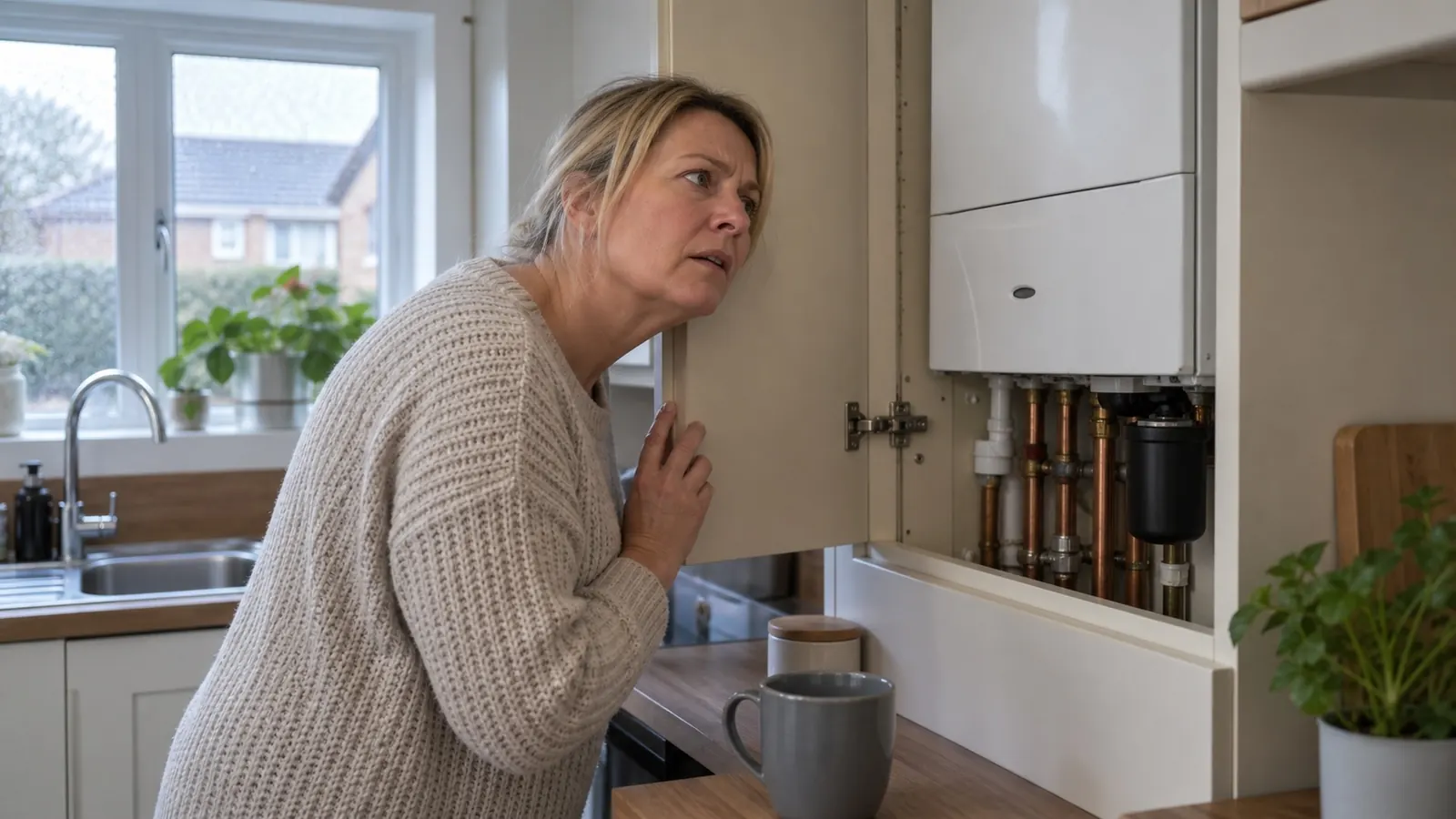
A boiler should sit in the background. A low hum when it fires, a click or two from the pipes as they warm, and that is about it. So when it starts banging, rumbling or sounding like a kettle coming to the boil, it is fair to worry. The good news is that most boiler noises have a clear cause. The less good news is that the most common one, a deep bang or rumble from the boiler itself, is a warning you should not ignore.
If you are in Milton Keynes there is an extra reason to take it seriously. Anglian Water supplies MK with some of the hardest water in the country, and that has a direct effect on what is happening inside your boiler.
The usual cause: kettling
If the noise is a bang, a rumble or a kettle-like whistle, especially in the first few minutes after the heating comes on, you are almost certainly dealing with kettling.
Inside the boiler is a heat exchanger, the part that passes heat from the burner into the water. Over time limescale and black iron sludge settle on it. Those deposits narrow the waterways, so instead of flowing smoothly across the hot metal the water gets trapped, overheats and flashes to steam. The steam bubbles collapse and that is the bang. It is exactly what happens in a scaled-up kettle, which is where the name comes from.
Hard water is why MK homes get this more than most. Every time hard water is heated some of the dissolved calcium comes out and sticks to the hottest surface it can find, which is the heat exchanger. Add the iron oxide sludge that forms naturally in any wet heating system, and a boiler on a 1970s grid-square estate that has never had a filter fitted has usually had years to fur up.
Why you should not just live with it
A kettling boiler still heats the house, so it is tempting to turn the radio up. Please do not. Kettling means the boiler is running far hotter in one spot than it was designed to.
- It damages the heat exchanger. Repeated local overheating stresses the metal. It can warp or crack, and on most boilers the heat exchanger is the single most expensive part to replace. On an older boiler that repair can be the point where a new boiler makes more sense.
- It burns more gas. Scale is an insulator. The boiler has to work harder to push the same heat into the water, and you pay for that on every bill.
- It shortens the boiler's life. A system left to kettle for years fails sooner than one that was cleaned when the noise started.
- It rarely travels alone. The sludge that is scaling the boiler is also settling in the bottom of your radiators. If you have radiators that are cold along the bottom edge, the two problems have the same cause. Our guide to a radiator not heating up covers that side of it.
Other boiler noises and what they usually mean
- Banging, rumbling or a kettle-like roar from the boiler. Kettling. Scale and sludge on the heat exchanger. Needs a system clean and an engineer's look at the boiler.
- Whistling or a high hum. Air in the system or restricted flow. Bleed the radiators first. If it carries on, the pump speed or a partial blockage needs checking.
- Gurgling or bubbling. Air, or low system pressure. Bleed the radiators and check the gauge.
- Vibrating or buzzing. A loose pipe clip, or a pump or fan bearing on its way out. Loose clips are simple. A pump or fan is an engineer's job.
- Tapping or ticking as the heating warms up or cools down. Pipes expanding and rubbing on joists or clips. Usually harmless. If it is loud and always in the same spot, the pipe can be re-clipped or padded.
- A loud thump when a tap closes. Water hammer in the plumbing rather than the heating. Different problem, still worth fixing because it stresses joints.
- Clicking, then nothing. Failed ignition. Not a noise problem, a fault. Note the code on the display and call a Gas Safe engineer.
What you can safely try yourself
Two checks are worth doing before you ring anyone, and both are safe.
Bleed the radiators. If the noise is more of a whistle or gurgle, trapped air is the likely cause. Turn the heating off, let it cool, and bleed each radiator with a radiator key until water rather than air comes out. Our step-by-step guide to bleeding a radiator walks you through it.
Check the pressure. The gauge on the front of the boiler should read between 1 and 1.5 bar when the system is cold. If it has dropped, top it up using the filling loop as described in your boiler manual, then bleed again if needed. If you find yourself topping up every few weeks there is a leak somewhere and that wants finding.
What not to do. Do not open the boiler casing, do not try to descale the heat exchanger, and do not pour anything into the system yourself. Work on a gas appliance is a Gas Safe registered engineer's job by law, and a boiler that is kettling needs the exchanger inspected properly, not guessed at.
The proper fix
If kettling is confirmed, the noise will not go away on its own. The scale and sludge have to come out, and the boiler has to be checked for damage.
A system clean. For a heavily sludged system that means a powerflush: a pump circulates cleaning chemicals through the boiler, pipework and every radiator at high velocity, breaking up the deposits and flushing them to drain. For a lighter build-up a chemical clean left in the system for a period may be enough. Which one you need depends on the age of the system, how many radiators are affected and what comes out when a radiator is bled. A good engineer will tell you which, and why.
A magnetic filter. Fitted on the return pipe to the boiler, it catches circulating iron oxide before it can settle back on the heat exchanger. In MK we treat it as essential rather than optional. It is emptied at every annual service.
Inhibitor. After any clean the system is dosed with corrosion inhibitor. In hard water it is also worth talking about a scale reducer on the cold feed. Without inhibitor the sludge simply starts forming again.
A look at the boiler itself. The engineer should check the heat exchanger for damage, check the pump is moving water at the right rate, and check the boiler's flow temperature has not been turned up to compensate. If the exchanger is already cracked, that is a boiler repair conversation, and on a boiler past ten years old it is worth weighing the repair against replacement before spending.
Here is the honest bit that a sales-led company will not print: a powerflush is not a magic cure, and it is oversold. If your boiler has been kettling for years the heat exchanger may already be too scaled internally for a flush to fully clear it, and the noise may only reduce rather than disappear. We will say so before we start rather than after you have paid. And if the boiler is old and tired, cleaning the system is still the right thing to do because a new boiler fitted to a dirty system will start scaling up on day one.
Stopping it coming back
- Annual service. A boiler service every year includes cleaning the magnetic filter and checking the inhibitor level, which is the cheapest protection there is.
- Keep the pressure right. Topping up regularly means fresh, oxygenated, hard water going in each time, which feeds both corrosion and scale.
- Do not run the flow temperature higher than you need. A hotter exchanger scales faster.
If your boiler is banging, whether you are in Bletchley, Newport Pagnell or one of the villages, get in touch and describe the noise. We are Gas Safe registered (957816), we will tell you whether it is kettling or something simpler, and we will explain what a fix involves before anyone touches it.
Frequently asked questions
Is boiler kettling dangerous?
Kettling itself is not usually an immediate safety risk, but it should not be ignored because the overheating it causes can crack the heat exchanger. If the noise comes with a smell of gas, water leaking from the boiler, or a carbon monoxide alarm sounding, treat it as an emergency: turn the boiler off and call the National Gas Emergency Service on 0800 111 999 if you smell gas.
Why does my boiler bang when the heating first comes on?
Start-up is when the temperature change is greatest. Cold water meets a heat exchanger that is scaled up and heating quickly, so trapped water flashes to steam and collapses with a bang. It often settles once the whole system is warm, which fools people into thinking it is fine. It is the classic sign of kettling.
Will a powerflush definitely stop the noise?
Usually it reduces or removes it, and in a hard water area like Milton Keynes it is the right first step. If the heat exchanger is heavily scaled internally or already damaged, a flush cannot repair the metal and the exchanger may need replacing. An engineer should tell you which situation you are in before you commit.
Can I put descaler or inhibitor in myself?
Dosing a sealed system properly means draining down part of it, adding the right product in the right amount, refilling and re-pressurising, and the boiler manufacturer will expect it done correctly. Have it done as part of a service by a Gas Safe engineer rather than guessing.
Need Professional Advice?
Our Gas Safe registered engineers are ready to help with all your heating needs. Get a free, no-obligation quote today.