How to Replace a Toilet Seat Properly
TL;DR
Measure three things before buying: the distance between the fixing hole centres, the width at the widest point, and the length from the fixing holes to the front of the pan. Most seats are top-fixing and take ten minutes. Seized fixings are the only real difficulty, and penetrating oil plus a hacksaw blade solves them.
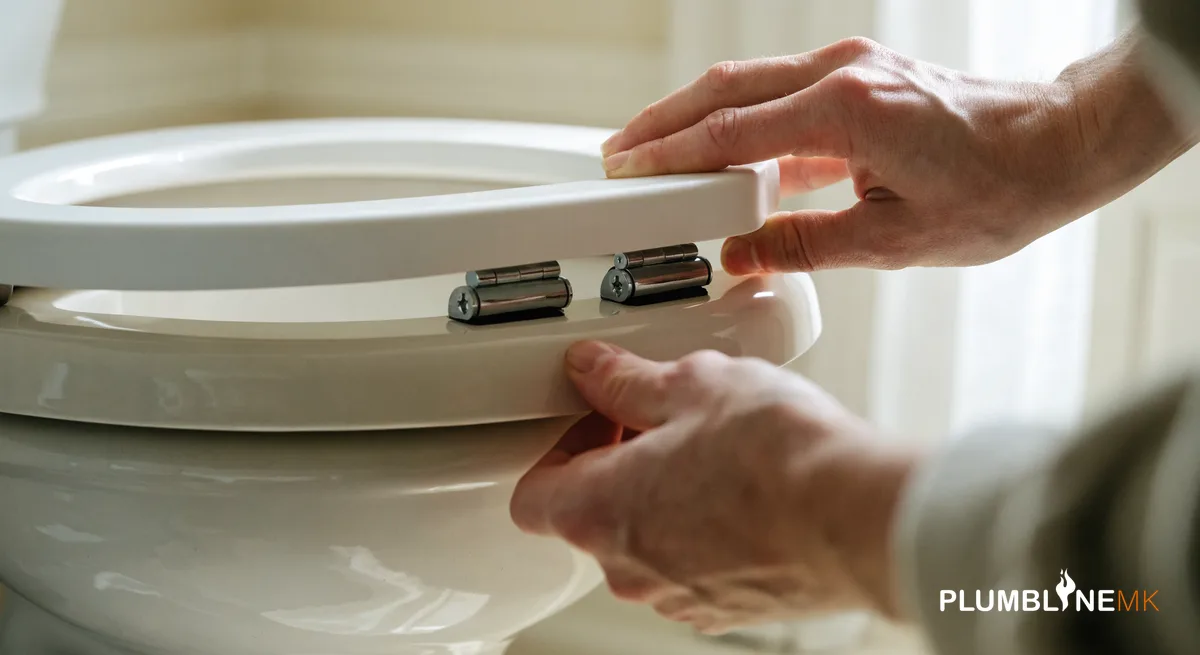
A toilet seat is one of the few things in a bathroom you can replace with no plumbing knowledge and no risk of flooding anything. The job is genuinely ten minutes. Almost all the difficulty is in buying the right seat, and almost all the frustration is seized fixings.
Measure Before You Buy
The Chartered Institute of Plumbing and Heating Engineering maintains guidance on domestic sanitaryware standards, and the short version is that toilet pans are not standardised, and a seat that is close but not right will overhang, rock, or fail to line up with the holes. Take three measurements.
- Hole centres. The distance between the centres of the two fixing holes at the back of the pan. This is the critical one — commonly around 150mm to 180mm, but check yours.
- Width. The pan at its widest point, left to right.
- Length. From the centre line of the fixing holes to the front edge of the pan.
Write all three down and take them with you. If your pan is an unusual shape, photograph it from above as well.
Shape matters too
The common shapes are round, oval, D-shape and square. A D-shape seat on an oval pan will not sit flush no matter how the measurements compare.
Removing the Old Seat
Look underneath at the back of the pan. You will find either wing nuts you can turn by hand, or plastic nuts needing a spanner, or — on top-fixing seats — a cap on top of the pan hiding the fixing.
If the fixings turn freely
Hold the bolt head still on top with a screwdriver, undo the nut underneath, and lift the seat off. Two minutes.
If they are seized
This is where most of the time goes. Years of moisture corrode metal fixings, and plastic ones become brittle and spin uselessly.
- Spray penetrating oil on the thread from below and leave it fifteen minutes. Repeat once.
- If the nut spins with the bolt, grip the bolt head from above with pliers while turning the nut.
- If it will not shift at all, cut it. A junior hacksaw blade, or a hacksaw blade held in a gloved hand, will get through a plastic or brass fixing in a couple of minutes. Protect the ceramic with card or masking tape while you cut.
- An oscillating multi-tool makes short work of it if you have one.
Do not attack it with force. The ceramic around those holes is thin, and a cracked pan turns a ten-minute job into a new toilet.
Fitting the New Seat
- Clean the area around the holes thoroughly. There will be years of residue under the old seat.
- Drop the new bolts through the hinges and the pan holes.
- Fit the washers and nuts underneath, finger-tight only at this stage.
- Sit the seat down and check alignment — square to the pan, centred, and closing without catching.
- Once it is right, tighten the nuts. Firm is enough. Over-tightening cracks ceramic and distorts the hinge.
- Open and close it a few times and re-check.
Stopping It Going Wonky
The usual reason a seat slides out of position is that the rubber or plastic washers between the hinge and the ceramic have been left out, or the nuts have loosened.
- Make sure every washer supplied is used, in the right order. They are there to grip.
- Re-tighten a month after fitting. Everything settles.
- If it still moves, a thin rubber washer added above the pan gives extra bite without extra torque.
Soft-Close and Quick-Release
Water efficiency labelling on sanitaryware is coordinated through Water UK if you are replacing more than the seat. For the seat itself, two features are worth knowing about before you buy.
Soft-close hinges lower the seat slowly instead of dropping it. They cost a little more and the mechanism does wear out eventually, but on most seats the hinge is replaceable separately.
Quick-release lets the seat unclip from the hinges for cleaning. Genuinely useful, because the join between seat and pan is the hardest part of a toilet to clean properly.
Frequently Asked Questions
Are toilet seats a standard size?
No. Hole centres, width, length and shape all vary between manufacturers and eras. Measuring is not optional.
What if my fixing holes are a strange distance apart?
Many seats have adjustable hinges with slotted fixings that cover a range. Check the stated range against your measurement before buying.
The bolt just spins and will not undo.
The nut has seized to the thread and both are turning together. Grip the bolt head from above while turning the nut, or cut through the fixing with a hacksaw blade.
Can I replace just the hinges?
Often yes, especially on soft-close seats where the damper is the part that fails. Worth checking before replacing the whole seat, particularly on a good quality one.
If the Pan Is Damaged
If a fixing has cracked the ceramic, or the pan itself is loose on the floor, that is a different job. We cover Milton Keynes and the surrounding area for bathroom plumbing and toilet replacement. Get in touch if you would rather it was handled.
Need Professional Advice?
Our Gas Safe registered engineers are ready to help with all your heating needs. Get a free, no-obligation quote today.