Heat Pump vs Gas Boiler: Which Is Right for Your Milton Keynes Home in 2026?
TL;DR
Heat pumps suit well-insulated Milton Keynes homes and can cut carbon and running costs, especially with the £7,500 Boiler Upgrade Scheme grant. Gas boilers remain cheaper to fit and better suited to older, draughtier properties. For many MK homeowners in 2026, a hybrid system or a well-chosen gas boiler is still the sensible middle ground.
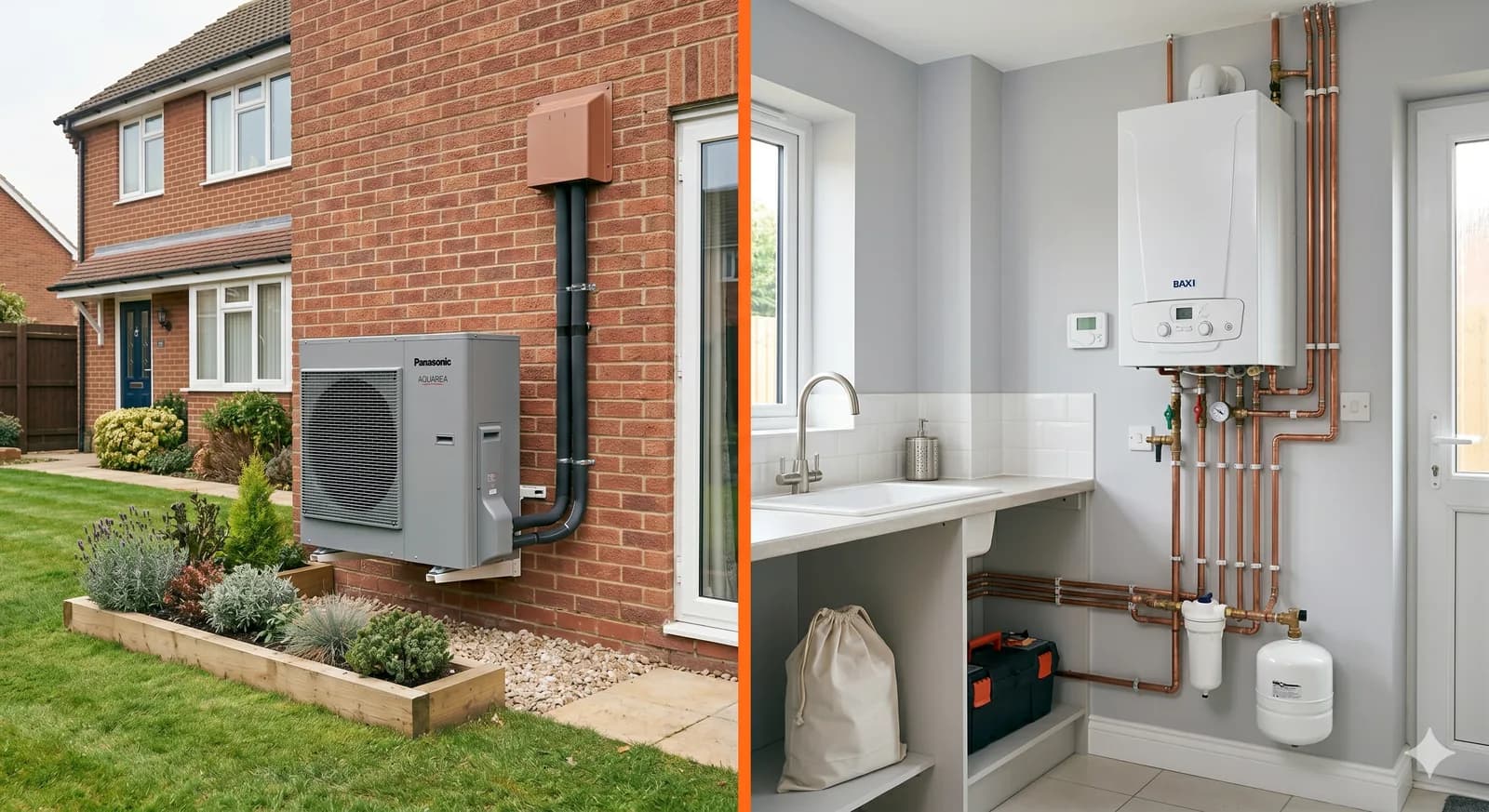
If you are weighing up your next heating system in Milton Keynes, you have probably noticed the conversation has shifted. For decades the only real question was which gas boiler to fit. Now air source heat pumps are heavily promoted, grants are on the table, and it can be hard to know whether the hype matches reality for your particular home. The honest answer is that neither option is universally "better" — the right choice depends on your property, your budget and how long you plan to stay.
This guide is deliberately balanced. We install and service both gas boilers and heat pumps across MK, so we have no reason to push you towards one or the other. Below we explain how each system works, what they really cost to buy and run in 2026, which MK property types suit a heat pump, what the Boiler Upgrade Scheme grant actually covers, and whether a hybrid system makes more sense for most homeowners right now.
How each system works
A gas combi or system boiler burns natural gas to heat water on demand or via a hot water cylinder. It produces high flow temperatures — typically 60 to 75 degrees — which means it can warm a room quickly through standard radiators. It is a mature, well-understood technology that almost every plumber in Milton Keynes can repair.
An air source heat pump works more like a fridge in reverse. A unit outside your home extracts warmth from the outside air — even in winter — and uses a refrigerant cycle and electricity to upgrade that heat and deliver it to your radiators or underfloor heating. Crucially, it runs at lower flow temperatures, often 35 to 50 degrees. That is why it is so efficient, but also why it only performs well when a home can hold onto heat and has radiators large enough to give off warmth at those lower temperatures.
The upfront cost difference
There is no getting around the fact that heat pumps cost considerably more to install. A like-for-like gas combi swap in MK is usually one of the most affordable heating upgrades available, while a heat pump is a larger, more involved job that may include radiator upgrades and pipework changes.
| System | Typical installed cost (2026) | Lifespan |
|---|---|---|
| Gas combi boiler | £2,000 - £3,500 | 10 - 15 years |
| Gas system boiler with cylinder | £3,000 - £4,500 | 10 - 15 years |
| Air source heat pump | £8,000 - £14,000 before grant | 15 - 20 years |
| Heat pump after £7,500 grant | £500 - £6,500 effective | 15 - 20 years |
So even with the grant applied, a heat pump usually still costs more upfront than a straightforward boiler replacement. For a detailed breakdown of what goes into a new boiler price, see our boiler installation cost breakdown for Milton Keynes.
Running costs at 2026 energy prices
This is where the picture becomes genuinely nuanced, and where a lot of marketing oversimplifies things. A heat pump is extremely efficient — for every unit of electricity it consumes, a well-installed system delivers roughly three to four units of heat. The catch is that electricity costs more per unit than gas. The maths only works in your favour when efficiency stays high, and efficiency depends heavily on your home.
In a well-insulated home with the right radiators, a heat pump can match or beat a gas boiler on running costs, while cutting carbon significantly. In a poorly insulated, draughty home, the heat pump has to work harder, its efficiency falls, and you can end up paying more than you would on gas. We are being honest here precisely because we have seen both outcomes in real MK homes.
| Property type | Likely heat pump outcome |
|---|---|
| Well-insulated newer build | Lower or comparable running costs, big carbon saving |
| Average home with loft and cavity insulation | Roughly comparable running costs, worthwhile carbon saving |
| Older, draughty, solid-wall property | Often higher running costs unless insulation is improved first |
Which Milton Keynes homes suit a heat pump?
Milton Keynes has a wide spread of housing stock, and that variety matters more than almost anything else when deciding. Three factors decide suitability: insulation standard, radiator sizing and outdoor space.
Newer estates such as Broughton, Brooklands, Oakgrove and the more recent developments around Wavendon tend to be well suited. They are typically built to higher insulation standards, often have generous garden or side space for an outdoor unit, and need fewer radiator upgrades. For these homes, a heat pump is a realistic and increasingly sensible option.
By contrast, many older terraced and Victorian-era properties in central Milton Keynes, parts of Bletchley, Wolverton and Stony Stratford can be more challenging. Solid walls, limited loft space, smaller radiators and tight outdoor areas all reduce heat pump performance. It does not mean a heat pump is impossible — but it usually means insulation upgrades and radiator changes first, which adds cost and disruption. For these homes, a modern condensing gas boiler often remains the pragmatic choice today.
A proper heat-loss survey is the only reliable way to know. Any installer who quotes a heat pump without surveying your home and assessing your radiators should be treated with caution.
The Boiler Upgrade Scheme grant in 2026
The government's Boiler Upgrade Scheme (BUS) currently offers £7,500 towards an air source heat pump in England, which is what makes the numbers add up for many households. The grant is paid to your installer, so it comes off your quote rather than being something you claim back yourself.
To qualify in Milton Keynes you generally need to own the property, be replacing a fossil-fuel system such as a gas or oil boiler, and have a valid EPC with no outstanding insulation recommendations like loft or cavity wall insulation. New-build properties are usually excluded. The scheme is competitive and budgets are reviewed periodically, so it is worth acting while the £7,500 level is available rather than assuming it will last indefinitely.
If your household is on a lower income or certain benefits, you may also qualify for separate insulation and heating support. We cover those routes in our guide to free boiler grants and ECO4 in Milton Keynes, which can be combined with insulation improvements that make a heat pump more viable later.
The honest limitations of heat pumps
To keep this balanced, here are the genuine drawbacks we think every MK homeowner should weigh up before committing:
- Higher upfront cost even after the grant, which takes time to recoup.
- Sensitivity to insulation — performance and running costs depend heavily on how well your home holds heat.
- Radiator and pipework upgrades are often needed, adding cost and disruption.
- Outdoor space is required for the external unit, which is not always available on smaller terraced plots.
- Slower, steadier heat — heat pumps are designed to run gently for longer rather than blasting a cold room warm quickly, which is a different way of living that some households take time to adjust to.
None of these are reasons to dismiss heat pumps outright. They are reasons to make the decision with your eyes open, based on your actual property rather than a brochure.
Does a hybrid system make more sense?
For a large number of Milton Keynes homeowners in 2026, the most sensible answer may be neither extreme, but a hybrid system that pairs a heat pump with a gas boiler. The heat pump handles the bulk of your heating efficiently through milder weather, while the gas boiler steps in on the coldest days or for rapid hot water demand.
The appeal of a hybrid is that it lowers the bar on insulation and radiator sizing — because the gas boiler covers the peak load, your existing radiators are less likely to need replacing. That can make a meaningful carbon reduction achievable in an older home without a full retrofit. The trade-off is that you still rely partly on gas, the grant treatment can differ, and you are maintaining two systems rather than one.
For a well-insulated newer build, a full heat pump is often the right long-term call. For an older or draughtier MK property where a full retrofit is not realistic yet, a hybrid or a high-efficiency gas boiler is frequently the more honest recommendation — at least until further insulation work is done.
Our balanced verdict
If you live in a well-insulated home in an area like Broughton or Brooklands, plan to stay several years, and want to cut carbon, a heat pump with the £7,500 grant is well worth serious consideration. If you live in an older, draughtier property, are working to a tighter budget, or need a straightforward replacement now, a modern condensing gas boiler remains a perfectly responsible choice — and a hybrid sits sensibly in between. There is no single right answer, only the right answer for your home.
You can compare the two technologies side by side on our gas boiler vs heat pump comparison page, and explore your options for a new system on our boiler installation service page.
Talk it through with Plumbline MK
The best decision starts with an honest assessment of your specific home — not a sales pitch. Our Gas Safe registered engineers will look at your insulation, radiators and outdoor space, explain what each option would realistically cost to install and run, and tell you frankly whether a heat pump, a gas boiler or a hybrid is the better fit. If a heat pump is not right for your property yet, we will say so.
Call us on 07805 844 016 or 01908 229 560, or send your details through our contact page to arrange a no-obligation home survey in Milton Keynes. We will give you a clear, balanced recommendation you can trust.
Need Professional Advice?
Our Gas Safe registered engineers are ready to help with all your heating needs. Get a free, no-obligation quote today.