Burst Pipe in Milton Keynes: What to Do in the Next 10 Minutes
TL;DR
If a pipe bursts, turn the water off at the stopcock first (usually under the kitchen sink), switch off the electrics at the consumer unit if water is near sockets or lights, open the cold taps to drain the pipework, and catch what you can. Photograph the damage for your insurer before cleaning up. A split pipe or a leak you cannot stop needs an emergency plumber today; a drip that has stopped can wait until morning.
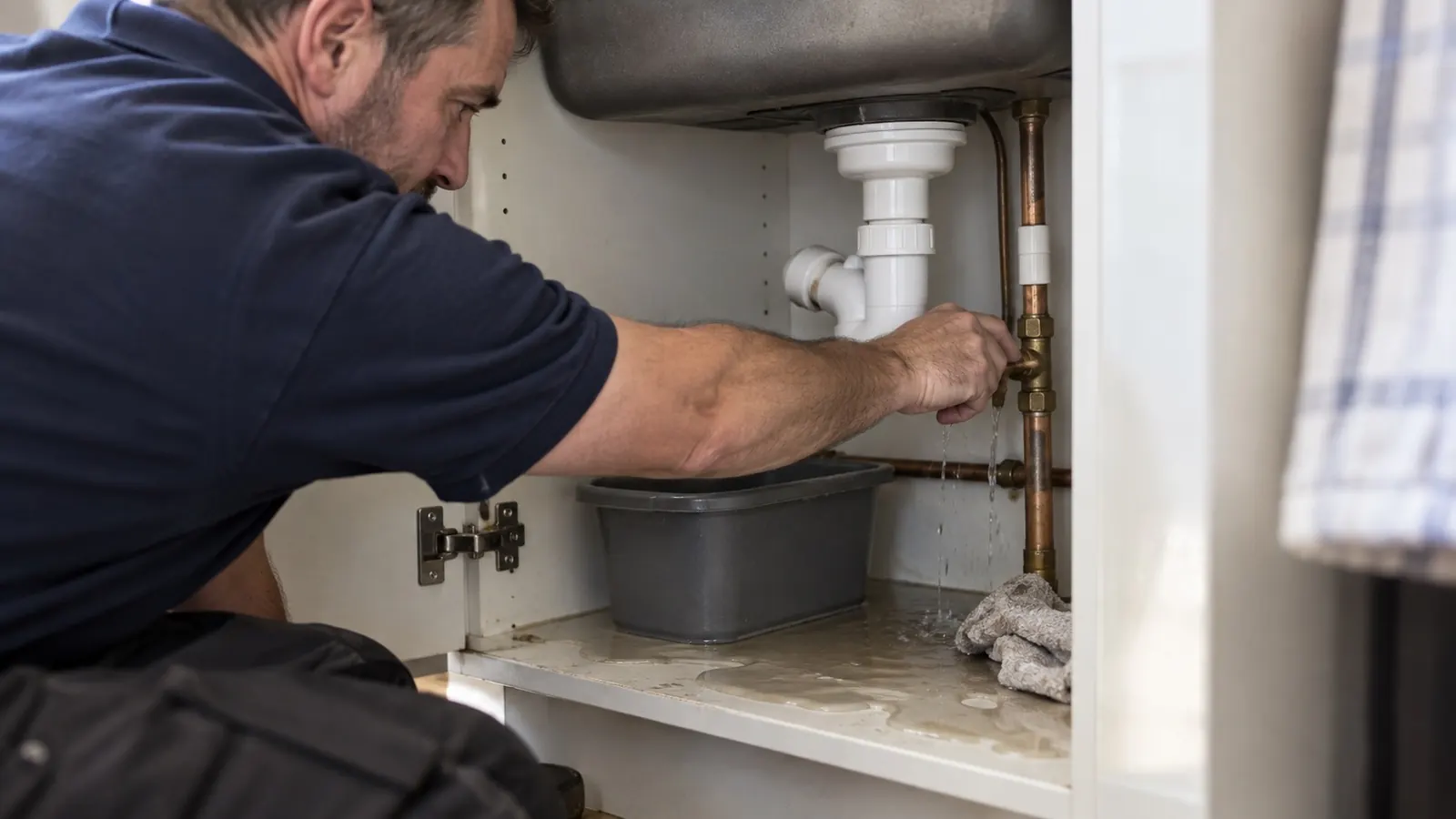
A burst pipe is one of the most stressful things that can happen in a house. Water is pouring through a ceiling, you do not know where it is coming from, and every minute feels expensive. Take a breath. What you do in the next ten minutes decides most of the damage, and none of it is difficult.
Step 1: do these things now, in this order
- Turn off the stopcock. This is the one thing that matters most. It shuts off the mains supply to the whole house, so no more water comes in. Do this before you go looking for the leak.
- Switch off the electrics if water is near them. If water is coming through a light fitting, running down a wall with sockets on it, or pooling near the consumer unit, turn the power off at the consumer unit. Do not touch switches with wet hands. If the consumer unit itself is wet, leave it and call an electrician.
- Open the cold taps. Kitchen, bathroom, all of them. This drains the water already sitting in the pipework and takes the pressure off the leak. Flush the toilets too.
- Turn off the boiler and heating. If the leak is on a radiator pipe, turning the heating off stops the pump pushing water round. If your boiler is fed from a cold water tank in the loft and that tank is now emptying, switching the boiler off protects it.
- Catch what you can. Buckets, washing-up bowls, towels along door thresholds. If a ceiling is bulging with water, put a bucket underneath and pierce the lowest point with a screwdriver to let it drain in a controlled way, rather than waiting for the plasterboard to give.
- Photograph everything. The pipe, the water, the damaged flooring, ruined belongings. Your insurer will want evidence from before you started cleaning up.
Where the stopcock is in a Milton Keynes home
Most people have never touched their stopcock. In MK houses it is usually in one of these places:
- Under the kitchen sink. The most common spot in 1970s and 1980s grid-square houses and in most new-builds.
- In the downstairs cloakroom, behind the toilet or under the basin.
- In the garage or utility room, on the wall where the water main comes in. Common on detached houses in Emerson Valley, Tattenhoe and Broughton.
- Under the stairs in older properties in Wolverton, Stony Stratford and Newport Pagnell.
- In a cupboard by the front door in flats and some newer estates.
It looks like a small brass tap or a lever on the incoming pipe. Turn it clockwise to close. If it has not been touched in years it may be stiff. Use a cloth for grip and keep turning; do not force it with a wrench, because an old stopcock can shear. If it will not close, or it turns but water keeps flowing, there is an outside stop valve under a small cover in the pavement or front garden. Anglian Water can turn that off if you cannot. Our guide on finding your stopcock has more.
One honest tip: go and find your stopcock today, before you need it. Turn it off and on once a year so it does not seize. Most of the emergency calls we attend would have been half as bad if the water had been off two minutes sooner.
Small leak or full burst?
Once the water is off, work out what you are dealing with.
Signs of a small leak:
- A steady drip from a joint, valve or fitting
- A damp patch on a wall or ceiling with no water actively running
- Water pooling slowly under a sink or behind a radiator
- No visible split in the pipe itself
Signs of a full burst:
- A visible split, crack or hole in the pipe
- Water was spraying or gushing before you turned the stopcock off
- A ceiling that is bowing, stained or dripping in several places
- Water spreading across a floor within minutes
In Milton Keynes the usual culprits are pipes in cold lofts and garages that have frozen and split in a cold snap, push-fit joints that were never fully pushed home, and old compression fittings that have finally let go. In the older stone villages, it is often a corroded copper pipe buried in a solid floor.
Call an emergency plumber now, or wait until morning?
Call now if:
- The pipe has visibly split and you cannot isolate it
- Water has reached sockets, light fittings or the consumer unit
- Water is coming through a ceiling
- You cannot find or operate the stopcock and water is still flowing
- The house is not habitable with the water off, for example you have young children or an elderly relative and it is winter
It can usually wait until morning if:
- The stopcock is off and the leak has stopped completely
- The wet area is small and contained
- No electrics are involved
- It is a slow drip from a fitting that is not getting worse, and you can catch it in a bowl overnight
Waiting until a normal working hour is cheaper, and there is no shame in it if the water is off. Our emergency plumbing page explains how out-of-hours calls work.
What to tell the plumber when you call
Having this ready means whoever comes out arrives with the right parts:
- Where the burst is. Which room, which floor, whether it is an inside or outside wall, loft or under a floor.
- Whether the water is off. And if not, why not.
- Whether the electrics are affected.
- What you can see. A split pipe, a failed joint, or water appearing with no obvious source.
- The pipe material if you can tell: copper, grey or white plastic, or old lead.
- Your postcode and any access notes. Grid-square estates confuse sat navs, so mention the nearest main road.
After the repair
Once the pipe is fixed, the water needs to be turned back on slowly and the system checked for airlocks. Get air out of radiators if the heating has been drained (our radiator bleeding guide covers it), and check the boiler pressure gauge before firing it up. Let wet plaster and floors dry properly with heating and ventilation before redecorating, or you will trap moisture and get mould. If a ceiling has come down or floors have lifted, that is an insurance claim, so keep every photo and receipt.
Ask the plumber why it burst. If it froze, the pipe needs lagging or rerouting before next winter. If a push-fit joint failed, the others on the same run were probably fitted the same day by the same person and want checking.
Frequently asked questions
Does home insurance cover a burst pipe?
Most buildings policies cover damage caused by escape of water: ceilings, floors, decoration and belongings under contents cover. The cost of repairing the pipe itself is often excluded, and "trace and access" (finding a hidden leak) is only covered if your policy lists it. Photograph everything before clean-up. Our guide on what home insurance covers goes into the detail.
What does an emergency call-out cost?
Out-of-hours work costs more than a daytime visit, and the total depends on how long the repair takes, whether a floor or ceiling has to be opened to reach the pipe, and what parts are needed. Any decent plumber will tell you the call-out charge before setting off and confirm the cost of the repair before starting it. Be wary of anyone who will not.
Can I repair a burst pipe myself?
A temporary fix is fine: a pipe repair clamp or self-amalgamating tape from a DIY shop will hold a small split until a plumber arrives. A permanent repair means cutting out the damaged section and re-jointing, which is a plumber's job if you have not done it before. Never repair anything on the gas side yourself.
How do I stop pipes bursting in the first place?
Lag pipes in lofts, garages and outbuildings, insulate outside taps or fit an isolation valve and drain them before winter, keep the heating on low if you go away in a cold spell, and fix drips when they start rather than when they become floods.
If it is happening right now
Turn the water off, get the electrics safe, then ring us. Plumbline MK covers Milton Keynes, Newport Pagnell, Bletchley, Wolverton, Stony Stratford and the surrounding towns. Call 07805 844 016 or get in touch.
Need Professional Advice?
Our Gas Safe registered engineers are ready to help with all your heating needs. Get a free, no-obligation quote today.