Emergency Plumber Milton Keynes: What to Do in the First 30 Minutes of a Plumbing Emergency
TL;DR
When a plumbing emergency strikes, the first 30 minutes matter most. Shut off your water at the stopcock, isolate electricity if water is near it, and contain the damage before help arrives. This guide walks you calmly through the most common emergencies in Milton Keynes, what to do and what to avoid, and when to call Plumbline MK on 07805 844 016.
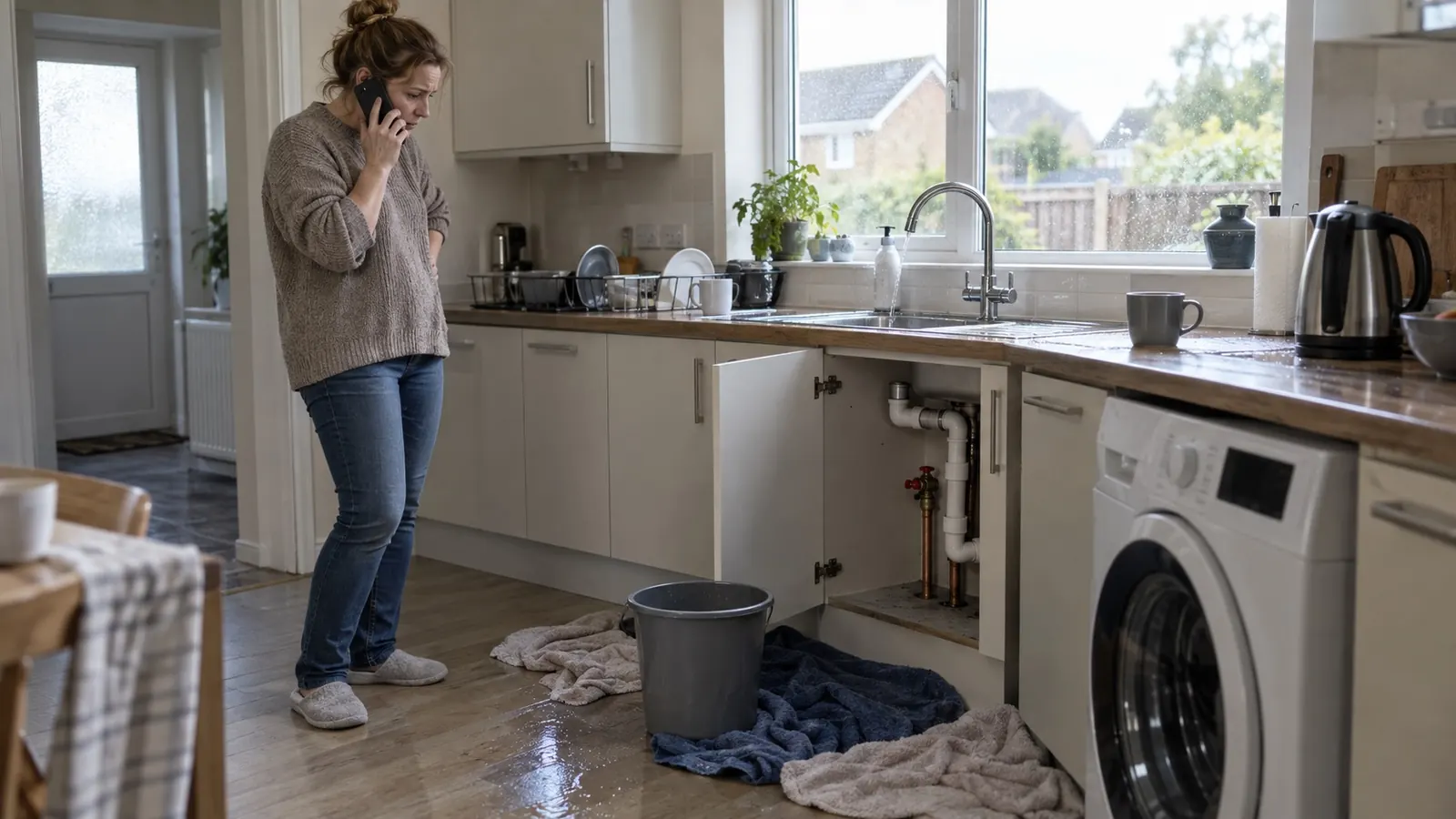
A plumbing emergency rarely announces itself politely. Water appears where it shouldn't, a ceiling starts to bulge, or you wake to a cold house and no hot water. In those first few minutes it is easy to feel overwhelmed - but what you do in the first half hour often decides whether you are dealing with a quick repair or weeks of drying out and redecorating. The good news is that the most important steps are simple, and almost anyone can do them.
This guide is written for exactly that moment. We have set out the most common household plumbing emergencies we see across Milton Keynes, and for each one we explain the immediate steps to take before the plumber arrives - and just as importantly, what not to do. Keep this page handy, take a breath, and work through it calmly. When you are ready to speak to a Gas Safe registered engineer, call Plumbline MK on 07805 844 016 or 01908 229 560.
Where is your stopcock, and how to use it
Before we go through individual emergencies, find your internal stopcock (sometimes called a stop tap). This single valve shuts off the cold mains supply to your whole home, and knowing where it is can save you thousands of pounds. Do not wait for a flood to go looking for it - find it today while everything is calm.
In most Milton Keynes homes the stopcock is in one of a few typical places:
- Under the kitchen sink - the most common location, usually where the mains pipe enters the property.
- In the downstairs loo or cloakroom - often tucked behind the toilet or in a corner.
- Near the front door - sometimes in a hallway cupboard, under the stairs, or close to where pipework enters the house.
To shut the water off, turn the stopcock clockwise (the old saying is "righty-tighty"). If it has not been touched in years it can feel stiff - turn firmly but steadily rather than forcing it, as old valves can snap. Once it is off, open a cold tap in the kitchen to drain the remaining water from the system and confirm the flow has stopped.
There is also an external stop tap, usually under a small round cover marked "W" or "stopcock" on the pavement or driveway near your boundary. You may need a long key or a screwdriver to reach it. This is useful if your internal stopcock is seized or you cannot find it. If you live in a flat, the stopcock may be in a communal cupboard or riser, so it is worth checking with your building manager in advance.
Burst pipe
A burst pipe is the emergency that does the most damage fastest, because water keeps coming until you stop it at the source. It might show as water pouring through a ceiling, a soaked patch of wall, or an unexpected puddle on the floor.
Do this straight away:
- Turn off the internal stopcock (clockwise) to cut the mains supply.
- Open all cold taps to drain the system and reduce pressure on the damaged pipe.
- If water is anywhere near light fittings, sockets or your consumer unit, switch off the electricity at the fuse board before going near it.
- Catch and contain water with buckets, bowls and towels, and move furniture and valuables clear.
- If a ceiling is bulging with trapped water, place a bucket underneath and, from a safe distance, pierce a small hole to release it in a controlled way rather than letting it collapse.
What not to do: do not ignore it in the hope it will ease off, and never touch wet electrics or stand in water near live electrical equipment. Do not pour boiling water over a frozen pipe that has burst, and avoid using the affected area until it has been checked.
Boiler breakdown
A boiler that stops working is alarming, especially in colder months, but it is rarely an immediate danger. Most modern boilers display a fault or error code on the front panel, which tells the engineer a great deal before they even arrive.
Do this first: note down any fault code shown, check that the boiler has power and that the gas supply is on, and look at the pressure gauge - many boilers lock out if pressure drops too low. Check whether your thermostat has lost its setting or run out of batteries, and confirm the issue is not simply a tripped switch. A single reset is fine, but if it locks out again, stop there.
What not to do: do not keep pressing reset over and over, and never attempt to open up the boiler casing yourself - that is for a Gas Safe registered engineer only. If you smell gas at any point, treat it as the gas leak emergency below. For a deeper walkthrough of boiler faults, see our guides on diagnosing no hot water and our boiler repair service.
No hot water
Losing hot water is one of the most common calls we get. It is not always an emergency, but it is always inconvenient. The cause might be a boiler fault, a failed thermostat, a problem with a hot water cylinder, or - in winter - a frozen condensate pipe shutting your boiler down.
Do this first: check whether you have heating but no hot water, or neither, as that helps narrow the cause. Confirm the boiler pressure is correct, look for a fault code, and check the thermostat and any timer or programmer settings. If you have a separate immersion heater, you can switch it on as a temporary backup for hot water.
What not to do: avoid repeatedly resetting the boiler, and do not start dismantling the cylinder or boiler. Our no hot water diagnosis guide walks through the common causes in detail.
Gas leak or smell of gas
A gas leak is the one emergency where you should act before doing anything else - including reading the rest of this page. Natural gas has a deliberate "rotten eggs" smell added so you can detect it. Treat any persistent gas smell, hissing near a gas appliance, or sudden unexplained dizziness and nausea as a potential leak.
Do this immediately:
- Open doors and windows to ventilate the property.
- Turn off the gas at the meter control valve (turn the handle so it sits across the pipe).
- Do not touch any electrical switches - do not turn lights on or off, and do not use anything that could create a spark.
- Put out naked flames and do not smoke.
- Leave the property and, from outside, call the National Gas Emergency line on 0800 111 999, which is free and staffed 24 hours a day.
What not to do: do not use your mobile phone inside the property, do not flick any switches, and do not try to find the leak yourself. Once the emergency service has made the situation safe, a Gas Safe registered engineer like our team can carry out the repair. Your safety always comes first.
Blocked drain or overflow
A blocked drain becomes an emergency when waste water has nowhere to go and starts backing up into the house, or when an overflow pipe runs continuously. It is unpleasant, but usually less destructive than a burst pipe - provided you act before it floods.
Do this first: stop using water that drains into the affected pipe (sinks, the washing machine, the dishwasher) so you are not adding to the problem. For a slow blockage, a plunger or hot water can sometimes help. If an outside drain is overflowing, keep children and pets well away for hygiene reasons. If a toilet overflows, turn off its isolation valve or the stopcock to stop more water entering.
What not to do: avoid tipping caustic chemical drain cleaners down repeatedly - they can damage pipes and make a plumber's job harder and riskier. Do not keep flushing a blocked toilet, as it will simply overflow again.
Leaking hot water cylinder
A leaking hot water cylinder (the large insulated tank often found in an airing cupboard) can release a surprising amount of hot water and cause real damage, particularly to floors and ceilings below.
Do this first: turn off the water supply feeding the cylinder, or shut the main stopcock if you are not sure which valve to use. Switch off the immersion heater and the boiler so the cylinder is not being heated. Open hot taps to drain the cylinder down and relieve pressure, and place towels and containers to catch the leak. Move anything stored nearby, as escaping water is hot.
What not to do: do not leave the immersion heater on while the cylinder is draining, and do not attempt to tighten fittings on a hot, pressurised tank. Take care - the water is hot enough to scald.
How quickly should a Milton Keynes emergency plumber respond?
For a genuine emergency, you should expect a fast response. A good local plumber covering Milton Keynes will typically aim to reach you within an hour or two, depending on traffic, time of day and how busy they are. Being based locally matters - an engineer travelling across the MK area will always reach you sooner than one coming from much further afield.
When you call, have a few details ready to speed things along: your postcode, what has happened, whether you have managed to shut off the water or gas, and whether anyone is at risk. Clear information helps us prioritise correctly and bring the right parts. Our emergency plumbing service covers Milton Keynes and the surrounding area around the clock.
Genuine emergency vs something that can wait until morning
Not every plumbing problem needs a midnight call-out, and knowing the difference can save you money. As a calm rule of thumb, it is a genuine emergency if there is a risk to safety or rapidly worsening damage.
| Call straight away | Usually safe to wait until morning |
|---|---|
| Any smell of gas or suspected gas leak | A single dripping tap |
| A burst pipe or uncontrollable leak | A slow, contained drip into a bucket |
| Water near electrics or a sagging ceiling | One slow-draining sink |
| No heating or hot water in freezing weather, especially with vulnerable occupants | Low boiler pressure you can safely monitor |
| Sewage backing up into the home | A running overflow you have isolated |
If you are ever unsure, call us and describe what is happening. We would always rather give you honest advice over the phone than have you worry alone - and sometimes we can talk you through a temporary fix until the morning.
How 24/7 emergency callout pricing works
We believe in being completely transparent about cost, because the last thing you need in a crisis is a nasty surprise on the bill. Here is how emergency call-out pricing generally works in Milton Keynes.
- Call-out fee: most plumbers charge a call-out fee to attend, which covers travelling to you and the first part of the visit. We will always tell you this figure before we set off.
- Out-of-hours rates: evenings, weekends and bank holidays are typically charged at a higher rate than a standard weekday daytime visit, because an engineer is on call around the clock.
- Parts: any replacement parts are charged separately, and we will explain what is needed and why before fitting anything.
Our promise is simple: clear, upfront pricing with no hidden extras. We tell you what to expect before we begin, so you can make an informed decision while staying in control. Honest pricing is part of looking after our neighbours across Milton Keynes.
Talk to Plumbline MK now
If you are in the middle of a plumbing emergency, take the immediate steps above to make things safe and contain the damage - then pick up the phone. Plumbline MK is a Gas Safe registered, local team offering 24/7 emergency plumbing across Milton Keynes, and we are here to help you through it calmly.
Call us now on 07805 844 016 or 01908 229 560, or send us your details through our contact page and we will respond quickly. Remember: if you smell gas, leave the property and call the National Gas Emergency line on 0800 111 999 first. Whatever the problem, you do not have to deal with it on your own.
Need Professional Advice?
Our Gas Safe registered engineers are ready to help with all your heating needs. Get a free, no-obligation quote today.