Bathroom Installation Cost: What You Are Paying For
TL;DR
A bathroom installation quote is mostly labour across several trades: strip-out, first-fix plumbing, electrics, plastering, tiling, second-fix and sealing, usually five to ten working days. The biggest swings come from things you cannot see until the old suite is out: moving the soil pipe, rotten floors, plaster that comes off with the tiles, and old pipework. A fixed price with a written rate for unforeseen work is the safest structure for a standard refit.
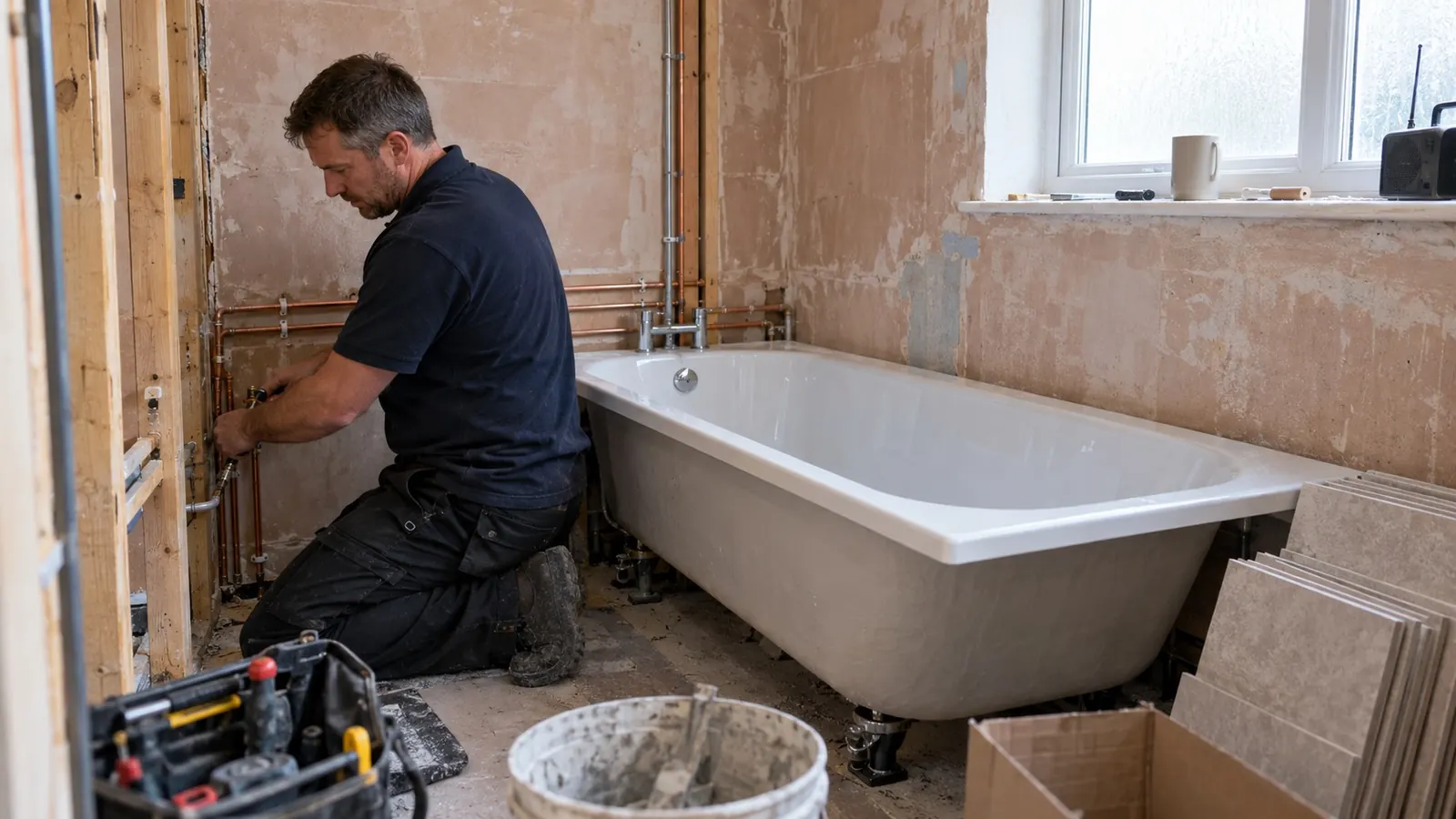
If you are comparing bathroom quotes, the labour line is where the differences usually sit, and it is the hardest part to judge because it bundles half a dozen separate trades into one figure. This guide explains what you are paying a fitter for, how a quote is normally structured, what drives the total up or down, and which items commonly sit outside the headline number.
We are not going to give you a price. Two bathrooms of the same size in Milton Keynes can come in thousands of pounds apart, and the reason is almost never the taps. It is what is behind the tiles and under the floor. What we can do is show you how to read a quote so you know whether it is complete.
What the labour figure covers
A full bathroom installation is not one job. A typical refit involves:
- Strip-out and disposal. Removing the old suite, tiles and flooring and taking the waste away. Usually a day, sometimes two if the tiles are on solid walls.
- First-fix plumbing. Moving or renewing supply and waste pipework before the walls close up. Anything that touches the drinking water supply has to comply with the Water Supply (Water Fittings) Regulations 1999.
- Electrical work. Lighting, extractor fan, shaver point. Bathroom electrics are zoned and notifiable under Part P of the Building Regulations, so someone has to certify them.
- Plastering. Almost always needed once old tiles come off, because they take the surface with them.
- Tiling. The single largest labour element in most bathrooms.
- Second-fix plumbing. Fitting the suite, taps, shower and waste connections.
- Sealing and making good. Silicone, trims, and tidying the joins.
Five to ten working days is normal. A wet room or a layout change pushes it longer, and both plaster and tanking need drying time that cannot be compressed.
What actually moves the total
When people ask why one quote is so much higher than another, it is nearly always one of these:
- Whether anything moves. Keeping the toilet, bath and basin where they are removes the biggest variable in the job. Moving the toilet means moving the soil pipe, and the pipe has to keep its fall under Approved Document H of the Building Regulations. If that means lifting floors or going through a wall, it is a significant job rather than a small change.
- How much tiling, and what kind. Tiling is charged by area and by difficulty. Full height on four walls can double the tiling labour against half height on two. Large-format tiles and mosaics both take longer and need a flatter wall.
- Wet room or shower tray. A wet room is not just a shower without a tray. The floor has to be tanked as a continuous waterproof membrane and formed to fall towards the drain. That is slow, skilled work you cannot inspect once it is tiled over.
- The state of the walls and floor. Nobody can price a rotten joist before the bath comes out. Old lead or steel pipe found during strip-out has to be replaced, not reconnected.
- Who supplies the fittings. A quote that includes a named suite, shower valve and tiles is a different number from one that assumes you are buying everything yourself.
- The house itself. In Milton Keynes the 1970s and 1980s grid-square houses often have plasterboard walls and original pipework that has never been touched. The older stone cottages in places like Stony Stratford and Olney have solid walls, uneven floors and awkward waste runs. New-build estates are usually the simplest. All of these change how long the job takes.
Materials: where the money goes
If your quote includes materials, it helps to know which lines matter.
- Sanitaryware and brassware. Toilet, basin, bath or tray, taps and shower valve. The functional difference between mid-range and premium is smaller than the price gap suggests. The exception is the shower valve, where a good thermostatic unit is genuinely worth paying for because it is the thing you use every day.
- Tiles. Often modest on their own. It is the labour to fit them that adds up.
- Waterproofing, adhesives and trims. Cheap to buy and the worst place to save. A failed tanking membrane is only discovered when the ceiling below it stains.
- Extractor fan. Not optional in a room with no opening window, and worth having anyway. Condensation is what wrecks grout and paintwork.
Day rate or fixed price?
Both are legitimate, and they suit different situations.
Fixed price is best for a defined job where the scope is clear. You know the total before work starts, and the risk of the job overrunning sits with the installer. The trade-off is that a sensible fixed price includes a contingency for the unknown. Ask what happens if something unforeseen appears. A written hourly or daily rate for extras is the sign of a quote that has been thought about rather than guessed.
Day rate is fairer when the scope genuinely cannot be pinned down: an old property, an unusual layout, or a job where you are still deciding details. The risk is yours, so it works best with an installer you trust and a realistic estimate of days.
For most standard bathrooms, a fixed price is the safer structure.
What usually sits outside the quote
These are the items that turn a labour quote into a much bigger final bill, and they are worth asking about before you sign anything:
- Plastering. Some quotes include it, many list it separately. Removing tiles from plasterboard often means re-boarding rather than skimming.
- Rotten floor. Common under old baths and shower trays where a slow leak has gone unnoticed for years.
- Electrical certification. Ask who issues the certificate and whether it is in the price.
- Waste removal. A full bathroom strip-out fills a skip. Check whether the skip is included.
- Decorating. Painting the untiled walls and ceiling afterwards is usually yours.
- Old pipework. Lead or steel found during strip-out has to be replaced.
- Building control. A like-for-like swap usually does not need it, but new drainage, structural work and bathroom electrics can. Your installer should tell you which applies.
Reading two quotes fairly
If one quote is noticeably cheaper, look for the reason before assuming it is a better deal:
- Does it include plastering and making good, or stop at second fix?
- Is waste removal in there?
- Who is certifying the electrics?
- Are the fittings named by make and model, or is there a vague allowance?
- Is there a written rate for unforeseen work, or silence on the subject?
- How many days, and is that realistic for the scope?
A quote that is cheaper because it excludes plastering is not cheaper. It is a different job.
Where labour cost is genuinely justified
Some things take longer for good reasons, and paying for them is sensible:
- Tanking a wet room. Done properly it is a continuous membrane with correctly formed falls. Rushed, it fails, and the failure shows up downstairs.
- Large-format tiles. Heavier, less forgiving, and easy to get visibly wrong.
- Moving the soil pipe. Falls and pipe sizing are set out in Approved Document H. Get it wrong and you have a toilet that does not clear.
- Silicone and sealing. The most visible finish in the room, and the difference between a neat bathroom and an obviously amateur one.
Where you can sensibly save
- Keep the layout. The biggest single saving available.
- Tile selectively. Full height in the wet areas, half height or painted elsewhere.
- Spend on the valve, save on the finish. A quality thermostatic shower valve matters daily. A designer basin does not.
- Do the decorating yourself once the trades are out.
What not to economise on: waterproofing, the extractor fan and the shower valve. All three are expensive to revisit.
One thing most fitters will not tell you
The most common cause of a bathroom refit going wrong is not bad tiling. It is a leak from the old bath or shower that nobody spotted, which has been soaking the floor for years. If a fitter quotes you a firm price without lifting anything or asking about damp on the ceiling below, they are either carrying a big hidden contingency or planning to charge you later. A good quote says plainly what it assumes and what happens if the assumption is wrong.
Frequently asked questions
How long should a bathroom take to fit?
Five to ten working days for a standard refit. Anyone promising two or three days for a full strip-out and retile is either skipping the plastering or not allowing drying time.
Should I pay a deposit?
A deposit covering materials is normal. Paying a large proportion of the labour up front is not. Staged payments tied to milestones protect both sides.
Can I supply my own fittings to save money?
It saves on materials rather than labour, and it moves responsibility to you if something arrives damaged or does not fit. Many installers are happy either way. Ask before assuming.
Is a shower refit cheaper than a full bathroom?
Usually, because less is being disturbed. Our shower installation guide covers what changes the price on a shower-only job.
Getting an itemised quote
We fit bathrooms across Milton Keynes and the surrounding towns, and we quote itemised so you can see what each part of the job costs and what is assumed. If we need to see under the bath before committing to a figure, we will say so. Get in touch and we will tell you honestly what your room needs.
Need Professional Advice?
Our Gas Safe registered engineers are ready to help with all your heating needs. Get a free, no-obligation quote today.