What Is a Condensing Boiler?
TL;DR
A condensing boiler is a gas or oil boiler with a larger heat exchanger that pulls extra heat out of its own flue gases before they leave the house. Cooling the gases that far turns their water vapour back into liquid, which is where the name comes from and why the boiler has a plastic condensate pipe. Every new gas boiler fitted in England and Wales since 2005 has had to be condensing.
'Condensing' is on every boiler advert and every energy performance certificate, and almost nobody explains what it means. If you are choosing a new boiler, or just trying to understand the one you have, here is the plain version.
The short answer
A condensing boiler is a high-efficiency boiler that recovers heat from its own exhaust. An older boiler burns gas, heats the water once, and sends the flue gases outside while they are still very hot. A condensing boiler passes those gases across a second, larger heat exchanger and takes more of the heat back before they go up the flue. That recovered heat goes into your radiators instead of into the garden.
How it works
Burning gas produces carbon dioxide and a lot of water vapour, and that vapour holds a surprising amount of energy. In an old boiler the flue gases leave at a temperature high enough that the vapour stays as vapour and all of that energy is wasted. In a condensing boiler the returning water from the radiators, which is the coolest water in the system, is used to cool the flue gases down. Once they drop below roughly 55 degrees, the vapour condenses back into liquid water and gives up its latent heat in the process. The boiler captures that too.
This is why the return temperature matters so much. A condensing boiler only condenses when the water coming back from the radiators is cool enough. Run it with the flow temperature set to maximum and the return comes back too hot, the flue gases never condense, and you have an expensive boiler behaving like a cheap one. More on that below.
Why it has a plastic pipe
The condensed water has to go somewhere. It is mildly acidic, so it runs through a plastic pipe rather than copper, either to an internal waste pipe or outside to a drain or soakaway. That pipe is the easiest way to tell a condensing boiler from an older one: if there is a white or grey plastic pipe leaving the bottom of the boiler, it condenses.
It is also the one part of a condensing boiler that regularly causes trouble. An external condensate pipe can freeze in a hard frost, the water backs up, and the boiler locks out, usually with an ignition fault code. It is one of the most common winter call-outs there is. You can thaw it yourself with warm water, and the permanent fix is to insulate the pipe properly, increase its diameter or reroute it inside. Any of those is a small job for a repair engineer.
How efficient is it?
Boilers are rated under the ErP energy label. A modern condensing boiler achieves an A rating, which means a seasonal efficiency in the low nineties as a percentage. Building Regulations Approved Document L requires new gas boilers in England to reach at least 92 percent ErP. A non-condensing boiler from the 1990s might have been rated around 65 to 75 percent when new, and an old cast-iron floor-standing boiler lower still. In practical terms, for every pound of gas you burn, an old boiler wastes a quarter or more of it up the flue and a condensing boiler wastes a small fraction.
What that saves you depends on how much gas you use, how well the house is insulated and how the boiler is set up, so treat any single number you see online as a guess. The Energy Saving Trust publishes worked estimates by boiler rating and property type if you want a starting point for your own home.
Are all new boilers condensing?
Yes. Since April 2005 in England and Wales, every new gas boiler has had to be a condensing model under the Building Regulations, and oil boilers followed in April 2007. If your boiler was fitted in the last twenty years, it is condensing. The only non-condensing boilers still running are older ones that predate the rule, and there are fewer every year. Combi, system and regular (heat-only) boilers are all available as condensing models, so 'condensing' tells you about efficiency, not about the type of boiler or how it makes hot water.
Getting a condensing boiler to actually condense
This is the part most guides leave out. A lot of condensing boilers in British homes are set up so that they rarely condense at all. The fix is free.
- Turn the flow temperature down. Many boilers leave the factory at 75 to 80 degrees. On a system with radiators sized sensibly, 60 to 65 degrees keeps the house just as warm and lets the return drop low enough to condense. Try it and see if the rooms still reach temperature; if they do, leave it there. Hot water on a combi is set separately and does not change.
- Balance the radiators. If the radiators nearest the boiler are hogging the flow, the return comes back hot. Balancing sends more through the far ones and cools the return.
- Fit weather compensation or load compensation controls if the boiler supports it. The boiler lowers its own temperature on mild days automatically.
- Keep the system clean. Sludge on the heat exchanger insulates it from the water. A magnetic filter and inhibitor keep the exchanger working. A yearly service checks the combustion and the condensate trap, which is where the efficiency is actually confirmed.
Here is the honest point: a new A-rated boiler fitted to a dirty system, set to maximum temperature and left alone will not deliver the efficiency on its label. The label is what the boiler can do. The installation and the settings decide what it actually does.
Should you replace a non-condensing boiler?
If yours predates 2005 and still works, the case for replacing it rests on three things: the running-cost difference, which is real and compounds every winter; the risk of a breakdown on a boiler that old, with parts becoming scarce; and the fact that any replacement will be condensing anyway, so the question is when rather than whether. A boiler that old also predates modern safety features and should be on an annual service without fail until it goes. If it has stopped working and needs a major part, that is usually the moment.
Signs of a non-condensing or poorly condensing boiler
- No plastic condensate pipe. Almost certainly non-condensing.
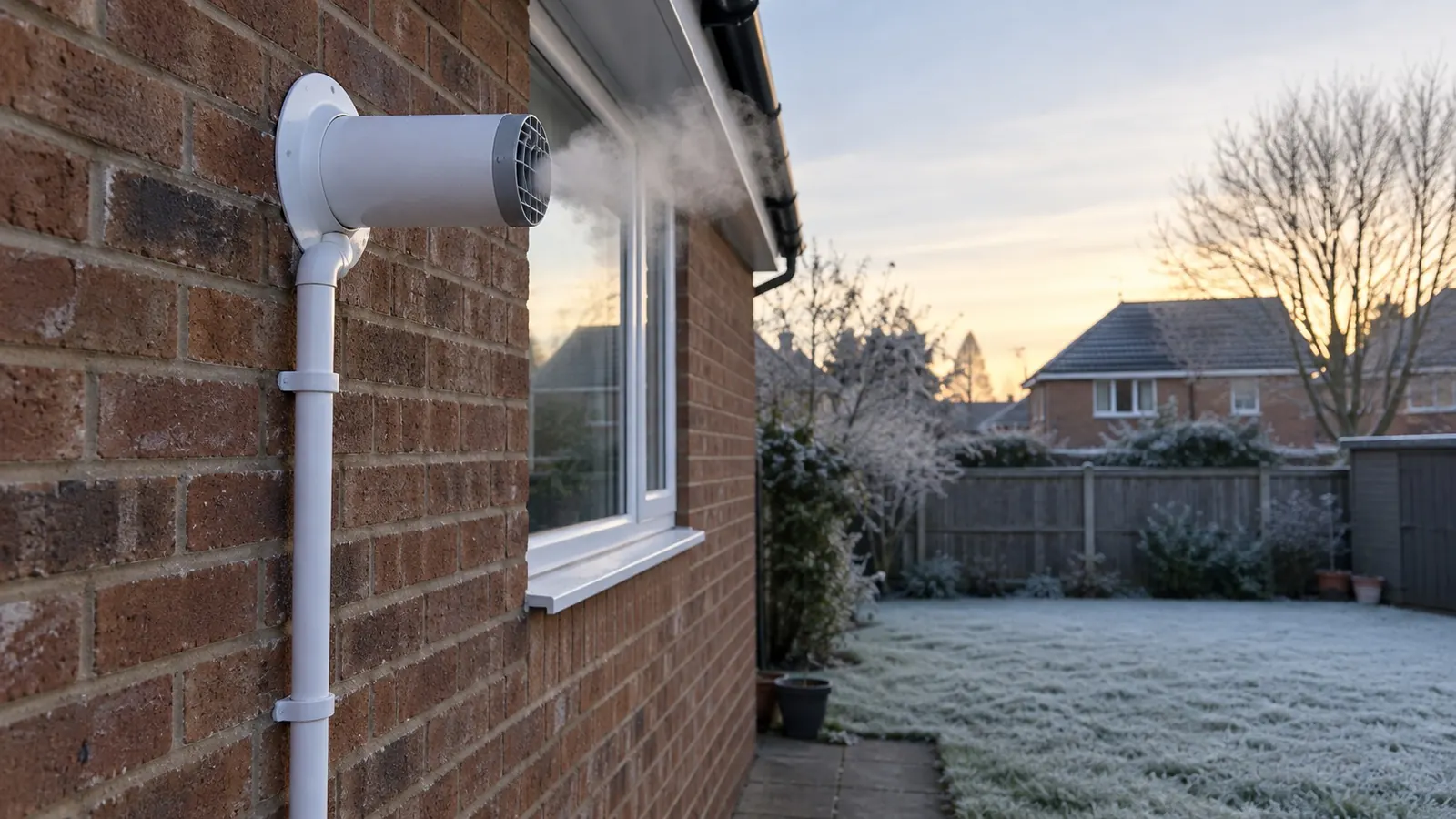
- A visible plume of steam from the flue in cold weather. Normal on a condensing boiler and actually a sign it is working; the exhaust is cool and wet. A non-condensing boiler's flue gases are hotter and less visible.
- A flue that is hot to the touch near the boiler. Heat going outside rather than into the house.
- Flow temperature set to maximum. Look at the dial or display. If it is at the top, it is probably not condensing much.
Where a local engineer comes in
Turning the flow temperature down and checking the condensate pipe are things anyone can do. Anything inside the casing, anything to do with the flue or the gas, and the annual service are a Gas Safe registered engineer's job. If you are in Milton Keynes and want to know whether your boiler is condensing, whether it is set up to do so, or whether a pre-2005 boiler is worth keeping, get in touch and we will tell you straight. Plumbline MK is Gas Safe registered (957816).
Need Professional Advice?
Our Gas Safe registered engineers are ready to help with all your heating needs. Get a free, no-obligation quote today.