Cut Heating Bills in MK 2026: 12 Tips
TL;DR
Turn down your boiler flow temperature to 55°C (free, saves 6–8%), use TRVs properly, bleed radiators, and set your programmer correctly. These free changes alone can save 10–20%. A smart thermostat (<strong>£150–£250</strong>) and annual service (<strong>£80–£120</strong>) provide further savings.
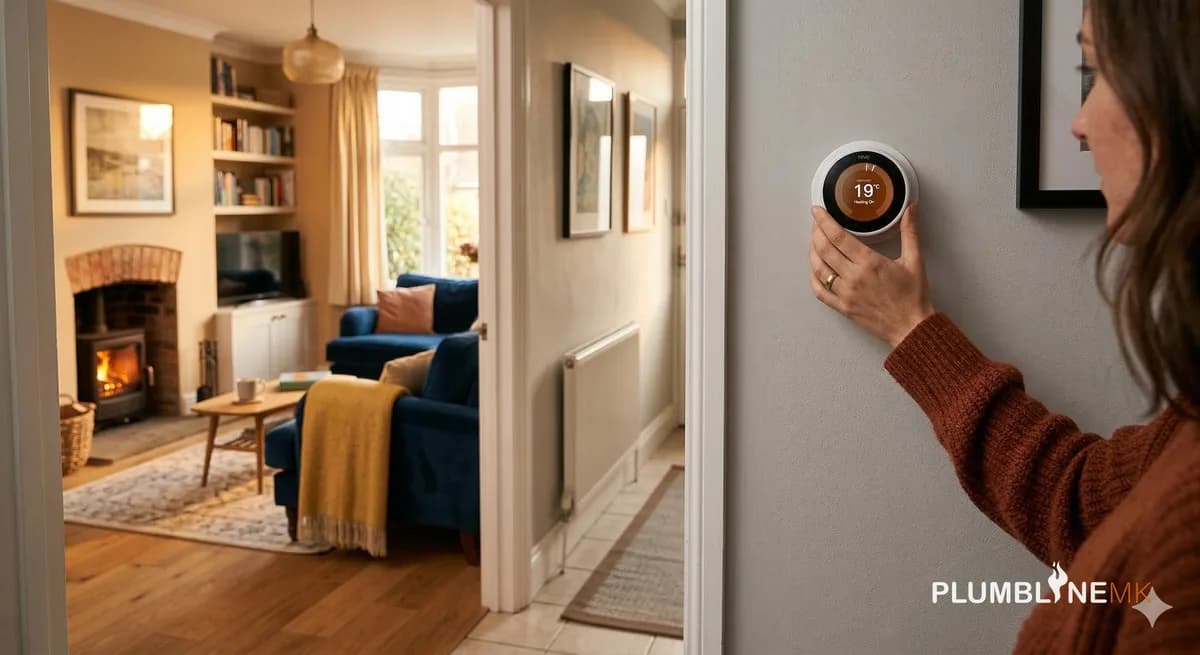
Energy bills remain a significant household expense for most Milton Keynes families. The good news is that there are a range of changes — from completely free adjustments to modest investments — that can meaningfully reduce what you spend on heating without making your home uncomfortable.
This guide works through the most effective measures in roughly ascending order of cost, starting with the things you can do today for free.
1. Lower Your Boiler Flow Temperature
This is one of the most effective free changes you can make, and most homeowners have never done it. Your boiler's flow temperature controls how hot the water is when it leaves the boiler. Many boilers are factory-set at 70–80°C, but for most homes a flow temperature of 55–60°C is perfectly adequate for heating and significantly more efficient.
Modern condensing boilers are most efficient when the return water temperature is below 55°C — this is when the boiler "condenses" and recovers latent heat from flue gases. Running at 70°C+ prevents the boiler from fully condensing, wasting energy.
- Recommended setting: 55°C flow temperature for most homes
- Estimated saving: 6–8% on gas bills (sometimes more)
- Time to do it: 2–5 minutes — consult your boiler manual for how to access the flow temperature setting
- Cost: Free
Note: If you have underfloor heating, flow temperature should already be set to 35–45°C. If you notice your home takes longer to heat after reducing flow temperature, you can always adjust upward — but try a week at 55°C first and see how your home responds.
2. Use Your Room Thermostat Correctly
Your room thermostat controls the temperature the boiler is trying to reach. Every 1°C reduction in thermostat setting saves approximately 3% on your heating bill.
- Set to 19–20°C for living areas during occupied hours
- Set to 16–18°C for bedrooms
- Use setback temperatures (16°C) overnight rather than turning heating completely off — it's cheaper to maintain a base temperature than to reheat a cold house
- Don't turn the thermostat up high to heat the room faster — it doesn't work that way. The boiler runs at the same rate regardless; a higher setting just means it runs for longer.
3. Use Thermostatic Radiator Valves (TRVs) Correctly
TRVs are the numbered valves on the side of your radiators. They control the temperature of individual rooms by limiting the flow of hot water to each radiator. Many people either leave them fully open (wasting heat in rooms that don't need it) or set them inconsistently.
- Set TRVs in bedrooms to 2–3 (approximately 18°C)
- Set TRVs in living rooms to 3–4 (approximately 20–21°C)
- Set TRVs in rooms you rarely use to 1–2 (frost protection)
- Do not fit a TRV in the same room as your main thermostat — they will fight each other and the heating will short-cycle inefficiently
4. Bleed Your Radiators
Air trapped in radiators creates cold spots and makes your boiler work harder to reach room temperature. Bleeding radiators is free, takes minutes, and should be done at the start of each heating season.
Signs you need to bleed: radiators are cold at the top but warm at the bottom, or you can hear gurgling sounds when the heating is on. Use a bleed key (under £1 from any hardware store) and open the bleed valve until water comes out steadily — then close it. Check boiler pressure afterwards and top up to 1–1.5 bar if needed.
5. Fit a Smart Thermostat
A smart thermostat replaces your existing programmer and thermostat with a system you can control via an app. Models like Hive, Nest, and Tado learn your schedule, allow remote control, and provide energy usage data.
| Product | Cost (supply and fit) | Key Feature | Estimated Annual Saving |
|---|---|---|---|
| Hive Active Heating | £150–£200 | App control, flexible scheduling | £80–£150/year |
| Google Nest Learning | £200–£250 | Auto-schedule learning, energy history | £100–£180/year |
| Tado Smart Thermostat | £150–£220 | Geo-fencing (detects when you leave) | £90–£160/year |
Most smart thermostats pay for themselves within 1–2 years. At Plumbline MK, we include a free Hive smart thermostat with every new boiler installation.
6. Get an Annual Boiler Service
An unserviced boiler loses efficiency gradually — a boiler that was 90% efficient when new may drop to 80–85% over several years without servicing. An annual service (£80–£120) cleans the burner, checks the flue, inspects the heat exchanger, and ensures the boiler is running at optimal efficiency.
The efficiency improvement from a service on a neglected boiler can save £50–£150 per year, depending on the boiler's condition — effectively making the service free or better. See our boiler servicing page for details.
7. Insulate Your Home
Insulation reduces the rate at which your home loses heat, meaning you need to run the heating less. The main options:
- Loft insulation: 270mm of mineral wool insulation costs £300–£600 to install and can save £150–£300 per year for an uninsulated semi-detached home. Payback in 1–2 years.
- Cavity wall insulation: Fills the gap in cavity walls with mineral wool or foam. Costs £400–£800, saves £100–£200/year for a typical semi. Check if your walls are suitable first.
- Draught-proofing: Sealing gaps around doors, letterboxes, keyholes, and floorboards. Very low cost (£50–£200 DIY) with meaningful impact in older MK properties.
- Hot water cylinder jacket: If you have a system or conventional boiler with a cylinder, an 80mm insulation jacket costs around £20–£30 and saves £30–£50 per year.
8. Government Grants and Schemes
Several government schemes may help fund heating improvements for eligible MK homeowners:
- ECO4 scheme: Funds insulation, heating upgrades, and boiler replacement for low-income households or those in inefficient homes. Administered through energy suppliers.
- Warm Home Discount: A one-off £150 discount on electricity bills for eligible households (low income or means-tested benefit recipients).
- Boiler Upgrade Scheme (BUS): £7,500 grant toward an air source or ground source heat pump. Not applicable to gas boiler replacements, but relevant if you're considering a heat pump. See our guide on heat pumps vs gas boilers.
- Milton Keynes Council schemes: MK Council occasionally runs local energy efficiency programmes — check the council website or contact us for the latest information.
The Bottom Line
You don't need to spend thousands to make a meaningful reduction in your heating bills. Adjusting flow temperature, using TRVs correctly, and bleeding radiators cost nothing and can save 10–20% immediately. A smart thermostat (£150–£250) typically pays back in under two years. Annual servicing ensures your boiler isn't quietly wasting money.
If you want a professional assessment of your heating system's efficiency, contact Plumbline MK on 07805 844 016. We can identify quick wins during a service visit and advise on whether an upgrade makes financial sense for your home.
Frequently Asked Questions
How much can I really save by lowering boiler flow temperature?
The Electrification of Heat trial carried out by BEIS found that reducing flow temperature to 55°C on modern condensing boilers improved seasonal efficiency by an average of 6–8 percentage points. At average gas consumption for a semi-detached home, this translates to approximately £60–£120 per year. Homes with more radiators, longer heating runs, or currently running at higher flow temperatures will save more.
Is it cheaper to leave the heating on low all day or use a timer?
Using a programmer timer is almost always cheaper. The "leaving it on low" myth persists because it feels intuitively right — a warm house loses heat gradually rather than all at once. But in practice, a home with the heating off for 8 hours loses less heat than one that's actively maintaining temperature all day. Programme your heating to come on 30 minutes before you need it and switch off when the house will be empty.
How much can a new boiler save on bills?
Upgrading from an older G-rated boiler (less than 70% efficient) to a modern A-rated condensing boiler (90%+ efficient) can save £200–£400 per year on gas bills for an average semi-detached home. Upgrading from an older B or C-rated boiler saves less — typically £100–£200 per year. The saving depends heavily on your current boiler's age and condition. Contact us for a personalised assessment.
Need Professional Advice?
Our Gas Safe registered engineers are ready to help with all your heating needs. Get a free, no-obligation quote today.