Common Central Heating Problems in Milton Keynes Homes and How to Fix Them
TL;DR
Cold radiators? Bleed them (trapped air) or check TRV pins. Pressure keeps dropping? Repressurise or check for leaks. Kettling noise? Limescale build-up — common in MK's hard water area. Multiple cold radiators with cold spots at the bottom? System needs a powerflush. DIY bleeding and repressurising is fine; anything involving gas or boiler internals needs a Gas Safe engineer.
Milton Keynes is a fascinating mix of housing. You've got 1960s and 70s estates in Fishermead and Netherfield sitting alongside newer builds in Broughton and Tattenhoe, and everything in between. That range of housing stock means an equally wide range of central heating problems — some systems are pushing 30+ years old, others are barely five years in but already showing early signs of trouble.
The good news is that most central heating faults follow recognisable patterns. A cold radiator, a pressure gauge that keeps dropping, a boiler that makes a noise you've never heard before — these all point to a fairly short list of causes.
A quick note before we start: anything involving your gas supply, boiler internals, or the flue must be handled by a Gas Safe registered engineer. Everything else — bleeding radiators, adjusting TRVs, checking pressure — is well within reach of a confident homeowner.
Cold Radiators: What's Causing It and How to Fix It
Cold at the top, warm at the bottom: bleed it
This is almost always trapped air. Over time, air works its way into the system and rises to the top of the radiator. The fix is straightforward:
- Turn the heating on and let the system fully heat up
- Turn the heating off and wait 30 minutes for pressure to drop slightly
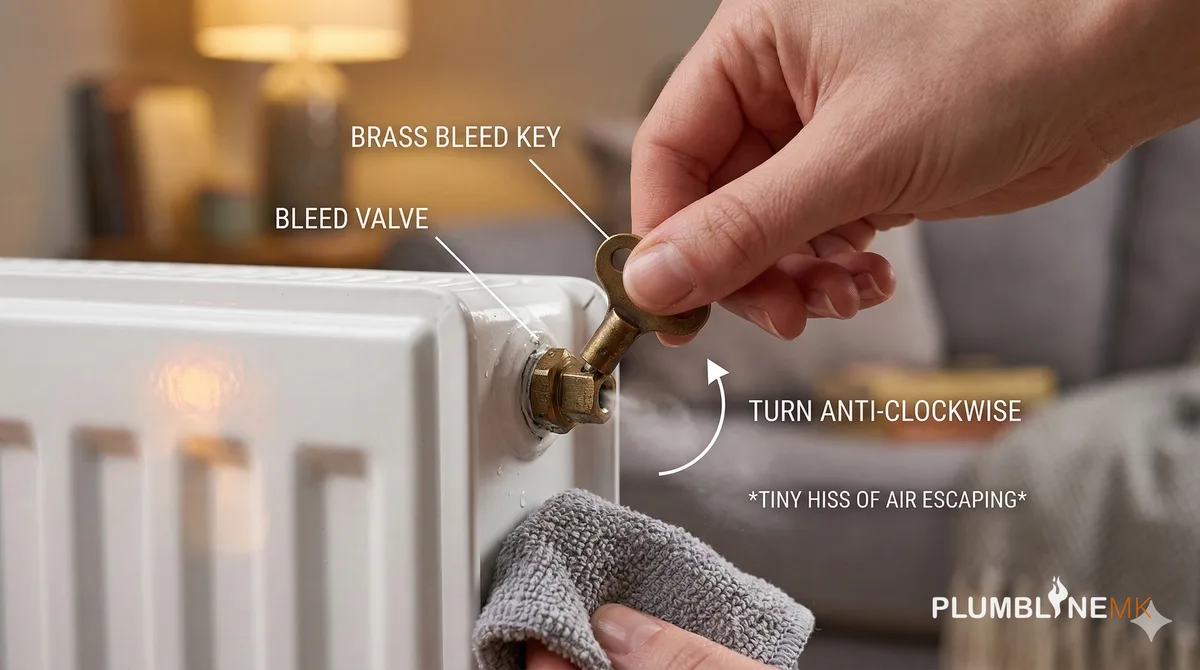
- Use a radiator bleed key to open the bleed valve (usually at the top corner) a quarter turn
- Hold a cloth underneath — you'll hear a hiss as air escapes, followed by water
- Close the valve as soon as water appears, then check your boiler pressure
Cold all over: TRV or lockshield issue
If the whole radiator is cold, check the thermostatic radiator valve (TRV) on the side. Sometimes the pin inside gets stuck, especially on radiators that haven't been used all summer. Try removing the TRV head and pushing the pin in and out a few times. Also check the lockshield valve on the opposite side hasn't been accidentally closed.
Still cold after all that: sludge or pump failure
Sludge is the dark, muddy deposit that builds up inside older systems as metal corrodes. It settles in radiators and blocks water flow. If multiple radiators are cold and the system is more than 10 years old, sludge is a strong suspect. A power flush is the proper solution here.
Pump failure is less common but worth ruling out. If you can hear the boiler firing but no radiators are warming up, put your hand on the pump (usually near the boiler) — it should be warm and you might feel a faint vibration. No warmth, no vibration? The pump may have seized or failed.
Boiler Pressure Keeps Dropping
Most modern combi boilers need to run at between 1 and 1.5 bar of pressure. If yours keeps dropping below that, you'll notice the boiler cutting out or the heating becoming unreliable.
Why it drops:
- You recently bled a radiator — this is the most common and least serious cause. Repressurising via the filling loop will sort it.
- A small leak somewhere in the system — check around radiator valves, pipe joints, and the boiler itself for damp patches or white limescale residue.
- A faulty pressure relief valve — if you see water dripping from the overflow pipe outside your house, the pressure relief valve may be releasing excess pressure. This needs an engineer.
- An internal boiler fault — a failing heat exchanger or other internal component. Don't attempt to diagnose this yourself.
When to call an engineer: if the pressure drops repeatedly (more than once a month) with no obvious cause, there's a leak somewhere that needs finding. Persistent pressure loss is a job for a Gas Safe registered heating engineer.
Noisy Pipes and Radiators: What Each Sound Means
- Banging/clunking (pipes, usually under floors) — Pipes expanding as they heat up, rubbing against joists or clips
- Gurgling (radiators or pipes) — Trapped air moving through the system
- Whistling/kettling (boiler) — Limescale build-up on the heat exchanger (common in MK's hard water area)
- Ticking (radiators) — Normal thermal expansion — usually nothing to worry about
- Loud banging from boiler — Could be delayed ignition or a more serious fault — call an engineer
Kettling is particularly common in Milton Keynes. The town sits in a hard water area, and limescale deposits on the boiler's heat exchanger restrict water flow and cause it to overheat and steam. Left untreated, it shortens boiler life significantly. A descale or system inhibitor treatment can help, but if the build-up is severe, the heat exchanger may need replacing.
Uneven Heating: Some Rooms Warm, Some Cold
If the upstairs is roasting while the downstairs stays cold (or vice versa), the system almost certainly needs balancing. Each radiator has a lockshield valve that controls how much hot water flows through it. Balancing means adjusting each lockshield so that all radiators heat up at roughly the same rate.
Also check your TRV settings. Thermostatic radiator valves have a numbered dial — if a radiator in a cold room is set to 1 or 2, turn it up.
If balancing doesn't solve it: the circulation pump may be running at too low a speed, or there may be a partial blockage from sludge in specific sections of pipework.
Radiators Warm at the Top, Cold at the Bottom
This is almost always sludge. When the black iron oxide deposits (magnetite) settle at the bottom of a radiator, they physically block hot water from circulating through that section.
The proper solution is a professional power flush — it forces high-velocity water and cleaning chemicals through the entire system, dislodging and flushing out sludge, rust, and debris.
Signs your system needs a power flush:
- Multiple radiators with cold spots at the bottom
- System takes a long time to warm up
- Heating bills have crept up without obvious explanation
- Boiler making kettling noises
- Discoloured water when you bleed a radiator
DIY vs. Calling a Gas Safe Engineer: Where to Draw the Line
Fine to do yourself:
- Bleeding radiators
- Repressurising the boiler via the filling loop
- Adjusting TRV settings
- Checking and adjusting lockshield valves for balancing
- Freeing a stuck TRV pin
Leave it to a Gas Safe registered engineer:
- Anything involving the boiler's internal components
- Tracing and repairing leaks (especially near the boiler)
- Replacing a pump, motorised valve, or expansion vessel
- Any work involving the gas supply or flue
- Power flushing (requires specialist equipment)
- Adding a radiator to the system
If you've worked through the steps above and your heating still isn't right, the team at Plumbline MK are Gas Safe registered and cover all of Milton Keynes. We handle everything from a single cold radiator to full system power flushes and central heating repairs — with same-day appointments available for urgent issues.
Need expert help? Contact Plumbline MK for a free, no-obligation quote. Call 07805 844 016 for same-day response across Milton Keynes and surrounding areas.
Frequently Asked Questions
How much does a power flush cost in Milton Keynes?
Power flush costs in Milton Keynes typically range from £300 to £600 depending on the number of radiators and the condition of the system. A standard 10-radiator system usually falls in the middle of that range.
How long does a central heating repair take?
Most central heating repairs can be completed in a single visit of 1 to 3 hours. Straightforward jobs like replacing a pump, motorised valve, or TRV are usually done the same day. More complex faults may require a return visit once parts are sourced. A power flush typically takes 4 to 8 hours.
Can I add a radiator to my existing central heating system?
Yes, in most cases. A heating engineer will assess whether your current boiler and pump have enough capacity for the additional load. It's not a DIY job — it involves draining the system, cutting into existing pipework, and refilling and balancing afterwards. Most single-radiator additions can be completed in a day.
Need Professional Advice?
Our Gas Safe registered engineers are ready to help with all your heating needs. Get a free, no-obligation quote today.