Moving Home Boiler Checklist: Milton Keynes Buyers and Sellers
TL;DR
When you move home in Milton Keynes, the seller should leave the boiler's Benchmark logbook, Building Regulations certificate, warranty registration, service history and a short note of any quirks, plus final meter readings. The buyer should find the stopcock, gas emergency control valve and boiler fused spur on day one, check the warranty by serial number, set up the energy supplier, and book a Gas Safe service within the first couple of months to baseline the system.
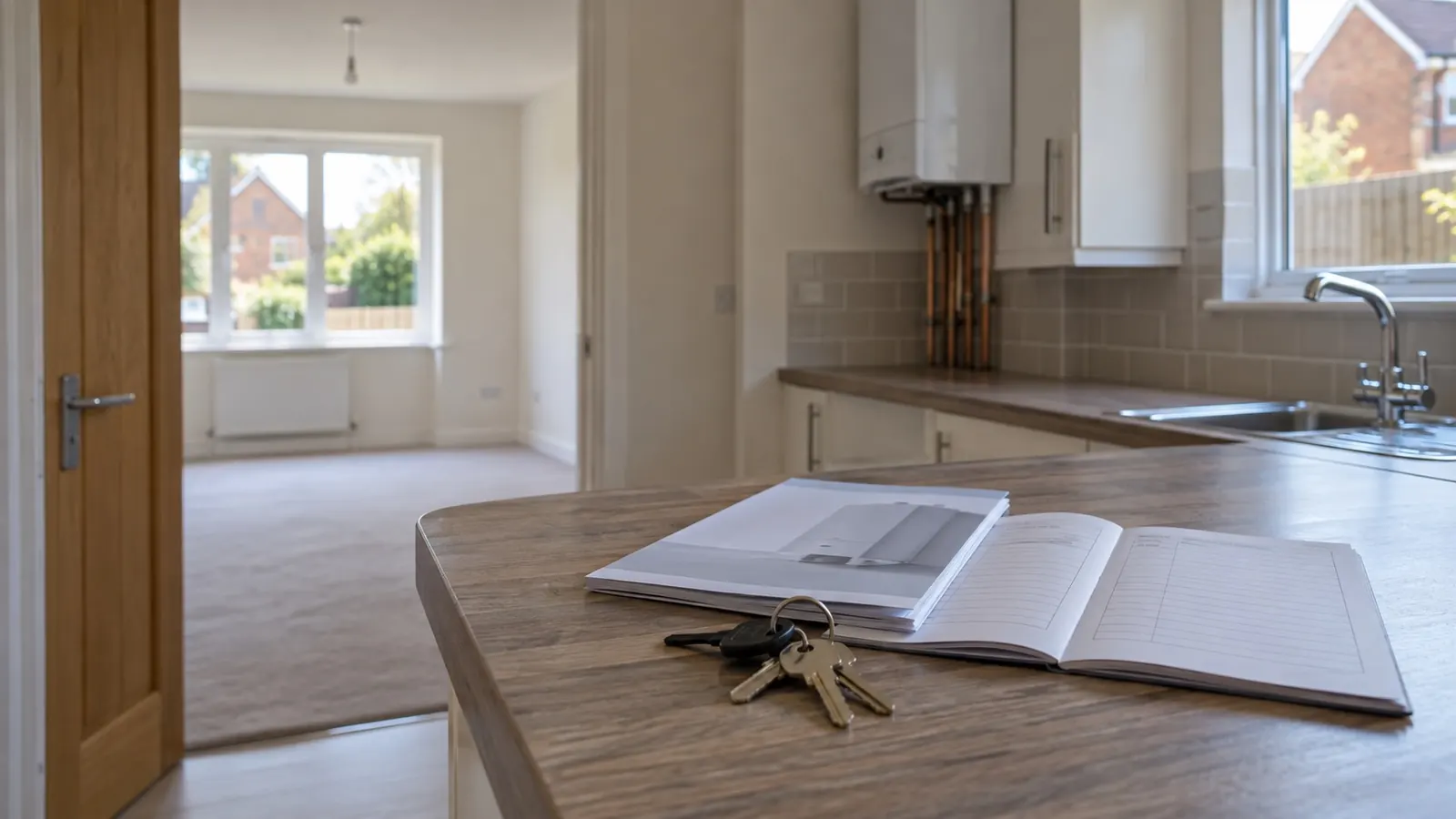
House moves are all about keys, completion money and the removal van. The boiler gets forgotten. Sellers leave without a scrap of paperwork; buyers move in not knowing how to turn the heating on, then ring us in November because the pressure has dropped and nobody showed them the filling loop. This checklist gives both sides a short list so the heating changes hands without drama.
The handover itself is paperwork and information. Any actual work on the boiler is for a Gas Safe registered engineer.
For the seller: three jobs the week before you move
1. Put the boiler paperwork in one envelope
- Benchmark logbook. The commissioning record the installer filled in on the day. It is often inside the boiler's front flap or in a plastic wallet next to it.
- Building Regulations compliance certificate for the installation. Gas Safe issue this when the installer notifies the job. Buyers' solicitors ask for it and a missing one causes delays.
- Warranty registration confirmation from the manufacturer.
- Service records, as many years as you have. Without them the remaining warranty is worth very little.
- The most recent Gas Safety Record (CP12) if the property has been let.
- The boiler manual and the thermostat or programmer instructions.
- Boiler care details if you have a plan, and whether it can transfer.
If the Building Regulations certificate is missing, Gas Safe Register can issue a duplicate for a fee if the job was notified. If the warranty was never registered, check the manufacturer's website by serial number; some will register late within the first year of installation, most will not after that.
2. Write a quirks note
Half a page, handwritten is fine:
- Where the boiler is, if it is not obvious. In MK it is often in the garage, loft or airing cupboard.
- How to top up the pressure using the filling loop, and what the gauge should read when cold (usually between 1 and 1.5 bar; the manual will say).
- The quirks: "the back bedroom radiator needs bleeding every autumn", "the pressure drifts down over a few months", "the boiler is noisy for the first thirty seconds".
- Smart thermostat login or how to reset it for a new owner.
- Last service date and who did it.
Sellers skip this all the time, and the buyer ends up paying for a call-out for something that would have taken thirty seconds to explain.
3. Take final meter readings
On the morning you move, photograph the gas and electricity meters and send the readings to your supplier. Leave a copy for the buyer so there is no argument about the starting point.
For the buyer: four jobs in the first week
1. Find the three shut-offs
- The water stopcock. Under the kitchen sink in most 1970s and 1980s MK houses; in a cupboard near the front door or in the garage on newer estates. Turn it off and on once so you know it moves. Our stopcock guide covers the usual hiding places.
- The gas emergency control valve. Next to the meter, often in an outside box. The lever in line with the pipe is open, across it is closed.
- The boiler's electrical isolator. A fused spur switch near the boiler.
You may never need them. The time to find them is now, not at eleven at night with water coming through the ceiling.
2. Check the warranty
The serial number is on a sticker on the boiler casing. Enter it on the manufacturer's website and it will tell you whether the boiler was registered, in whose name, how long is left, and what keeps it valid. Worcester Bosch, Vaillant, Ideal and Baxi all generally allow the warranty to pass to a new owner provided it was registered properly and serviced every year. If the previous owner skipped services, the remaining warranty may already be void regardless of what the paperwork says. That is worth knowing before you decide whether to take out boiler care.
3. Sort the energy supply
You inherit the previous owner's supplier on a deemed contract until you switch, and deemed rates are rarely the cheapest. Take your own readings on moving day, give them to the supplier, and shop around within the first month. If the meters are still manual, photograph them at handover.
4. Book a first service
The most useful thing you can do for the boiler in your first year is book a Gas Safe service in the first couple of months. It gives you a clean baseline so any existing faults are on record now rather than blamed on you later, it keeps the warranty alive if the previous owner was servicing on time, it catches anything the previous owner ignored, and it means you have a local engineer's number before you need it in an emergency. Our boiler servicing page explains what is checked. If you would rather be inspected before you exchange, a pre-purchase boiler inspection is a shorter visit that tells you the age, condition and any obvious problems.
Boiler care during a sale
If the seller has a care plan, check two things before completion: whether it transfers to the new owner (many do not), and whether an annual service under the plan is already booked. If it does not transfer, the seller should cancel it and the buyer can set up their own plan once they have decided whether one is worth it. Our boiler care plans page sets out what ours include.
What the survey will not tell you
Here is the honest bit: a standard homebuyer survey does not test the boiler. The surveyor notes its make, a rough age and whether it looks maintained, and recommends a specialist test. Most buyers read that as a formality. It is not. We have been called to newly bought houses in Bletchley and Newport Pagnell where the boiler had been condemned two years earlier and simply turned back on for viewings. If the boiler matters to your offer, pay for a proper inspection by a Gas Safe engineer before exchange, not a service afterwards.
Situations that come up
- The boiler fails during the sale. If the property was sold as having working heating, that is the seller's problem to fix before exchange. Get it in writing.
- The boiler is clearly at end of life. Either the buyer prices it into the offer or the seller replaces it. Do not complete with an undisclosed dead boiler; it always ends in a dispute.
- The house has been empty for months. Pipes may have frozen over winter and old boilers often throw up faults when restarted after a long rest. Have it looked at before you turn everything on.
- You are buying to let. You need a Gas Safety Record in your name before the tenancy starts, regardless of what the seller left. See our gas safety certificate page.
Frequently asked questions
What boiler paperwork should the seller leave?
Benchmark logbook, Building Regulations certificate, warranty registration, service history, the last CP12 if let, the manual, thermostat instructions and any care plan details, all in one place near the boiler.
Does the manufacturer warranty transfer to me?
Usually yes with the main brands, if it was registered at install and serviced annually. Check by serial number on the manufacturer's site and ask them to update the name.
When should I service the boiler after moving in?
Within the first couple of months, sooner if the service history is missing or the boiler is more than ten years old.
What is the first thing to do with the boiler on moving day?
Find the stopcock, gas valve and fused spur, check the pressure gauge, and make sure the heating comes on. Then take meter readings.
Just moved into Milton Keynes?
We do first services, pre-purchase inspections and gas safety records across Milton Keynes, Newport Pagnell, Bletchley, Wolverton, Stony Stratford, Olney, Woburn Sands, Buckingham, Leighton Buzzard, Bedford and Towcester. Get in touch or call 07805 844 016 and we will baseline the system before your first winter.
Need Professional Advice?
Our Gas Safe registered engineers are ready to help with all your heating needs. Get a free, no-obligation quote today.