Moving a Boiler in Milton Keynes: Where It Can Go and What the Job Involves
TL;DR
A boiler can usually be moved to another wall, a utility room, the airing cupboard or the loft, but four things move with it: the flue, the gas pipe, the condensate pipe and the water pipes. Each one sets what is possible. A loft needs a fixed ladder, fixed lighting, a boarded route and a guard at the hatch. Moving an old boiler rarely makes sense; it is usually done with a replacement. Plumbline MK surveys first.
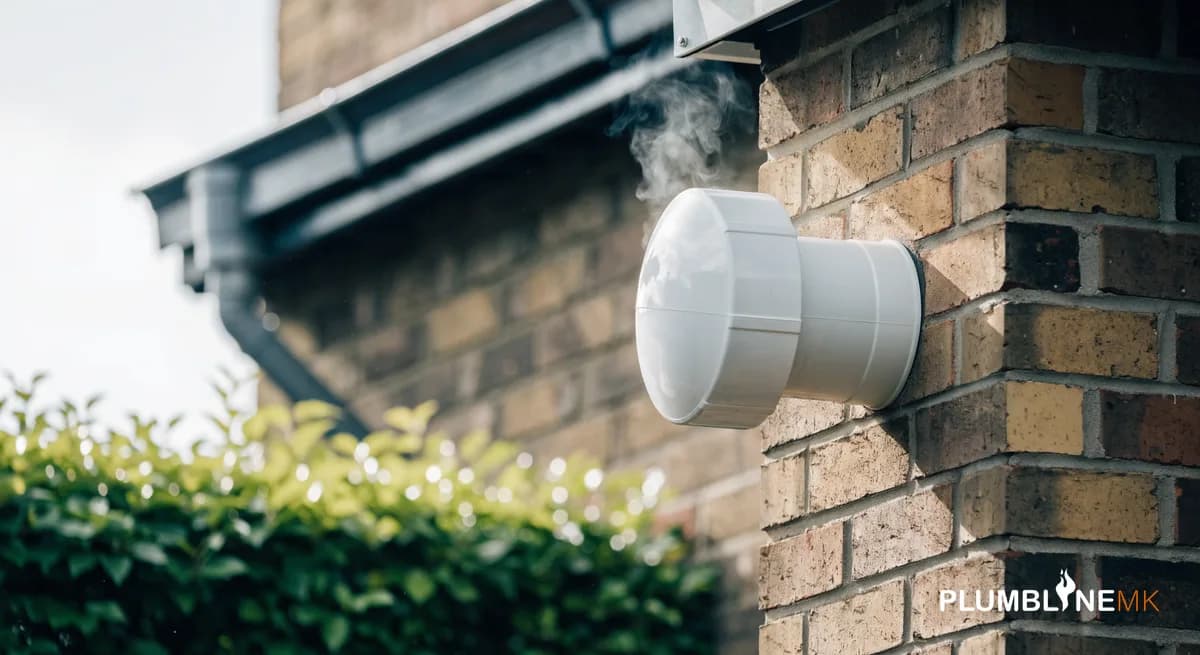
People ask us to move a boiler for good reasons: a kitchen refit where the boiler is in the way, a loft conversion, a cupboard they want back, or a conversion from tanks and a cylinder to a combi that frees up the airing cupboard. A boiler can go in a lot of places. What decides where is not the boiler itself but the four things that have to move with it.
Move the old boiler, or replace it while you are at it?
Start with this, because it changes everything else. Moving a boiler means taking it off the wall, running new pipework, fitting a new flue and recommissioning it. On an older boiler, much of that work is the same as fitting a new one, and you end up with an old boiler in a new place. If your boiler is more than about ten years old, or already needing repairs, moving it is usually the moment to replace it. If it is young and under warranty, moving it can make sense, and the manufacturer's instructions and warranty terms still apply in the new position.
Our guide to boiler upgrades covers the swap, combi conversion and back boiler options that often go together with a move.
The four things that move with it
The flue
Every modern boiler needs a flue to take its exhaust outside. Approved Document J of the Building Regulations, together with the manufacturer's instructions, sets how close the terminal can be to windows, doors, boundaries, corners and anything that opens. A wall that looks perfect inside may have no compliant spot outside. A vertical flue through the roof, or a longer horizontal run, opens up more options, within the maximum length the boiler allows. Our flue regulations guide goes into this.
In a conservation area, a new flue on a wall or roof facing a road can need planning permission. If that applies to you, see our posts on Stony Stratford and Wolverton.
The gas pipe
A boiler needs a gas supply sized for its output and the length of the run from the meter. Moving the boiler further from the meter often means a larger pipe, not just a longer one. That pipework has to be routed, clipped and, where it runs under floors or through walls, protected. This is the part of the job that most often surprises people on a quote.
The condensate pipe
Condensing boilers produce acidic water that has to drain away. The best route is to an internal waste pipe or soil stack. Where the only option is outside, the pipe has to be sized and insulated against frost, because a frozen condensate pipe is the classic cold-snap breakdown. Our frozen condensate pipe guide explains why. If there is no drain anywhere near the new spot, a condensate pump is possible but adds another part to maintain.
The water and heating pipes
The flow and return to the radiators, and on a combi the mains cold in and hot out, all have to reach the new position. That can mean lifting floorboards, running pipes through ceilings or boxing them in. The longer and more awkward the route, the bigger the job and the more making good afterwards.
Where a boiler can go
- Another wall in the same room. The simplest move. Short runs, and often the same drain for the condensate.
- A utility room or garage. Popular after a kitchen refit. In a garage, think about frost protection for the pipes and condensate, and whether the space is ever left freezing.
- The airing cupboard. Common after converting to a combi, because the cylinder that lived there has gone.
- The loft. Possible, but it comes with rules. Worcester Bosch's technical guidance, for example, requires a permanently fixed, retractable loft ladder, fixed lighting on the route and at the boiler, boarding at least 600mm wide from the hatch to the boiler, and a guard rail or similar at the hatch, with the route kept clear and not used for storage. It warns that failing to provide safe access may affect the warranty. You will also need to get up there to check the pressure gauge, so think about that before you choose it.
- A bedroom or bathroom. Sometimes possible, but bathrooms have rules on electrical zones and the manufacturer's instructions set where the boiler can sit. We would rarely recommend either if there is another option.
Older homes: one thing to check first
HSE advises that any building built or refurbished before 2000 may contain asbestos. In older houses, old flues, boiler cupboard linings and some boards around boilers can contain it. If the old boiler, flue or cupboard looks original to a pre-2000 house, it needs checking before anyone cuts into it. We look for it on the survey.
What you should get at the end
Moving or replacing a gas boiler is notifiable work. A Gas Safe registered engineer commissions it, completes the Benchmark checklist, and notifies the work so that you receive a Building Regulations Compliance Certificate. Keep that with the house paperwork; a buyer's solicitor will ask for it. The old flue hole should be sealed and made good, inside and out.
What changes the price of moving a boiler
We do not publish prices, because two moves in the same street can be very different jobs. What the quote is made of:
- Move only or move and replace: and if replacing, the boiler itself.
- The distance and route: how far the gas, water and heating pipes have to travel, and through what.
- The gas pipe size: whether the supply needs upgrading for the new position.
- The flue: horizontal or vertical, standard or extended.
- The condensate route: internal drain, external insulated run or a pump.
- Loft works: ladder, lighting, boarding and guard rail if they are not already there.
- Making good: floors, ceilings, the old flue hole and boxing in.
The honest bit
The cheapest move is the shortest one. If you can live with the boiler on another wall of the same room, that will cost a fraction of moving it to the loft. And if the boiler is old, do not pay to move it: put the money towards a new one in the right place.
Book a survey
Planning a kitchen refit, a loft conversion or a combi conversion in Milton Keynes or the surrounding towns? Get in touch before the kitchen fitter or builder sets the layout, not after. Rob or Sam will look at where the boiler could go, check the flue, gas and drain routes, and give you a written quote. See our boiler installation service.
Frequently asked questions
Can I move my boiler to the loft?
Usually, yes, if the loft has a fixed retractable ladder, fixed lighting, a boarded route to the boiler and a guard at the hatch. Manufacturers set these conditions, and safe access can affect the warranty.
Do I need planning permission to move a boiler?
Not normally. A new flue on a wall or roof facing a road in a conservation area can need it, and listed buildings can need listed building consent.
Is it worth moving an old boiler?
Rarely. Most of the work is the same as fitting a new one, so if the boiler is older than about ten years, replacing it in the new position is usually better value.
Sources
Need Professional Advice?
Our Gas Safe registered engineers are ready to help with all your heating needs. Get a free, no-obligation quote today.