Air Source Heat Pump Cost Explained
TL;DR
An air source heat pump is substantially more expensive to install than a gas boiler, and government grant funding is designed to close much of that gap. Running cost depends almost entirely on one thing — the flow temperature the system needs, which is set by how well insulated the house is and how big the radiators are. A well-matched installation runs cheaper than gas. A badly matched one does not.
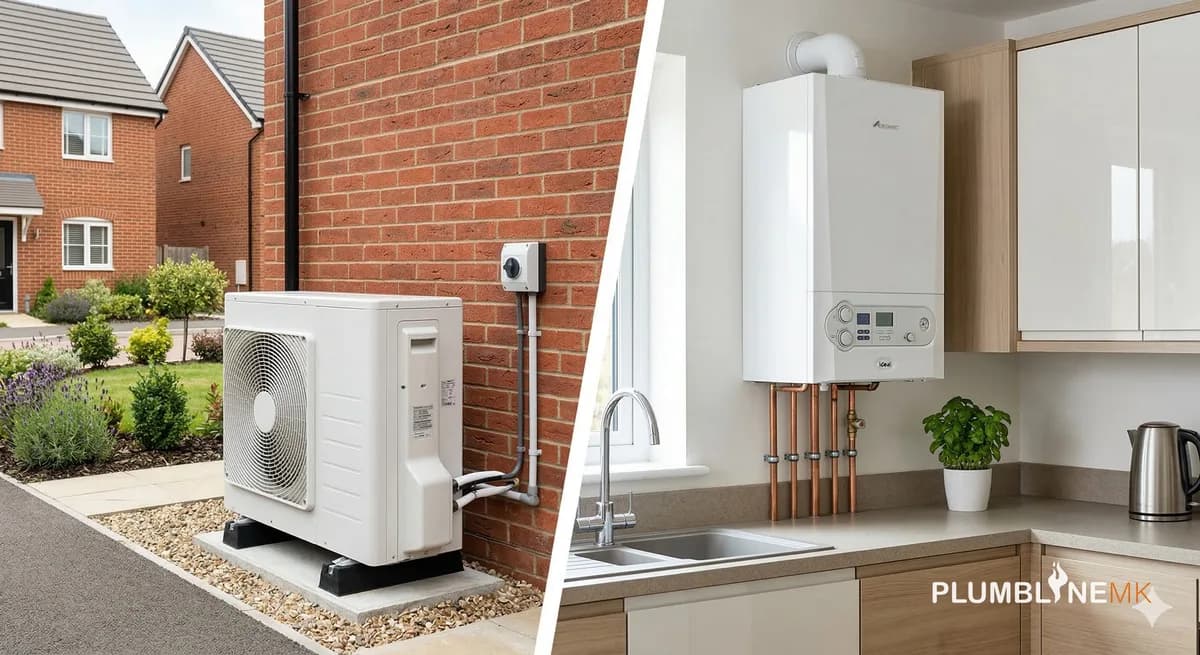
Heat pump pricing is confusing because two very different numbers get quoted as if they were the same thing: the cost of the unit, and the cost of making a house work with one. The second is where installations diverge, and it is the part that determines whether you end up happy.
What You Are Actually Buying
An air source heat pump is a refrigeration cycle running backwards. It extracts low-grade heat from outside air and concentrates it to a usable temperature for your heating and hot water. Because it moves heat rather than creating it, it delivers more energy than it consumes — typically three to four units of heat per unit of electricity, expressed as the coefficient of performance.
That ratio is the whole economic argument. Electricity costs more per unit than gas, so a heat pump only makes financial sense if it is delivering meaningfully more than one unit of heat per unit of electricity. Well set up, it comfortably does.
The Installation Cost, Broken Down
A quote is made of several parts, and it is worth understanding which are fixed and which are variable:
- The heat pump unit itself. Sized to the property's heat loss. Reasonably predictable.
- The hot water cylinder. Almost always required. A heat pump produces hot water at a lower temperature than a boiler, so it needs a cylinder with a larger heat exchanger coil than a standard one. An existing cylinder usually cannot be reused. Our cylinder replacement guide covers the specification side.
- Radiator upgrades. The big variable. More on this below.
- Pipework alterations. Heat pumps move more water at lower temperature, so undersized pipework sometimes needs upgrading.
- Electrical work. A dedicated supply, and occasionally a consumer unit upgrade or a supply capacity check with the network operator.
- Groundwork and siting. A base for the outdoor unit, and consideration of noise and neighbour proximity.
The unit and cylinder are broadly the same for everyone with a similar-sized house. The radiators, pipework and electrics are where two houses on the same street can end up with very different quotes.
The Radiator Question
This is the single most important thing to understand before getting quotes.
A gas boiler typically runs a flow temperature around 65 to 75°C. A heat pump is most efficient at 35 to 45°C. A radiator emits far less heat at 40°C than at 70°C — often less than half. So to get the same warmth out of a room, the radiator has to be substantially bigger, or the emitter has to change entirely to underfloor heating.
An installer who skips this and simply swaps the heat source will produce a system that either cannot heat the house in cold weather, or that has to run at high flow temperatures to cope. Running a heat pump hot destroys its efficiency, and that is exactly how people end up with the horror-story running costs you read about.
Our radiator sizing guide explains how to work out what each room actually needs. Doing this exercise before you get quotes tells you a great deal about which quotes are realistic.
Grant Funding
Government support is available through the Boiler Upgrade Scheme, which pays a fixed grant directly to certified installers to reduce the price you pay. The scheme's eligibility rules, current grant levels and the requirement for an approved installer are set out on GOV.UK. It is worth checking these directly, because the figures and conditions are periodically revised.
Two things to note. First, the grant is claimed by the installer, not by you, so it should appear as a deduction on the quote. Second, eligibility usually depends on having no outstanding insulation recommendations on your EPC — which is the government's way of ensuring the house is ready before the heat pump goes in.
What It Costs to Run
Running cost is a function of three variables: the efficiency the system achieves in practice, your electricity tariff, and how much heat the house needs.
The efficiency figure that matters is the seasonal one, measured across a whole heating season rather than in lab conditions. It is driven overwhelmingly by flow temperature. Every degree lower improves it. This is why insulation work and radiator sizing are not optional extras — they are the running cost.
Tariff matters more than people expect. Heat pumps pair well with time-of-use electricity tariffs, because you can shift hot water heating and some space heating into cheaper periods. Comparing tariffs designed for heat pump households is worth doing before you commit; the Energy Saving Trust publishes independent guidance on the running cost comparison against gas.
Where Heat Pumps Do Well and Badly
Good candidates: reasonably well insulated houses, homes with underfloor heating or generously sized radiators, properties off the gas grid currently running on oil or LPG (where the economics are strongly favourable), and new builds designed for low-temperature heating.
Harder cases: solid-wall Victorian properties with no practical insulation route, homes with very small microbore pipework throughout, flats with nowhere sensible to site an outdoor unit, and houses where there is genuinely no space for a hot water cylinder.
Hard does not mean impossible. It means the enabling works cost more, and that needs to be in the quote honestly rather than discovered later.
Questions Worth Asking Any Installer
- Have you done a room-by-room heat loss calculation, and can I see it? If the answer is no, that is a serious warning sign.
- What flow temperature is the design based on?
- Which radiators are you changing, and why those?
- What seasonal efficiency does your design predict, and what happens to it on the coldest days?
- Are you certified for the grant scheme, and is the grant shown as a deduction?
- Where is the outdoor unit going, and what is the noise assessment?
A design-led quote will answer all of these without hesitation. A price-led one will not.
Should You Wait?
If your existing boiler is healthy, there is no urgency. If it is near the end of its life, the decision is worth making deliberately rather than in an emergency — because when a boiler fails in January, nobody chooses a heat pump. Understanding where the regulations are heading helps here; our guide to the gas boiler ban sets out what is actually proposed versus what gets reported.
Frequently Asked Questions
Do heat pumps work in cold weather?
Yes. They work down to well below freezing, though efficiency falls as outside temperature drops. Systems are designed around the coldest expected local conditions.
Will I need to replace all my radiators?
Rarely all. Typically a proportion of them, concentrated in the rooms with the highest heat demand. The heat loss calculation identifies which.
Are they noisy?
Modern units are quiet, but not silent — comparable to a fridge at close range. Siting matters, and there are permitted development rules on proximity to boundaries.
Can I keep my gas boiler as backup?
Hybrid systems exist and can make sense in hard-to-treat properties, though they complicate grant eligibility and controls.
How long do they last?
Broadly comparable to a boiler, with annual servicing. The cylinder typically outlives the unit.
Talking It Through
We are happy to give an honest view on whether your property is a good candidate before you commit to anything — including telling you if it is not. Call 07805 844 016 or contact us.
Need Professional Advice?
Our Gas Safe registered engineers are ready to help with all your heating needs. Get a free, no-obligation quote today.