Powerflushing in Milton Keynes: Signs You Need One
TL;DR
A powerflush is a deep clean of the central heating circuit: cleaning chemicals are pumped through every radiator and pipe to shift sludge, rust and debris. You probably need one if radiators are cold at the bottom, bleed water is black, the system is slow to heat, or a new boiler is going onto an old system. You probably do not if the system is young and heating evenly, or only one radiator is cold.
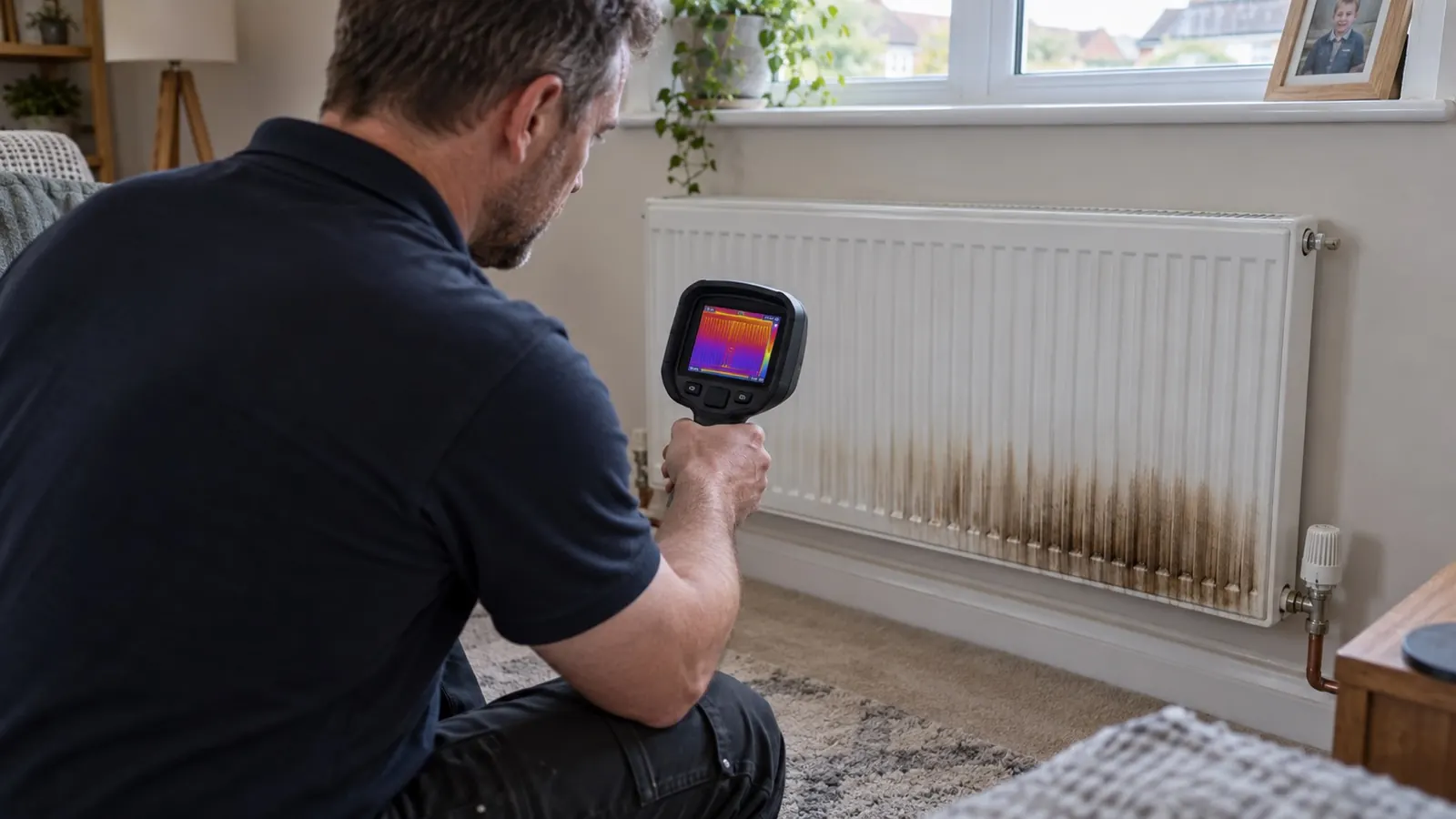
An engineer has told you your system needs a powerflush, or you have found this page because your radiators are cold at the bottom and the water that comes out when you bleed them is black. Either way, the question is the same: is this genuinely needed, or is it an upsell?
It is a fair question. Powerflushing gets recommended a lot, sometimes because it is needed and sometimes because it is a profitable day's work. This guide explains what a powerflush actually does, the signs that you need one, the signs that you do not, what happens on the day, what the price is made of, and why the water in Milton Keynes changes the picture.
What a powerflush is
A powerflush is a deep clean of the central heating circuit. The engineer connects a purpose-built pump to the system, usually at the circulating pump or across a radiator's valves, and circulates a chemical cleaner through every radiator and pipe at high flow but low pressure. The turbulence and the chemicals break up the sludge that has settled over the years, and a magnetic collector on the machine pulls it out of the water as it passes. Each radiator is flushed individually, the chemicals are neutralised, the system is refilled with clean water and dosed with inhibitor.
The sludge in question is mostly magnetite, a black iron oxide produced when the steel inside radiators corrodes. It settles in the bottom of radiators, in low pipe runs and, worst of all, in the boiler's heat exchanger and pump.
Signs you need one
- Radiators cold at the bottom, hot at the top. The classic sign. Sludge has settled in the lower panel and water cannot get through it. (Cold at the top is trapped air, and bleeding fixes that.)
- Black or brown water when you bleed a radiator. Clear water is normal. Dark water is corrosion debris in circulation.
- The system is slow to heat up even with the boiler running normally and radiators bled.
- Some rooms never get warm despite the valves being balanced. Sludge restricts flow to the furthest radiators first.
- The boiler cuts out on overheat because restricted flow means the heat exchanger cannot shed its heat.
- The pump is noisy or has failed more than once. Pumps grind themselves to death on magnetite.
- A new boiler is going onto an old system. Manufacturers require the system to be cleaned before a new boiler is fitted, and fitting one onto a sludged system is a leading cause of early heat exchanger failure and refused warranty claims. Whether that clean needs to be a full powerflush or a chemical flush depends on how dirty the system is.
Signs you probably do not
- The system is only a few years old and heats evenly. Leave it alone. Check the inhibitor level at the annual service instead.
- Only one radiator is cold. That is a bleed, a stuck thermostatic valve pin or a single blocked radiator, not a whole-system flush.
- Nobody has looked at a radiator. If a powerflush is recommended without anyone checking the radiators, bleeding one to see the water colour, or asking about symptoms, be cautious.
- The problem is hot water, not heating. If the heating is fine but the combi's hot water runs lukewarm or the boiler kettles only when a tap is running, that is limescale on the hot water side. A powerflush cleans the heating circuit. It does not touch the mains water side of a combi. That needs descaling, and honest engineers will tell you the difference.
Why Milton Keynes is different
Milton Keynes has some of the hardest water in the country; Anglian Water publishes the figure for your postcode. Hard water carries dissolved calcium and magnesium, and when it is heated those minerals come out as limescale on the hottest surface they can find.
It is worth being precise about where that matters, because it is often overstated:
- Combi hot water side and cylinders. Fresh mains water passes through every time you run a tap, so scale builds up continuously in the plate heat exchanger, on immersion elements and in cylinders. This is where MK's water does its expensive damage. A scale reducer on the cold feed to the boiler, or a softener, is what protects it. A powerflush does not.
- The sealed heating circuit. A sealed system contains a fixed volume of water. It deposits its scale once, at first fill, and then stops, because no fresh minerals are coming in. What ruins heating circuits in MK is the same thing that ruins them everywhere: corrosion sludge, made worse by missing inhibitor. Where hard water does creep in is through repeated topping up. Every top-up via the filling loop brings in fresh hard, oxygenated water that adds scale and drives corrosion. A system that keeps losing pressure should be fixed, not refilled.
So the honest MK picture: your heating circuit needs a powerflush for the same reasons as anyone's, and the local housing stock makes it common. The 1970s and 80s grid-square estates are full of original steel radiators and small-bore pipework that have never been cleaned, and small pipes block with far less sludge than large ones. Your hot water side needs scale protection because of the water, and that is a separate job.
What happens on the day
Allow most of a day for a typical three-bed house; more radiators and older pipework take longer. The engineer needs access to the boiler and every radiator. The heating is off while the work is done and back on by the end. You do not need to stand over them, but someone needs to be in.
Ask to see the water that comes out. It normally runs from brown to jet black and it settles any doubt about whether the job was needed. Afterwards the engineer should run the system and confirm every radiator is heating across its full face, check the inhibitor dose, and tell you what they found. If a radiator is too far gone to recover, you should be told rather than left to find out in December.
What the quote is made of
We do not put a price on this page because the right price depends on things only a look at the system will tell you. What moves it:
- Number of radiators. Each one is flushed individually, so it is the main driver of time.
- Pipework. Microbore (the small copper pipe common in MK's 70s and 80s houses) is slower to clear and sometimes needs individual runs treated.
- How bad it is. A system that has never been cleaned in thirty years needs longer on the machine and more chemical than one that is a bit tired.
- Whether a magnetic filter is already fitted. If not, fitting one at the same time is the obvious moment.
- Any radiators or valves that need replacing because they are beyond cleaning. These are quoted separately once found.
The quote should include the chemicals, the inhibitor afterwards and disposal of the waste water. If it does not say so, ask.
Powerflush or chemical flush?
- Powerflush. The machine, the pump, the individual radiator treatment. For systems that are visibly sludged, systems with cold-bottom radiators, and most older systems getting a new boiler.
- Chemical flush. Cleaner added to the system and circulated by the boiler's own pump for a period, then drained and refilled. Gentler and cheaper. Right for lightly dirty systems and often enough before a new boiler on a system that has been reasonably looked after.
- Single radiator removal and hose-out. If one radiator is the problem, it can be taken off the wall and flushed in the garden. No need to treat the whole house.
A good engineer picks the least invasive option that will actually work, and tells you why.
Can a powerflush cause a leak?
Occasionally, yes, and you should be told this before you agree. On very old systems, corrosion deposits can be the only thing sealing a pinhole in a radiator or a weeping joint. Clean the deposit out and the leak appears. The flush did not cause the damage, it revealed it, and finding it during a controlled job is better than finding it under the laminate in January. An engineer should assess the system's condition first and flag anything they are worried about.
Keeping it clean afterwards
- Magnetic filter on the return pipe before the boiler, emptied at every service. In MK we treat this as standard, not optional.
- Inhibitor at the correct dose, tested annually and topped up. It is what stops the steel radiators corroding in the first place.
- Fix pressure loss rather than topping up week after week.
- Annual service so the filter is emptied, the inhibitor checked and early signs caught. See our boiler servicing page.
- Scale protection on the hot water side, whether a reducer on the boiler's cold feed or a whole-house softener, to deal with the part of the hard water problem a powerflush cannot reach.
Done properly and looked after like this, most systems never need a second powerflush.
Frequently asked questions
How often should a system be powerflushed?
Once, if a filter and inhibitor are then maintained. Systems with no filter and no inhibitor sludge up again, but that is a maintenance failure rather than a schedule.
Will a powerflush fix my cold radiators?
If they are cold at the bottom or slow to heat because of sludge, usually yes. If they are cold at the top, bleed them first. A badly corroded radiator may need replacing.
Do I need one before a new boiler?
The system needs cleaning before a new boiler. Whether that is a powerflush or a chemical flush depends on how dirty it is, and the installer should show you why they have chosen one or the other.
Will it fix kettling?
If the kettling is caused by sludge restricting flow through the heat exchanger, often. If it is limescale on the hot water side of a combi, no; that is a descale.
If you are in Milton Keynes or nearby and want an honest opinion on whether your system needs a flush, see our powerflushing page or get in touch. Bleed a radiator into a white cup first and tell us what colour it is.
Need Professional Advice?
Our Gas Safe registered engineers are ready to help with all your heating needs. Get a free, no-obligation quote today.