How Long Does a Boiler Last?
TL;DR
A well-maintained modern boiler lasts 10-15 years, and some reach 20 years with annual servicing. Lifespan is shortened by skipped servicing, hard-water limescale (a real issue across Milton Keynes), system sludge and a poor original installation. If your boiler is over 12 years old, breaking down repeatedly, or costing more than a third of a new one to repair, replacement usually makes more financial sense.
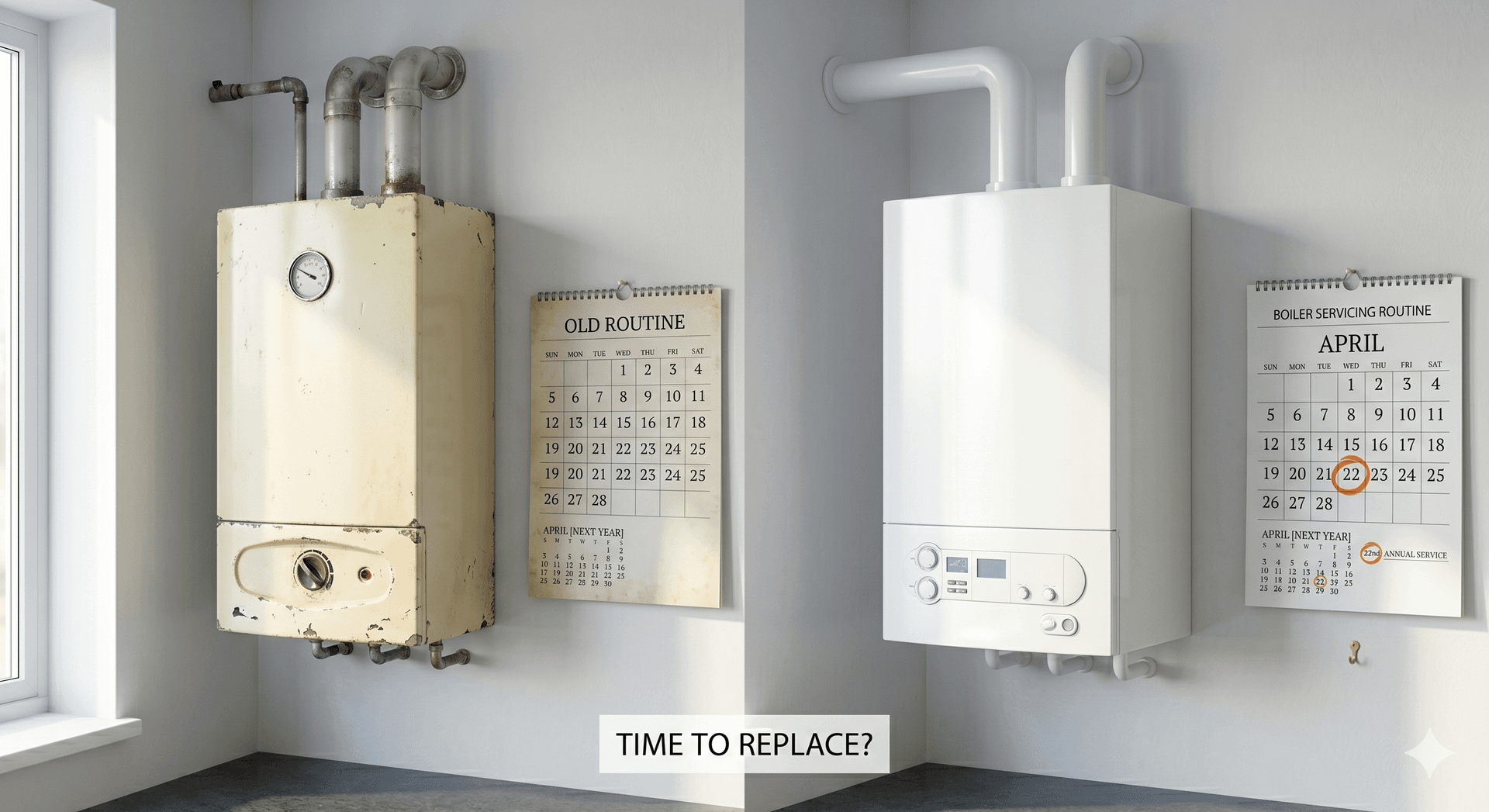
It's a question we get asked on almost every job in Milton Keynes: "How much longer will this boiler last?" Whether you've just bought a house in Bletchley with an unknown boiler in the airing cupboard, or you've nursed the same Worcester unit through a decade of MK winters, knowing how long a boiler should last helps you plan — and avoid being caught out by a January breakdown.
The honest answer is that boiler lifespan varies more than most homeowners expect. Two identical boilers fitted on the same Milton Keynes estate can be ten years apart in how long they survive. The difference almost always comes down to how they were installed and how they've been looked after since.
How Long Should a Boiler Last on Average?
A modern, well-maintained gas boiler typically lasts 10 to 15 years. With annual servicing and a bit of luck, some quality boilers — particularly higher-end Worcester Bosch, Vaillant and Viessmann models — comfortably reach 18 to 20 years before they need replacing.
That said, the practical lifespan is often shorter. Many boilers in Milton Keynes are replaced at around 10-12 years, not because they've completely failed, but because repairs become too frequent, parts get harder to source, and efficiency drops to the point where a new boiler pays for itself in saved fuel. A boiler from 2010 can be 15-20% less efficient than a modern A-rated unit, which is real money on every heating bill.
Older non-condensing boilers — still found in some pre-2005 MK properties in Wolverton and the older parts of Bletchley — were often built to last mechanically, but they're so inefficient that keeping them running rarely makes financial sense today.
What Shortens a Boiler's Lifespan?
If your boiler is failing well before the 10-year mark, one or more of these factors is usually to blame.
Skipped annual servicing
This is the single biggest one. A boiler that's never serviced develops small faults that go unnoticed until they cause a major failure. An annual boiler service catches worn parts, cleans key components and keeps the system running within safe tolerances. Skipping it doesn't save money — it just delays and multiplies the cost.
Hard water and limescale
Milton Keynes sits in a hard-water area, and that matters more than people realise. Limescale builds up inside the boiler's heat exchanger and pipework, forcing the boiler to work harder and run hotter to deliver the same heat. Over time this scale damages the heat exchanger — one of the most expensive components to replace. Homes in MK often benefit from a scale reducer fitted on the mains supply.
System sludge
Black iron-oxide sludge collects in radiators and pipework as the system ages. It blocks flow, causes cold spots, and puts strain on the pump and heat exchanger. A power flush and a magnetic system filter dramatically reduce sludge damage and are well worth the investment on any older MK heating system.
A poor original installation
An incorrectly sized boiler, badly routed pipework or a system that was never properly flushed when the boiler was fitted will shorten its life from day one. This is why a quality boiler installation by a Gas Safe registered engineer matters so much — corners cut at installation cost you years later.
7 Signs Your Boiler Is Near the End
Boilers rarely die without warning. Watch for these signs:
- It's over 12 years old. Age alone isn't a fault, but it raises the odds of expensive failure considerably.
- Frequent breakdowns. If you've called out an engineer two or three times in a year, the boiler is telling you something.
- Rising heating bills. A boiler losing efficiency costs more to run for the same warmth.
- It takes longer to heat up. Sluggish heating and hot water often signals a tired heat exchanger or pump.
- Strange noises. Banging, gurgling or whistling ("kettling") points to limescale and internal wear.
- A yellow flame instead of blue. This can indicate incomplete combustion — get it checked immediately, as it can also signal a carbon monoxide risk.
- Leaks or persistent low pressure. A boiler that keeps losing pressure or drips water has an internal fault that will worsen.
Boiler Age: What to Expect and What to Do
| Boiler Age | What to Expect | Recommended Action |
|---|---|---|
| 0-6 years | Reliable, efficient, usually still under warranty | Keep up annual servicing to protect the warranty |
| 7-10 years | Generally dependable; minor parts may start to wear | Service annually, fit a magnetic filter if not already present |
| 11-14 years | Repairs become more frequent; efficiency noticeably lower | Budget for replacement; weigh repair costs carefully |
| 15+ years | Higher breakdown risk, scarce parts, poor efficiency | Plan a replacement before winter rather than after a failure |
When Does Repair Stop Being Worth It?
A useful rule of thumb: if a repair costs more than a third of the price of a new boiler, replacement is usually the smarter choice — especially on a boiler over 10 years old. With a new combi boiler installed in Milton Keynes typically costing between £2,200 and £3,500 in 2026, a £700-plus repair on an aging unit rarely makes sense.
Other factors tip the balance towards replacement: obsolete parts, repeated faults within a year, and a boiler so inefficient that a new one would noticeably cut your bills. Our guide to new boiler costs in Milton Keynes for 2026 breaks down the numbers, and if budget is the concern, 0% APR boiler finance spreads the cost without interest.
If your boiler is still relatively young, a one-off boiler repair is almost always the right call. The decision is rarely about the boiler alone — it's about its age, history and the cost of keeping it alive.
How to Get the Longest Life From Your Boiler
To push your boiler towards the upper end of its lifespan: service it every single year without fail, fit a magnetic filter and scale reducer, have the system power flushed if it's full of sludge, keep the pressure correct, and don't ignore small faults. A boiler that's looked after across MK estates from Newport Pagnell to Tattenhoe genuinely can reach 18-20 years.
Not sure how old your boiler is or how much life it has left? We're happy to take a look. Plumbline MK are Gas Safe registered engineers based in Milton Keynes, and an honest assessment costs you nothing.
Need expert help? Contact Plumbline MK for a free, no-obligation assessment of your boiler. Call 07805 844 016 for friendly advice and service across Milton Keynes and surrounding areas.
Frequently Asked Questions
When should I replace my boiler?
Consider replacement when your boiler is over 12 years old, breaking down repeatedly, costing more than a third of a new boiler's price to repair, or running so inefficiently it's noticeably inflating your bills. Replacing a tired boiler before winter — rather than after a mid-January breakdown — also means you can plan the job properly and avoid an emergency callout.
Can a boiler last 20 years?
Yes, some quality boilers reach 18-20 years, but it's the exception rather than the rule. It generally requires a good-quality boiler that was correctly installed, annual servicing every year without fail, and protection against the limescale and sludge that wear boilers out. Most boilers in Milton Keynes are realistically replaced at 10-15 years.
Does servicing extend a boiler's life?
Significantly. An annual service catches small faults before they cause major failures, keeps the boiler running efficiently, and protects key components from premature wear. A serviced boiler routinely lasts years longer than an unserviced one, and the modest annual cost is easily offset by avoided breakdowns and lower running costs.
What are the signs of a dying boiler?
The clearest signs are frequent breakdowns, rising heating bills, slow heating, banging or whistling noises, persistent low pressure or leaks, a yellow rather than blue flame, and an age of 12 years or more. A yellow flame in particular should be checked by a Gas Safe engineer immediately, as it can indicate a carbon monoxide risk.
Need Professional Advice?
Our Gas Safe registered engineers are ready to help with all your heating needs. Get a free, no-obligation quote today.