How to Check a Gas Safe Registered Engineer in Milton Keynes (and Why It's the Law)
TL;DR
Anyone working on a gas appliance or pipe in your home must by law be on the Gas Safe Register. You can verify them in under a minute on the official register or by phone, and you should always check their ID card. Using an unregistered fitter risks carbon monoxide, gas leaks, invalid insurance and, for landlords, prosecution.
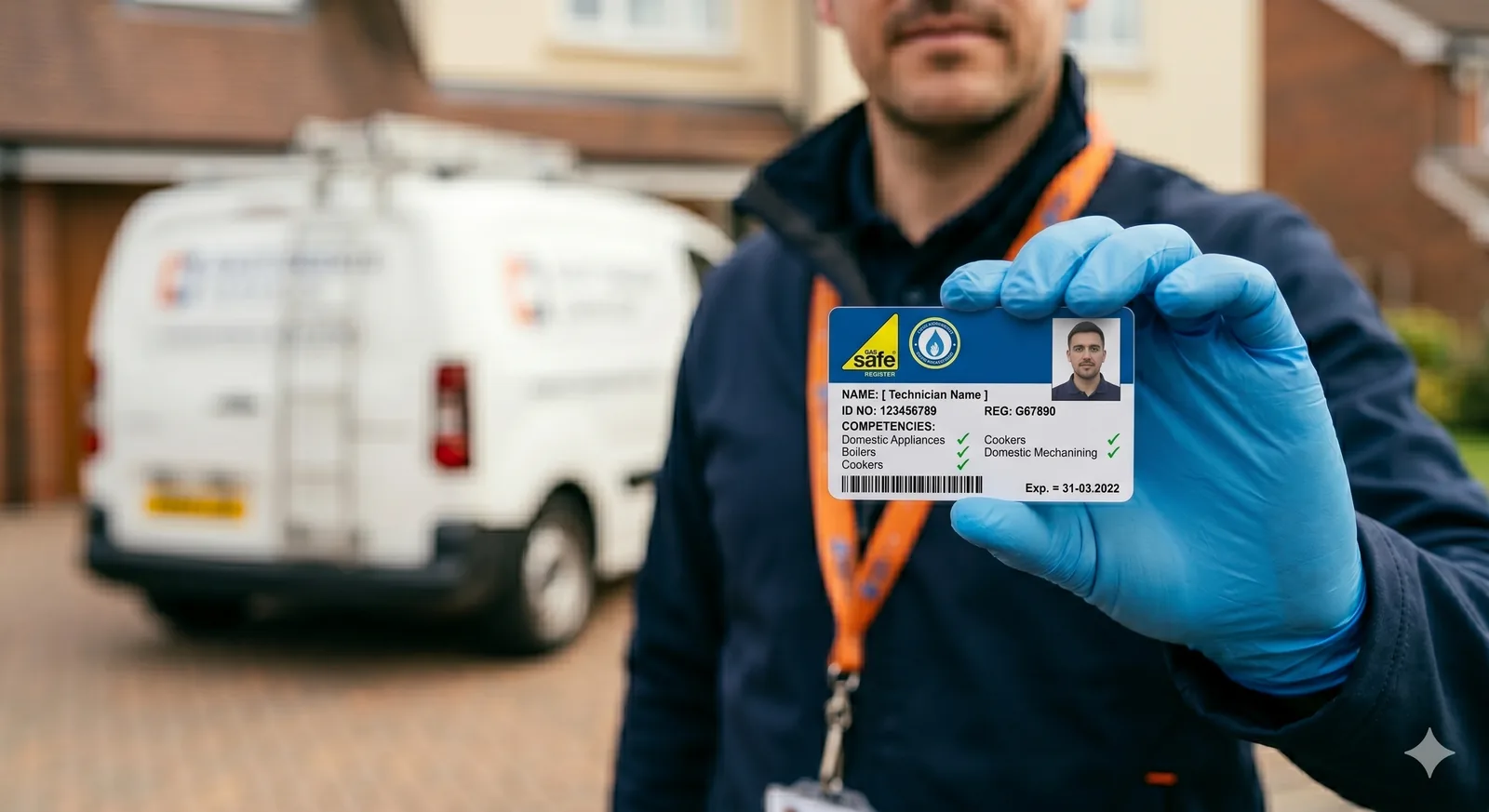
When someone comes into your home to fit a boiler, service a gas fire or move a cooker, you are trusting them with the most dangerous service running through your property. Gas that is burned incorrectly can leak, poison you with carbon monoxide or, in the worst cases, cause an explosion. That is precisely why the law does not leave gas work to chance. In the United Kingdom, anyone who carries out work on a gas appliance, fitting or pipe must be on the Gas Safe Register. It is not a recommendation or a trade badge you can take or leave. It is a legal requirement, and the penalties for ignoring it are severe.
The good news for Milton Keynes homeowners is that checking an engineer is genuinely quick and free. In this guide we explain what Gas Safe registration actually means, how to verify an engineer on the official register and by telephone, how to read the ID card every legitimate engineer must carry, exactly which gas jobs the law covers, and what to do if you suspect work in your home was done illegally. Five minutes of checking can protect your family, your home and your insurance.
What Gas Safe registration actually is
The Gas Safe Register is the official list of businesses and engineers who are legally permitted to work on gas in Great Britain, the Isle of Man and Guernsey. It is the only register recognised in law. Run on behalf of the Health and Safety Executive (HSE), it exists to make sure that anyone touching gas in your home has proven, current competence for the specific work they carry out.
Registration is not a one-off certificate that lasts forever. To stay on the register, an engineer must hold valid qualifications, work to recognised safety standards and renew their competence at regular intervals. Crucially, registration is granted by category. An engineer may be qualified to work on domestic boilers and central heating but not on gas cookers, commercial catering equipment or LPG appliances in caravans. A genuine engineer will only carry out work they are individually qualified for, and the register lets you confirm exactly that.
How to verify an engineer on the Gas Safe Register
The fastest way to check is the official website. Visit the Gas Safe Register and use the check-an-engineer tool. You can follow these steps:
- Go to the official site. Make sure the address is gassaferegister.co.uk and nothing else. Avoid lookalike sites.
- Search by licence number, name or postcode. If you have the seven-digit licence number from the engineer's ID card, enter that for an exact match. Otherwise search by business name or your Milton Keynes postcode to find registered businesses near you.
- Confirm the business details. Check that the registered business name and address match the person or company you are dealing with.
- Check the qualifications. The record lists the specific types of gas work the business and its engineers are registered for. Confirm the job you need, such as a boiler installation or a gas cooker, appears on that list.
- Match the engineer to the card. When the engineer arrives, the name and licence number on their ID card should match the register entry exactly.
If you prefer to speak to someone, you can verify an engineer by telephone. Gas Safe Register operates a phone line where you can read out the licence number or business name and have the details confirmed. This is useful if you are not online, or if you simply want a second confirmation before letting someone start work. Either method takes only a minute or two.
How to read a Gas Safe ID card
Every registered engineer must carry a Gas Safe ID card and must be willing to show it. Do not feel awkward asking. A professional expects it and will hand it over without hesitation. The card has two sides, and both matter.
On the front you will find the engineer's photograph, their name, a unique seven-digit licence number, a start and expiry date, and a security hologram. Check the photo matches the person in front of you and that the card has not expired. The licence number is what you use to cross-check against the register.
The back is where the detail lives. It lists the specific categories of gas work the engineer is qualified to carry out, each with its own expiry date. Categories cover areas such as domestic boilers, central heating, gas cookers, gas fires and water heaters. If the engineer is here to install a boiler, the relevant category must appear on the back and must be in date. An engineer can be fully registered yet still not qualified for your particular job, so always read the categories rather than assuming the card covers everything.
If anyone produces a card that has expired, shows categories that do not cover the work, or does not match what the register shows online, do not let them proceed. A genuine engineer's details will line up perfectly across the card and the register.
Which gas work legally requires a Gas Safe engineer
The law is broad. In simple terms, any work on a gas appliance, gas fitting or associated pipework in a domestic property must be carried out by a Gas Safe registered engineer. That includes far more than fitting a new boiler. The following all legally require registration:
- Installing, replacing or removing a boiler, including the work covered on our boiler installation page
- Servicing, repairing or commissioning any gas boiler or heater
- Fitting or disconnecting a gas cooker, hob or oven
- Installing or repairing a gas fire, fireplace or flue
- Moving, extending or capping gas pipework
- Carrying out gas safety checks, including a landlord gas safety certificate
It does not matter whether the person is a friend, a handyman or a general builder. If the task involves gas, the person doing it must be on the register for that type of work. There is no DIY exemption and no "small job" loophole. Even disconnecting a gas cooker to redecorate counts.
The real risks of using an unregistered person
Unregistered gas work is dangerous because the things that go wrong are invisible until it is too late. The most serious risk is carbon monoxide. A poorly fitted or badly adjusted appliance can release this colourless, odourless gas into your home, causing headaches, sickness and, in extreme cases, death. Faulty installations also create the risk of gas leaks and, in rare but devastating cases, explosions and fires.
The damage is not only physical. Consider what else is at stake:
- Invalid home insurance. If a fire or escape of gas is traced to illegal, unregistered work, your insurer may refuse to pay out.
- Voided manufacturer warranties. Boiler makers require installation by a suitably registered engineer. Work done by anyone else can void the warranty on an expensive new appliance.
- No Building Regulations notification. A registered engineer can notify a new boiler installation to Building Control and arrange your compliance certificate. An unregistered fitter cannot, leaving you with paperwork problems.
- Failed house sales. Missing or invalid gas paperwork frequently holds up or collapses property sales when a buyer's solicitor asks for it.
- No comeback. If the work is faulty, an unregistered person has no professional standing, no traceable registration and often no proper insurance to put it right.
Penalties for using unregistered gas fitters
Gas safety law is enforced by the Health and Safety Executive, and it has real teeth. The most severe penalties fall on the person who carries out illegal gas work, who can face heavy fines and, in serious cases, imprisonment for breaching gas safety regulations.
Homeowners and landlords are not automatically liable simply for being the victim of a rogue trader. However, landlords carry a specific legal duty. A landlord must ensure that gas appliances and flues in a rented property are maintained and checked annually by a registered engineer, with records kept. A landlord who knowingly allows unregistered work, or who fails to arrange proper annual checks, can be prosecuted, fined and held responsible if a tenant is harmed. For a fuller explanation of landlord obligations, see our guide to the landlord gas safety certificate (CP12) in Milton Keynes. The simplest protection for any homeowner or landlord is to verify the engineer before work begins. If they are on the register, you have done your due diligence.
Gas Safe vs CORGI: what changed
If you have lived in your home for some years, you may remember being told to use a "CORGI registered" engineer. That advice is now out of date. CORGI was the previous gas registration scheme, and on 1 April 2009 it was replaced by the Gas Safe Register as the single official body for gas registration in Great Britain.
This matters because rogue traders still occasionally claim to be "CORGI registered" to sound legitimate, knowing that some homeowners remember the old name. Since April 2009 there has been no such thing as current CORGI registration for gas work in this country. If anyone tells you they are CORGI registered today, treat it as a warning sign and ask to see their Gas Safe ID card instead. The only registration that counts now is Gas Safe.
What to do if you suspect gas work was done illegally
If you have moved into a property, inherited paperwork that does not add up, or had work done by someone you now doubt was registered, do not ignore it. Act calmly and methodically:
- If you smell gas or suspect immediate danger, leave the property, do not use switches or naked flames, and call the National Gas Emergency line on 0800 111 999.
- Check the register. Look up the business or engineer who did the work. If you cannot find them, that is a strong sign the work may have been carried out illegally.
- Gather your paperwork. Find any invoices, certificates or notification documents. Legitimate boiler work should come with a compliance or commissioning record.
- Report your concern. Illegal gas work can be reported to the Gas Safe Register, who can investigate and arrange for an inspection if needed.
- Have the work inspected. Arrange for a registered engineer to inspect the appliance and pipework so any defect is found and made safe before it causes harm.
It is always better to have a qualified engineer confirm that an installation is safe than to wonder about it through a cold winter. A short inspection brings peace of mind and a clear paper trail.
Get a Gas Safe registered engineer in Milton Keynes
Plumbline MK is Gas Safe registered, and we welcome every check. We will happily give you our registration details before we start and show our ID cards on the doorstep. Whether you need a new boiler fitted, an annual service, a landlord certificate or simply reassurance that previous work was done safely, our Milton Keynes engineers carry out the work properly, with all the paperwork you are entitled to.
If you are unsure about work in your home, or you want a quote from engineers you can verify in seconds, call us on 07805 844 016 or 01908 229 560, or send us a message through our contact page. For a clear picture of what a new system costs, our boiler installation cost breakdown for Milton Keynes walks you through it. When it comes to gas, checking first is never a waste of time. It is the law, and it keeps your household safe.
Need Professional Advice?
Our Gas Safe registered engineers are ready to help with all your heating needs. Get a free, no-obligation quote today.