Burst Pipe in Milton Keynes? Here’s Exactly What to Do Right Now
TL;DR
Turn off the water at the stopcock immediately (usually under the kitchen sink). Turn off your boiler. Open taps to drain the system. Catch water with towels and buckets. Then call a Gas Safe emergency plumber — a local MK plumber can reach you within 1–2 hours.
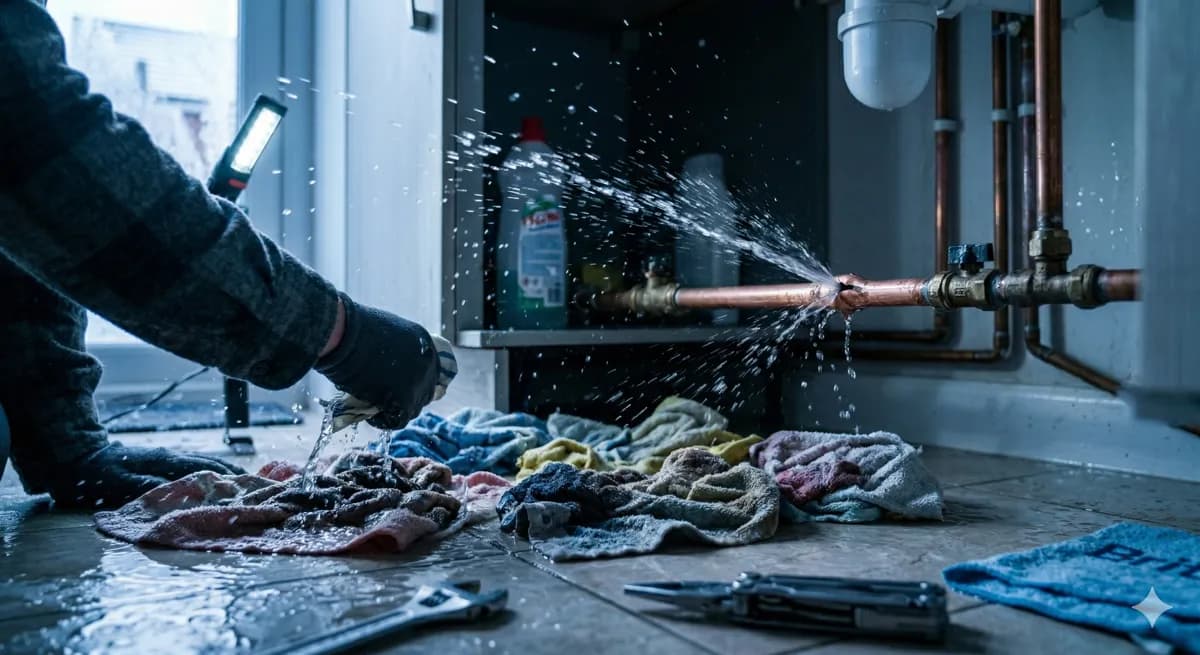
Water is pouring into your home. Maybe from a ceiling, maybe from behind a wall, maybe from under the kitchen sink. Whatever the source, you need to act now — not in 10 minutes, not after you’ve Googled solutions. Right now.
A burst pipe is one of the few genuine plumbing emergencies. But if you act quickly in the first few minutes, you can minimise the damage significantly. Here’s exactly what to do.
Right Now — The First 5 Minutes
1. Turn off the water.
Find your stopcock and turn it clockwise to close it. In most Milton Keynes homes, the stopcock is under the kitchen sink. In some older Wolverton and Stony Stratford properties, it may be in the hallway or under the stairs. If you can’t find it, look outside for your external stop valve — it’s usually near the boundary of your property, under a small cover in the pavement.
2. Switch off the central heating.
This stops hot water circulating and reduces pressure in the system.
3. Turn on all cold taps.
This drains remaining water from the system faster and reduces the flow from the burst.
4. Switch off electrics near the leak.
Water and electricity are a dangerous combination. If water is near electrical sockets, a consumer unit (fuse box), or any wiring, turn off the relevant circuit at the consumer unit. If you’re unsure which circuit, turn off the mains.
5. Contain the water.
Buckets, towels, containers — use whatever you have. If water is pooling on a ceiling, poke a small hole in the lowest point to release it into a bucket rather than waiting for the ceiling to collapse under the weight.
6. Call an emergency plumber.
Now that you’ve minimised the immediate damage, call a Gas Safe registered emergency plumber. Describe the situation: where the burst is, how much water is flowing, and whether you’ve managed to turn off the supply.
What Causes Pipes to Burst?
The most common causes in Milton Keynes are:
Freezing:
When water freezes in a pipe, it expands and can crack the pipe. This is the most common cause during winter, especially in pipes running through uninsulated loft spaces, along external walls, or in garages.
Corrosion:
Older copper and iron pipes deteriorate over time. In Milton Keynes’ hard water area, the higher mineral content accelerates this process. BISF properties in Bletchley, built in the 1970s with non-standard pipework, are particularly susceptible.
Water hammer:
Repeated pressure surges from valves closing too quickly can weaken pipe joints over time.
High pressure:
If your system pressure is consistently too high, it puts stress on all joints and connections.
Choosing a Plumber in Milton Keynes
Plumbline MK offers 24/7 emergency response for burst pipes across Milton Keynes. We aim to be on-site within 1–2 hours, with transparent pricing and no hidden charges. Call 07805 844 016 — you’ll speak directly to our team, not a call centre.
Need expert help? Contact Plumbline MK for a free, no-obligation quote. Call 07805 844 016 for same-day response across Milton Keynes and surrounding areas.
Frequently Asked Questions
How quickly can a plumber get to me for a burst pipe in Milton Keynes?
A good local emergency plumber should be able to reach you within 1–2 hours during daytime hours in Milton Keynes. The city’s grid road system means travel time from one side of MK to the other is typically 15–25 minutes. Out-of-hours response may take 2–4 hours. When you call, make sure to mention if you’ve turned off the stopcock and contained the water — this helps the engineer prioritise and prepare.
Will my home insurance cover a burst pipe?
Most standard home insurance policies cover the damage caused by a burst pipe (water damage to walls, ceilings, floors, belongings) under the “escape of water” section. However, the actual repair of the pipe itself may not be covered, or may be subject to a separate excess. Document everything with photos before you start cleaning up — your insurer will need evidence of the damage. Check your policy or call your insurer as soon as the immediate emergency is handled.
How do I prevent pipes from bursting in cold weather?
Insulate all exposed pipes, especially in lofts, garages, and along external walls. Pipe lagging costs a few pounds per metre and takes minutes to fit. During cold snaps, keep your heating on a low setting (12–15°C) overnight instead of turning it off completely. Know where your stopcock is before an emergency happens. If you’re going away during winter, either drain the system or leave the heating on a frost protection setting.
Need Professional Advice?
Our Gas Safe registered engineers are ready to help with all your heating needs. Get a free, no-obligation quote today.