How to Compare Plumbers in Milton Keynes
TL;DR
Compare any plumber in Milton Keynes on eight things: Gas Safe registration you have checked yourself, manufacturer accreditation for boiler work, a written fixed quote after a proper look at the job, a genuine local base, recent independent reviews, a written workmanship guarantee, public liability insurance, and clear answers to plain questions. The right choice is rarely the cheapest or the biggest name. It is the firm that holds up on all eight.
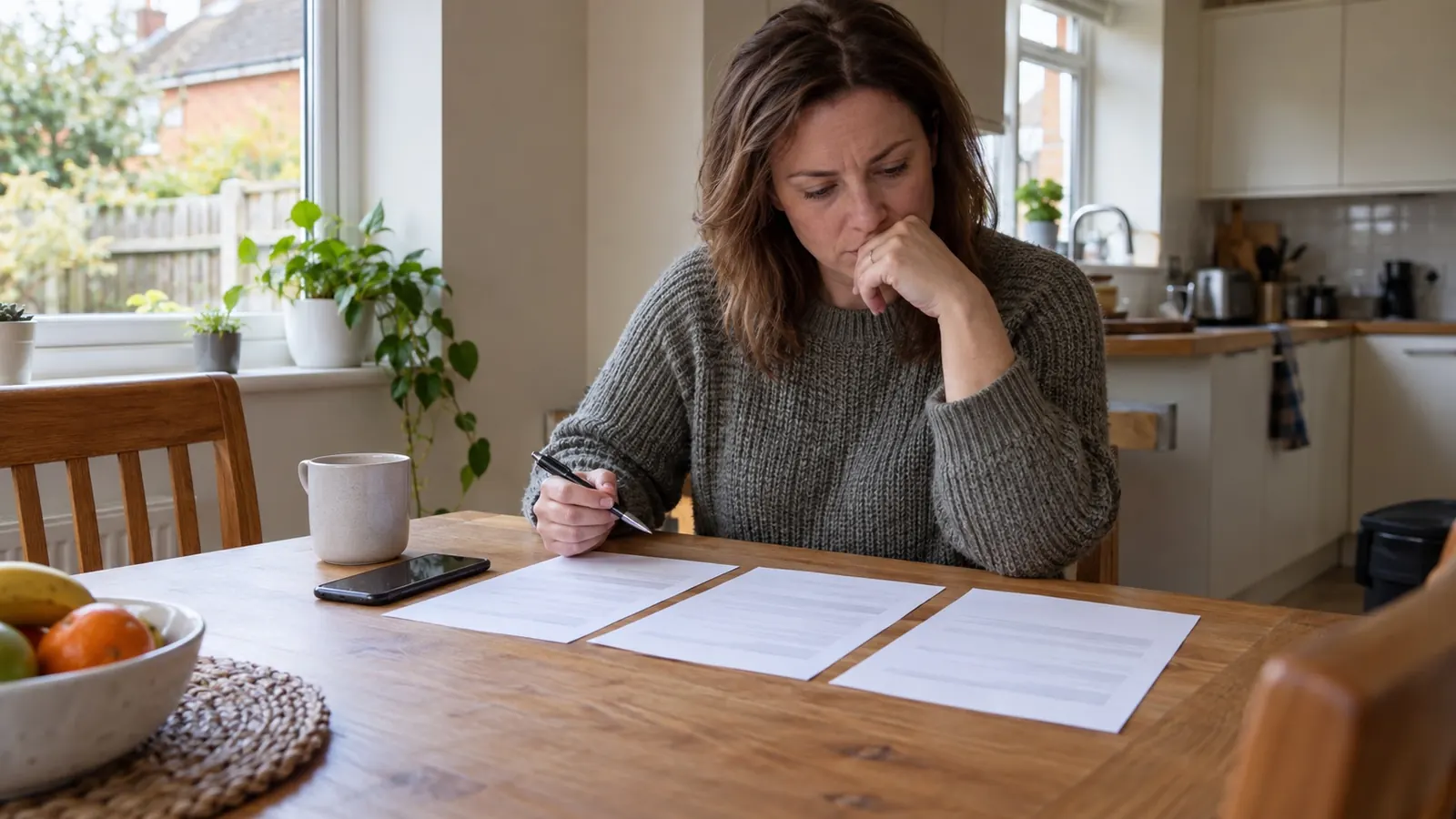
Most people only look for a plumber when something has already gone wrong. A leak, a dead boiler, no hot water. So the decision gets made in a hurry, on whoever picks up the phone first. That is how people overpay, or pay twice when a bad job has to be redone.
This is a checklist you can apply to anyone in Milton Keynes, whether that is a one-man band, a regional firm or a national chain. It covers the eight things that actually matter, the extra checks for a boiler installation or a repair, the questions worth asking, and the warning signs. At the end we hold ourselves up to the same list, so you can judge us the same way.
The eight things that matter
- 1. Gas Safe registration. If a boiler, hob or gas fire is involved, the engineer must be on the Gas Safe Register. It is the law. Every registered engineer carries an ID card with a licence number, and the back of the card lists what they are qualified to work on. Check the number on the Gas Safe Register website yourself; it takes a minute. Ours is 957816. Anyone who hesitates to show the card is a firm no.
- 2. Manufacturer accreditation. For a new boiler, ask which manufacturers have trained and approved them. Accredited installers can register the longer warranties: up to 12 years on Worcester Bosch and up to 10 on Vaillant. A firm accredited with several brands can recommend the right boiler for your house rather than the one brand they are tied to.
- 3. A written fixed quote, after a proper look. For anything bigger than a tap washer, the price should be in writing before work starts. For a boiler installation, that means a survey at the house first. Anyone who prices a new boiler over the phone is guessing, and the guess is usually corrected on the day in their favour. Hourly rates are fair for open-ended diagnostic work, but the rate and the likely time should be stated up front.
- 4. A genuine local base. "Milton Keynes plumber" on a website does not mean the van is in Milton Keynes. Some national firms dispatch from regional hubs and advertise every town in the country. A genuinely local firm knows the housing here: the 1970s and 80s grid-square estates with their original microbore pipework, the new-build estates with their pressurised systems, the older stone villages with solid walls and awkward flue runs. Ask where they are based.
- 5. Recent, independent reviews. Testimonials on a firm's own site are curated. Look at Google and the trade directories, and read the recent ones rather than the average. You want specifics: turned up when they said, price matched the quote, fix lasted. Look at how they answer a bad review. A firm that replies calmly and puts it right is telling you how they will treat you.
- 6. A written workmanship guarantee. Separate from the manufacturer's warranty on parts. Twelve months is the sensible standard. It means if the thing they fixed fails again, they come back at no charge. No guarantee at all should give you pause.
- 7. Public liability insurance. If a joint lets go overnight and the kitchen ceiling comes down, this is what pays. It is a normal question and a professional answers it without blinking.
- 8. Clear communication. Easy to underrate. Does the plumber explain the fault in plain English, set out the options and answer questions without making you feel daft? Unreturned calls and vague answers before the job predict the same during it.
Extra checks for a boiler installation
A new boiler is the biggest single job most households give a plumber, and the one where the wrong choice costs most.
- Who is actually doing the work? Some firms sell the job and subcontract the fitting. Ask whether the person quoting is the person installing.
- What does the quote include? A proper installation quote lists the system clean, a magnetic filter, controls, commissioning, warranty registration and Building Regulations notification through Gas Safe. If any of those are missing, ask why. If the system clean is missing, walk away; fitting a new boiler on a dirty system is how warranties get lost.
- What warranty, in writing? The boiler warranty comes from the manufacturer and depends on the installer registering it and on an annual service. The workmanship guarantee comes from the installer. Ask for both lengths on the quote.
- Will I have heating during the work? A straight swap is a day. Conversions are longer. A good installer tells you this before you book. More on how we do it on our boiler installation page.
Do not pick on price alone. The gap between two installation quotes is often the difference between a five-year warranty and a ten or twelve-year one, and over the life of the boiler the warranty is worth far more than the saving.
Extra checks for a boiler repair
- Can they explain the diagnosis? A confident engineer can tell you what the fault is and how they worked it out. "It needs a new board" with no explanation is not a diagnosis.
- Genuine parts or pattern parts? You should know what is going in, and genuine parts are a condition of most manufacturer warranties.
- Is the call-out or diagnostic fee stated up front? Charging one is fair. Hiding it is not.
- Is the price including VAT? Ask, every time. A firm that is not VAT registered should say so, and a firm that is should quote inclusive.
- Are they pushing a replacement? Sometimes a boiler is genuinely done, especially past 12 to 15 years with a failed heat exchanger. But a repairable fault dressed up as "not worth fixing" is one of the oldest tricks in the trade. If you are told on the first visit that you need a new boiler, get a second opinion. Our boiler repair page explains how we approach it.
Questions to ask before you book
- Are you Gas Safe registered, and what is the number?
- Which manufacturers are you accredited with?
- Is the quote fixed or estimated, and what would change it?
- Who will do the work: you, an employee or a subcontractor?
- What guarantee do you give on your work, and is it in writing?
- Do you have public liability insurance?
- Where are you based, and when can you be here?
- What happens if something goes wrong afterwards?
Red flags
- Cannot produce a Gas Safe card. Walk away, whatever the price.
- Prices over the phone for a new boiler.
- The price changes once the job starts, or extra problems are discovered mid-job with no evidence.
- Pressure to decide today. Discounts that vanish if you do not sign on the spot.
- Verbal quote only. No paper trail protects them, not you.
- No fixed business address. Hard to hold to account.
- A price far below everyone else. Something has been left out: usually the system clean, the filter or the warranty registration.
- Leaves a mess. Sounds trivial. It is a reliable proxy for how carefully the rest was done.
Local firm or national chain
National chains offer a call centre that answers at 3am, a formal complaints process and a brand you recognise. For some people that is worth a lot. The trade-offs are usually slower response because engineers come from a regional hub, higher prices to carry the overhead, and a different engineer every visit.
Good local firms tend to respond faster, cost less and know the local housing and the very hard water that scales up boilers across MK. The catch is that quality varies more between local firms, which is exactly why this checklist exists. A strong local firm beats a chain on most measures. A weak one does not.
Milton Keynes' grid roads mean an engineer based anywhere in the city can reach Bletchley, Newport Pagnell or Wolverton in a short drive, so "who is nearest" matters less here than "who is best qualified".
How Plumbline MK measures up
Judge us by the same list. We are Gas Safe registered, number 957816, and will show the card. We are a Worcester Bosch Accredited Installer, a Vaillant Advance installer, and Baxi and Ideal approved. We quote in writing after a survey, and the price is fixed once we have seen the job. We are based in Milton Keynes and it is Robert and Sam who turn up, not a subcontractor. Every job carries a 12-month workmanship guarantee. Ask us the insurance question too; we would think less of you if you did not.
The honest bit: we are a two-man firm. That means you get the same engineers every time and they know your system, but it also means we are not a 24-hour call centre and on a bad January week we cannot be everywhere at once. If you need a guaranteed hour, a big national plan may suit you better. If you want someone who will tell you the boiler does not need replacing, that is us.
Frequently asked questions
How do I know if a plumber is trustworthy?
Check the Gas Safe number yourself, read recent independent reviews, get the quote and the guarantee in writing, and ask about insurance. A trustworthy plumber is happy to be checked.
Should I get more than one quote?
For a new boiler, a bathroom or major pipework, yes, two or three. For an emergency it is not practical, which is why it pays to know a good local firm before you need one.
Does it matter that the plumber is local to Milton Keynes?
Yes. Local firms know the housing stock and the hard water, carry parts for the boilers common here, and have a local reputation to protect.
If you would like to put us through the checklist, get in touch and ask whatever you like.
Need Professional Advice?
Our Gas Safe registered engineers are ready to help with all your heating needs. Get a free, no-obligation quote today.